The Evolving Role of Meta Descriptions in Search Engine Optimization and Generative AI Snippets

Google’s approach to search result snippets has undergone a significant transformation, moving away from its historical reliance on meta descriptions to a more dynamic system that prioritizes on-page content. While once a cornerstone of organic search optimization, designed to entice users with compelling summaries, meta descriptions are now often bypassed by search engines. This shift raises crucial questions about their continued necessity for website owners and SEO professionals.
Historically, the meta description tag was a critical element for website visibility in search engine results pages (SERPs). Search engine optimization (SEO) strategies heavily revolved around crafting these short, descriptive texts to accurately summarize a page’s content and, more importantly, to encourage users to click through to the website. The assumption was that a well-written meta description, rich with relevant keywords, would directly influence a searcher’s decision to engage with a particular link. This symbiotic relationship between meta descriptions and user clicks was a fundamental aspect of early SEO practices. Websites invested considerable effort in optimizing these snippets, viewing them as a direct interface between their content and potential visitors.
However, the advent of more sophisticated search algorithms, particularly those powered by artificial intelligence and machine learning, has altered this landscape. Google, a leader in search technology, has increasingly demonstrated a preference for generating snippets directly from the content of a web page. This means that instead of solely relying on the meta description provided by the website owner, Google’s algorithms now analyze the page’s text in relation to the specific search query. The goal is to present the most relevant and contextual information directly within the search results, aiming to provide a more immediate and accurate answer to the user’s query. This algorithmic evolution has led to a situation where meta descriptions, while still a feature, are no longer the sole determinant of what appears in a search snippet.
The Continued Relevance of Meta Descriptions: An Official Perspective
Despite the observed shift in Google’s snippet generation practices, the search giant maintains that meta descriptions still play a role. According to an official post on Google’s Search Central blog, the company explicitly states its continued use of this HTML element. The blog post clarifies that while Google "primarily uses the content on the page to automatically determine the appropriate snippet," it "may also use descriptive information in the meta description element when it describes the page better than other parts of the content." This nuanced statement suggests that meta descriptions are not entirely obsolete but rather serve as a supplementary data point, utilized when they offer superior clarity and relevance compared to algorithmically extracted content.
The Search Central blog further advises website owners to "at the very least, create a description for the critical URLs like your home page and popular pages." This recommendation underscores the importance of these foundational pages, implying that for high-traffic or strategically vital sections of a website, a well-crafted meta description can still provide significant value. This guidance acknowledges that while dynamic snippet generation is the norm, there are specific instances where a manually curated description offers a distinct advantage.
Adding further weight to the ongoing utility of meta descriptions, Google’s John Mueller, a prominent figure in search at Google, offered his perspective last month. In a discussion on Reddit’s r/TechSEO community, Mueller recommended the continued use of meta descriptions, stating, "sometimes it [a meta description] helps you to figure out a clear focus for a page. Overall, I think it’s still worthwhile to do so for individual pages that you care about, but it’s definitely not a requirement." Mueller’s remarks highlight a dual benefit: meta descriptions can serve as a tool for website owners to clarify the page’s core message for themselves, and they can still contribute to how the page is represented in search results, albeit without being a mandatory element for indexing or ranking.
Strategic Application of Meta Descriptions in the Modern SEO Landscape
The consensus from Google and its representatives suggests that while meta descriptions are not a strict requirement for search engine visibility, they offer undeniable benefits, particularly for pages of strategic importance. The absence of any negative repercussions for including them further strengthens the argument for their continued implementation. This means that website owners can implement meta descriptions without fear of penalty, and instead, potentially gain an advantage in how their content is presented.
The strategic application of meta descriptions is particularly crucial for pages that contain a wealth of detailed information that might be challenging for algorithms to condense effectively. This includes critical landing pages, category pages, and product pages. These pages often house extensive service or product descriptions, technical specifications, customer reviews, and testimonials. Such comprehensive content, while valuable for users, can be difficult for automated systems to parse and summarize accurately for a concise snippet.

Consider, for example, a detailed product page for a high-end electronic device. It might include intricate technical specifications, multiple user reviews with varying opinions, and in-depth usage guides. An algorithm might struggle to pick out the most salient points for a snippet that satisfies a broad range of user queries. A well-written meta description, however, can succinctly highlight the product’s key selling points, its primary benefits, or a summary of its most praised features, thereby providing a more targeted and appealing preview in the SERPs.
Generative AI and the Meta Description Nexus
The rise of generative AI platforms, such as ChatGPT and Claude, has introduced another layer to the discussion surrounding meta descriptions. These AI models, which are increasingly being used to answer user queries directly within search interfaces or as standalone conversational agents, also rely on the information available to them. In many cases, these AI models will leverage meta descriptions when they are well-written and accurately reflect the page’s content.
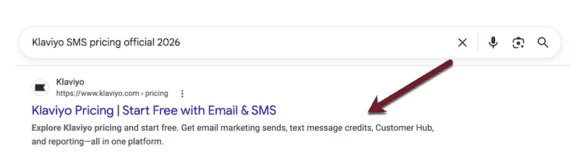
A practical demonstration of this phenomenon can be seen with Klaviyo’s SMS pricing page. The meta description for this page reads: "Explore Klaviyo pricing and start free. Get email marketing sends, text message credits, Customer Hub, and reporting – all in one platform." When a user searches for "Klaviyo SMS pricing official 2026," both Google and ChatGPT demonstrably utilized this meta description to formulate their responses. This indicates that meta descriptions continue to serve as valuable content for AI-driven information retrieval systems, influencing not only traditional search snippets but also the emerging landscape of AI-generated answers. The ability of a meta description to be recognized and utilized by both Google’s core search algorithms and advanced AI models highlights its enduring significance as a piece of descriptive metadata.
Crafting Effective Meta Descriptions in the Age of AI
The emphasis in meta description writing has shifted from a heavy focus on keyword stuffing to a more user-centric and descriptive approach. While keywords remain important for signaling relevance to search engines, the primary goal is to create a compelling summary that accurately represents the page’s content and entices users to click. For high-intent pages, such as product detail pages or service offerings, meta descriptions should aim to:
- Clearly articulate the page’s primary topic or offering: What is the user going to find on this page?
- Highlight key benefits or unique selling propositions: Why should the user choose this page over others?
- Include a clear call to action (where appropriate): What should the user do next? (e.g., "Learn more," "Shop now," "Get a quote").
- Maintain conciseness and readability: Aim for a length that is typically displayed in search results (around 150-160 characters) to avoid truncation.
- Incorporate relevant keywords naturally: While not the sole focus, using terms that users are likely to search for can improve discoverability.
For websites with a vast number of pages, such as large e-commerce platforms with thousands of products, manually crafting meta descriptions for every single page is an impractical undertaking. In such scenarios, Google recommends a programmatic approach to generating these descriptions. This can be achieved through various methods, including:
- Template-based generation: Using predefined templates with placeholders for product names, features, and prices.
- Leveraging Generative AI: Employing AI platforms like ChatGPT or Claude, or specialized apps that utilize them, to generate descriptions based on product data. This requires careful prompting to ensure accuracy and adherence to brand voice. For instance, a prompt might be: "Generate a meta description for [Product Name] which is a [Product Category] with features like [Feature 1], [Feature 2]. Highlight its [Key Benefit]. Keep it under 160 characters and include the keyword ‘[Primary Keyword]’."
However, even with programmatic generation, a crucial step remains: manual review by humans. This is especially critical for pages that are expected to receive higher traffic, are considered popular products, or are associated with top conversion rates. Human oversight ensures that the generated descriptions are not only accurate but also compelling, free of errors, and aligned with the overall marketing strategy. This human element acts as a quality control mechanism, preventing potentially misleading or ineffective descriptions from being published.
Broader Implications and Future Outlook
The ongoing evolution of search algorithms and the increasing integration of AI into information retrieval mean that the landscape of online content presentation will continue to shift. While meta descriptions may not hold the same paramount importance they once did, they remain a valuable tool for website owners. Their ability to influence snippets, provide clarity for search engines and AI, and guide user engagement means they should not be entirely discarded.
The core principle remains consistent: to provide users with the most relevant and helpful information. Whether this information is extracted algorithmically from a page’s content or provided via a carefully crafted meta description, the ultimate goal is to satisfy the user’s query effectively. Websites that embrace this principle, by optimizing their content comprehensively and strategically utilizing meta descriptions for their key pages, are likely to fare better in the evolving digital landscape. The trend suggests a future where a multi-faceted approach to content optimization, combining strong on-page content with descriptive metadata, will be the most effective strategy for achieving visibility and driving user engagement. The data from sources like Klaviyo’s pricing page snippet demonstrates that in a competitive search environment, every element that can positively influence a user’s perception and click-through rate, including a well-crafted meta description, remains a vital component of a robust SEO strategy.