AI-Powered Breakthrough at MIT Yields Heat-Resistant mRNA Vaccines Capable of Surviving Room Temperature for a Year

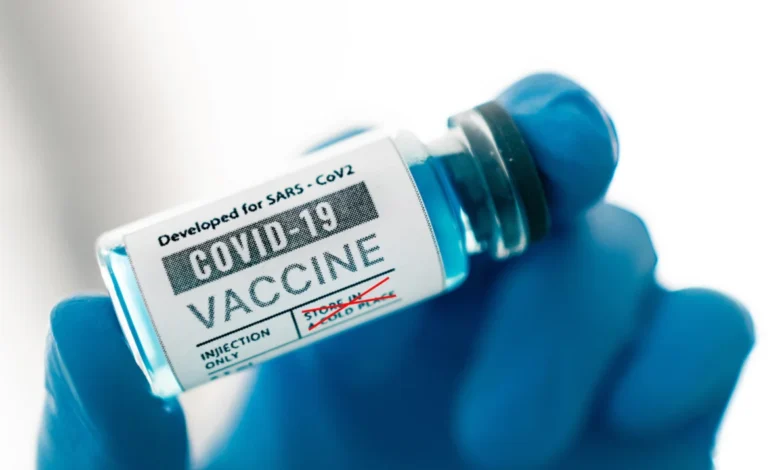
The landscape of modern medicine could be permanently altered following a significant scientific breakthrough out of the Massachusetts Institute of Technology (MIT). Researchers have successfully engineered a method to make messenger RNA (mRNA) vaccines heat-resistant by employing an artificial intelligence algorithm to optimize the formulation of lipid nanoparticles (LNPs). Published in the journal Nature Biotechnology, the discovery overcomes one of the most stubborn technological hurdles in modern biotechnology: the absolute requirement for ultracold storage chains to maintain vaccine stability and efficacy.
For years, the revolutionary potential of mRNA technology—proven globally during the COVID-19 pandemic—has been severely bottlenecked by extreme thermal sensitivity. Because RNA molecules are inherently fragile and prone to rapid degradation, standard mRNA vaccines must be kept frozen at temperatures ranging from minus 20 degrees Celsius to minus 80 degrees Celsius. This cold-chain requirement necessitates specialized freezers, dry ice, and complex logistical networks, creating immense barriers to the distribution of life-saving therapeutics in low-income nations, rural environments, and developing regions lacking robust healthcare infrastructure.
By integrating specialized machine-learning protocols with advanced materials science, the MIT research team has bypassed these traditional limits. Their newly formulated mRNA-LNP structures can remain entirely stable at standard room temperature for up to an extraordinary full year. Furthermore, the newly stabilized vaccines can endure temperatures nearing 100 degrees Fahrenheit for as long as two months without losing their structural integrity or biological potency.
The Chronology of the Breakthrough
The path to achieving thermal stability for FDA-approved lipid nanoparticle architectures was neither linear nor immediate. For months, researchers in the laboratory of Ana Jaklenec, a principal investigator at MIT’s Koch Institute for Integrative Cancer Research, faced persistent roadblocks. The scientific team initially attempted to leverage a tried-and-true empirical methodology, systematically screening a variety of chemical excipients—including specific sugars, salts, and polymers—that had previously demonstrated success in stabilizing localized drug-delivery systems.
Despite exhaustive manual laboratory trials, the traditional approach stalled. The team found themselves unable to reach the rigorous threshold required for 100 percent stability while maintaining compatibility with the lipid nanoparticle configurations authorized by the U.S. Food and Drug Administration (FDA) for human use.
Recognizing that an exhaustive, trial-and-error physical screening process would take years and consume prohibitive amounts of time and resources, the MIT researchers pivoted toward computational solutions. They forged a cross-disciplinary collaboration with investigators at MIT’s Computer Science and Artificial Intelligence Laboratory (CSAIL). Together, they deployed a specialized machine-learning algorithm designed explicitly to parse and learn from exceptionally small datasets.
The algorithmic deployment altered the trajectory of the project within weeks. Rather than requiring thousands of physical iterations, the predictive computational model rapidly converged on optimized formulations after only a handful of experimental feedback loops. By evaluating the performance of nearly 50 FDA-approved excipients—quantified via bioluminescent assays using firefly luciferase reporter mRNA—the algorithm successfully calculated the ideal chemical ratios needed to protect the fragile genetic cargo against elevated thermal stress.
Data, Performance, and Preclinical Validation
To establish the viability of the AI-engineered formulations, the research team subjected the newly stabilized mRNA particles to rigorous stress testing. Using a vacuum-drying dehydration process, the team converted the liquid vaccines into solid states capable of enduring harsh environmental conditions.
The physical test results exceeded expectations. When stored continuously at 37 degrees Celsius (approximately 98.6 degrees Fahrenheit) for two months, or kept at standard ambient room temperatures for a full year, the dehydrated mRNA-LNP particles retained their protective characteristics. When subsequently rehydrated and administered to murine (mouse) models, the heat-exposed vaccines generated immune responses virtually identical in magnitude and quality to fresh, conventionally stored mRNA vaccines modeled after commercial formulations like those developed by Moderna.
Beyond standard liquid injections, the enhanced thermal stability unlocked alternative delivery modalities that were previously unfeasible. The MIT team successfully integrated the heat-resistant mRNA formulations into solid-state microneedle patches. These microscopic patches feature hundreds of tiny, vaccine-loaded projections engineered to dissolve safely upon contact with human skin. When tested in animal models, the microneedle patches delivered antigens effectively, eliciting robust immune responses comparable to traditional needle-and-syringe immunizations.
Crucially, the utility of the AI framework extended beyond a single proprietary chemical recipe. The researchers demonstrated that the machine-learning algorithm could be recalibrated to stabilize alternative commercial architectures, including formulations structurally analogous to those utilized by Pfizer. By adjusting excipient ratios to match different proprietary LNP profiles, the algorithm proved to be a versatile platform technology adaptable to a wide range of future pharmaceutical applications.
Expert Insights and Official Perspectives
The implications of the study extend far beyond the immediate context of COVID-19 booster shots. Senior and lead authors of the study emphasize the paradigm shift represented by the marriage of machine learning and biological drug delivery.
"The real beauty of this algorithm is that we can use it with small data sets," noted Ana Jaklenec, emphasizing the difficulty of running physical biological experiments at scale. "It’s really hard to run thousands of experiments, so this algorithm allows us to easily achieve formulations with features that we want—in this case, stability."
Mina Konaković Luković, an assistant professor of electrical engineering and computer science at CSAIL and a co-author of the paper, highlighted the novelty of applying automated design to biological stability problems. "We’d used our algorithms for various automated experimental design applications before, but never on a biological problem like vaccine stability," she observed. "It was surprising to see how quickly the algorithm converged on a stable formulation—getting there in just a handful of iterations, rather than the exhaustive search that would normally be required."
Graduate student Jinbi Tian, serving as a co-lead author alongside postdoc Khanh Tran, emphasized the broader technological horizons opened by the discovery. "Our approach broadens the application of not only mRNA vaccines, but also therapeutics or advanced drug-delivery platforms like controlled-release particles or microneedle patches, which requires the formulation to either be in solid state or to be stable at higher temperature," Tian explained.
The research effort received vital financial backing from the Bill & Melinda Gates Foundation, an organization long dedicated to eradicating logistical roadblocks that prevent equitable vaccine distribution in the developing world.
Broader Industry Implications and Future Outlook
The successful combination of artificial intelligence and advanced biophysical formulation heralds a transformative era for global health logistics. By eliminating the reliance on ultracold-chain storage, health agencies can drastically reduce the financial and logistical expenditures associated with vaccine distribution campaigns. Remote populations in tropical and equatorial regions, where ambient temperatures routinely exceed standard cold-storage thresholds, stand to benefit immensely from temperature-tolerant pharmaceutical supplies.
Furthermore, the integration of heat-resistant mRNA formulations with painless microneedle patches introduces the possibility of self-administered immunizations. Such an advancement could circumvent shortages of trained medical personnel during global health emergencies, streamlining mass vaccination efforts and lowering operational thresholds for public health administration.
As pharmaceutical developers increasingly turn their attention toward personalized cancer vaccines, rare genetic disorders, and novel infectious disease targets, the demand for versatile, stable delivery systems will only accelerate. The methodology pioneered at MIT—demonstrating that small-data AI algorithms can rapidly solve complex biochemical optimization challenges—provides a blueprint for accelerating the translation of laboratory breakthroughs into globally accessible clinical solutions.
Related posts: