Stargazing Guide for the Waxing Crescent Moon and the Upcoming Lunar Calendar Transitions

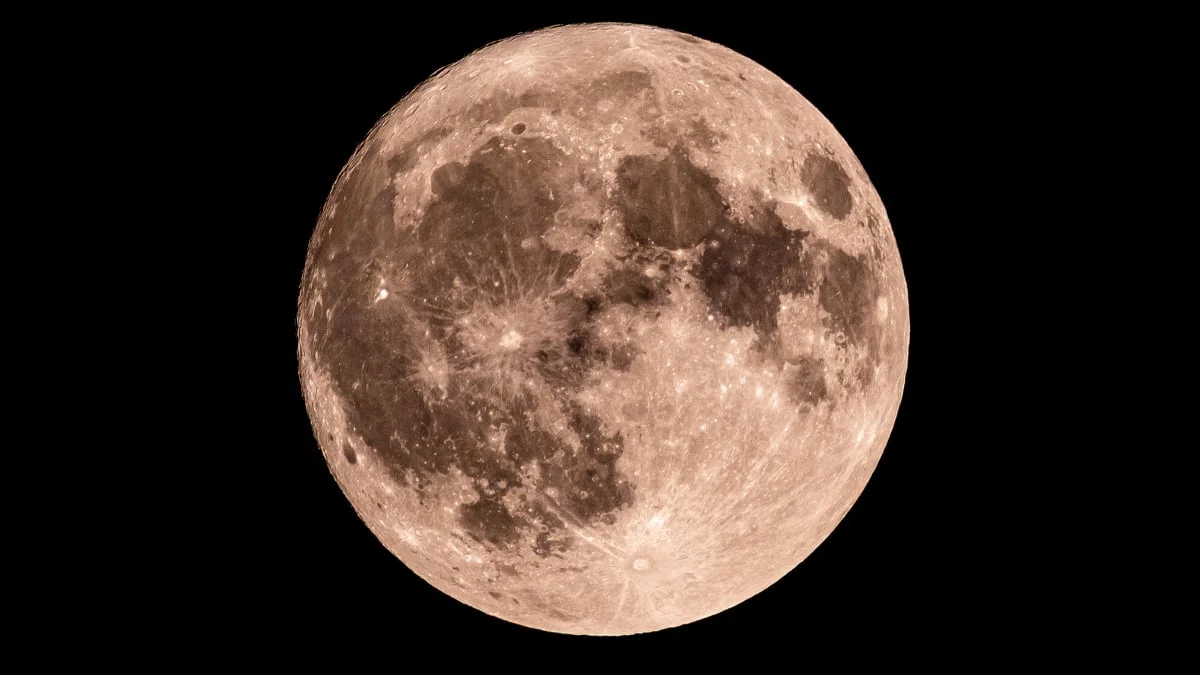
As the lunar cycle progresses into its fourth day, the Moon is entering a phase of increasing visibility that offers a unique opportunity for both amateur astronomers and seasoned observers to witness the emerging topographical details of Earth’s only natural satellite. On Tuesday, April 21, the Moon reached the Waxing Crescent phase, a period characterized by a thin sliver of light that gradually expands each night. According to data provided by NASA’s Daily Moon Guide, the lunar surface is currently approximately 20% illuminated. This specific stage of the lunar month is often considered one of the most rewarding for observation, as the "terminator"—the line separating the dark and light sides of the Moon—casts long shadows that highlight the depth and texture of lunar craters and mountain ranges.
The Waxing Crescent phase occurs shortly after the New Moon, when the Moon has moved far enough in its orbit around the Earth for a small portion of its sunlit side to become visible from our perspective. While the New Moon remains invisible because it is positioned between the Earth and the Sun, the Waxing Crescent represents the rebirth of the lunar cycle. For observers in the Northern Hemisphere, this illumination appears on the right side of the lunar disk, growing larger each night until the Moon reaches its First Quarter phase.
Observing the Lunar Surface: Key Features for Tonight
The current level of illumination provides an excellent window for identifying specific geological landmarks. For those observing with the naked eye, two prominent features are visible: Mare Crisium and Mare Fecunditatis.
Mare Crisium, also known as the "Sea of Crises," is a lunar mare located in the Moon’s Crisium basin, just northeast of Mare Tranquillitatis. It is approximately 345 miles (555 kilometers) in diameter and is notable for its flat, dark floor composed of ancient basaltic lava. Because it is isolated from the larger complexes of lunar maria, it is easily distinguishable even without magnification.
Adjacent to this is Mare Fecunditatis, or the "Sea of Fertility." This mare spans roughly 522 miles (840 kilometers) and is characterized by a thinner layer of basalt compared to other lunar basins. Its surface is punctuated by interesting features like the Messier craters, though these typically require higher-powered optics to resolve.
For enthusiasts utilizing binoculars or a modest telescope, the Endymion Crater becomes a focal point of the evening. Located near the Moon’s northeastern limb, Endymion is an ancient impact crater that has been flooded with lava, leaving it with a smooth, dark floor. Its high walls catch the sunlight during the Waxing Crescent phase, creating a sharp contrast against the surrounding rugged terrain. Observing this crater during this phase is particularly advantageous because the low angle of the sun emphasizes its circular rim and the shadows within its 78-mile diameter.
The Mechanics of the Lunar Cycle: A 29.5-Day Journey
The Moon’s transition through its phases is a result of its synodic period, which lasts approximately 29.5 days. This is the time it takes for the Moon to return to the same position relative to the Sun as seen from Earth. Although the Moon completes a full sidereal orbit around Earth in about 27.3 days, the Earth’s own movement around the Sun means the Moon must travel a bit further to complete its phase cycle.
NASA scientists emphasize that while the same side of the Moon—the "near side"—always faces Earth due to tidal locking, the amount of sunlight hitting that face changes constantly. This celestial dance produces the eight distinct phases recognized by astronomers:
- New Moon: The Moon is positioned between the Earth and the Sun, rendering it invisible to the naked eye.
- Waxing Crescent: A thin sliver of light appears on the right side as the Moon moves away from the Sun’s glare.
- First Quarter: Exactly half of the Moon is illuminated, appearing as a semi-circle.
- Waxing Gibbous: More than half is lit, but the Moon has not yet reached full illumination.
- Full Moon: The Earth is between the Sun and the Moon, allowing the entire near side to reflect sunlight.
- Waning Gibbous: The Moon begins its journey back toward the Sun, and the light on the right side starts to recede.
- Third Quarter: The left half of the Moon is illuminated, signifying the final week of the cycle.
- Waning Crescent: A final sliver of light remains on the left before the Moon disappears into the New Moon phase once again.
Chronology and Upcoming Celestial Events
Following the current Waxing Crescent phase on April 21, the lunar progression will lead toward the First Quarter later in the week. The most significant upcoming milestone for observers is the arrival of the Full Moon.
The next Full Moon is scheduled to occur on May 1. This particular Full Moon is often referred to in folklore as the "Flower Moon," a name originating from Native American traditions that signal the abundance of spring blooms in the Northern Hemisphere. Interestingly, May will be a rare month for lunar enthusiasts, as it is slated to feature two Full Moons, the second of which is colloquially known as a "Blue Moon."
The transition from the current 20% illumination to the 100% illumination of the Full Moon involves a steady increase in the Moon’s altitude in the evening sky. During the Waxing Crescent phase, the Moon sets shortly after the Sun, but as it approaches the Full Moon stage, it will rise at sunset and remain visible throughout the entire night.
Scientific and Exploration Context: The Role of Modern Lunar Missions
The study of lunar phases is not merely a hobby for stargazers; it remains a critical component of modern space exploration. NASA and private aerospace entities, such as ispace, continue to monitor lunar conditions to plan future landings and surface operations.
The mention of ispace in recent lunar guides highlights the growing involvement of private industry in lunar exploration. The Japanese company’s HAKUTO-R program, for instance, represents a significant step toward commercializing lunar transport. Such missions rely heavily on the lunar cycle for solar power management and thermal control. During the 14-day lunar day (the period of illumination), landers must harvest enough energy to survive the subsequent 14-day lunar night, where temperatures can plummet to minus 208 degrees Fahrenheit (minus 133 degrees Celsius).
NASA’s Artemis program also utilizes detailed lunar mapping and phase data to identify landing sites near the lunar South Pole. This region is of particular interest because of the presence of "permanently shadowed regions" (PSRs) in craters that may contain water ice. Understanding the exact angle of sunlight—dictated by the lunar phase and the Moon’s axial tilt—is essential for navigating these treacherous environments.
Implications of Lunar Observation for Earth-Based Science
The regularity of the lunar cycle provides a stable framework for various scientific disciplines on Earth. Marine biologists study the Moon’s phases to predict tidal patterns, which are driven by the gravitational pull of the Moon and the Sun. The "spring tides," which are the highest and lowest tides, occur during the Full and New Moon phases when the gravitational forces are aligned. Conversely, "neap tides" occur during the Quarter phases.
For astronomers, the Waxing Crescent phase is an ideal time for "Deep Sky" photography. Because the Moon is only 20% lit, its reflected light is not strong enough to wash out distant stars, nebulae, or galaxies. This allows photographers to capture the Moon’s detailed craters while still maintaining a dark enough sky to see the Milky Way and other celestial phenomena.
Furthermore, the phenomenon known as "Earthshine" is often visible during the Waxing Crescent. Earthshine, or the "Da Vinci Glow," occurs when sunlight reflects off the Earth’s surface, hits the dark part of the Moon, and reflects back to our eyes. This creates a faint, ghostly glow on the unlit portion of the lunar disk, allowing observers to see the outline of the entire Moon even when only a sliver is officially illuminated.
Technical Data and Observational Tips
To get the most out of tonight’s 20% illumination, experts recommend the following:
- Timing: The best time to view a Waxing Crescent is shortly after sunset. Look toward the western horizon. The Moon will be relatively low in the sky, so ensure you have a clear view unobstructed by buildings or trees.
- Atmospheric Conditions: A clear, crisp night with low humidity will provide the best "seeing" conditions. High-altitude turbulence can cause the Moon to appear to "shimmer," which reduces the clarity of fine details like the Endymion Crater.
- Equipment: While the 20% Moon is beautiful to the naked eye, a pair of 7×50 or 10×50 binoculars will reveal the jagged edges of the terminator line. If using a telescope, a lunar filter can help reduce glare and improve contrast, making the basaltic plains of Mare Crisium appear more defined.
As the world looks toward the May 1 Full Moon, the current Waxing Crescent serves as a reminder of the dynamic nature of our solar system. The Moon is not a static object but a changing world that has influenced human culture, navigation, and science for millennia. Whether viewed as a target for future colonization or a subject of nightly wonder, the Moon’s current phase offers a glimpse into the complex mechanics of the cosmos.
By monitoring these shifts, NASA and other global space agencies continue to refine our understanding of the Moon’s geology and its relationship with Earth. For the casual observer, tonight represents an opportunity to connect with the broader universe, beginning with the simple act of looking up at a 20% illuminated sliver of light in the evening sky.