Crusoe Drops Boom Supersonic Turbine Partnership in Abilene AI Data Center Energy Pivot

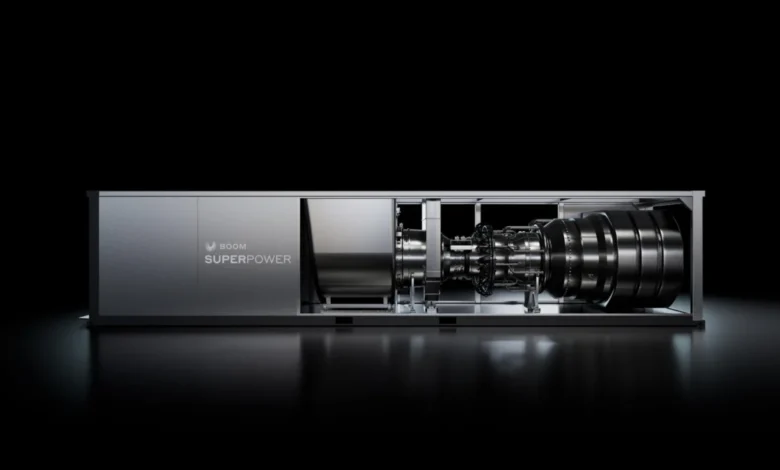
The high-stakes intersection of artificial intelligence infrastructure and energy supply faced a sudden realignment this week as Denver-based AI data center titan Crusoe officially terminated a massive, high-profile agreement with local aerospace and energy innovator Boom Supersonic. The canceled deal, which was initially valued at $1.25 billion, would have made Crusoe the launch customer for Boom’s newly developed line of stationary natural gas turbines, known as "Superpower."
The parting of ways, confirmed by representatives from both companies, highlights the fluid and rapidly evolving energy demands of the booming generative AI sector. As data center operators scramble to secure reliable, high-capacity electricity to power sprawling arrays of energy-hungry graphics processing units (GPUs), power procurement strategies are shifting dramatically by the month—and sometimes by the site.
The Chronology of a Billion-Dollar Partnership
The relationship between the two Denver companies dates back several years, forged in the rapidly expanding ecosystem of Colorado’s tech and energy sectors. Boom Supersonic, globally recognized for its ambitious development of the Overture supersonic passenger jet, made strategic corporate waves last year by launching an entirely separate commercial arm. This new business division was designed to leverage the core engineering of its proprietary "Symphony" aircraft engine to build heavy-duty, stationary power plants fueled by natural gas.
According to technical specifications released by Boom, the Superpower turbine shares approximately 80% of its component architecture with the airborne Symphony engine. Recognizing a lucrative opportunity to secure localized, flexible power generation for its rapidly expanding fleet of artificial intelligence data centers, Crusoe stepped forward as the venture’s premier launch partner.
Under the terms of the initial agreement, Crusoe committed to purchasing 29 of Boom’s 42-megawatt Superpower turbines, amounting to a staggering $1.25 billion capital expenditure. Initial hardware deliveries were scheduled to commence in 2027, providing a critical localized power bridge for Crusoe’s massive infrastructure projects. Furthermore, the partnership served as a vital financial pillar for Boom Supersonic, which successfully raised $300 million late last year specifically to commercialize and scale its stationary turbine business. Aerospace executives had envisioned that the steady profit margins generated by the power plant division would help subsidize the capital-intensive development of the Overture passenger jet.
However, shifting operational realities rendered the landmark agreement untenable. The partnership unraveled as Crusoe reevaluated its immediate power mix for its flagship data center developments, most notably its sprawling campuses in Abilene, Texas.
Public Disclosure and Official Statements
The dissolution of the agreement came to light through a public disclosure on social media. Blake Scholl, CEO of Boom Supersonic, took to the platform X on Friday to address the change in circumstances. Scholl began his statement by offering public congratulations to Crusoe founders Cully Cavness and Chase Lochmiller on their company’s recent monumental capital raise—a staggering $3.9 billion influx announced just days prior.
Scholl then directly addressed the status of the joint venture, writing, “The TL/DR is that turbines are no longer part of Crusoe’s near term primary power mix at Abilene/etc., so a launch partnership just didn’t make sense.”
Despite losing its anchor client, Boom Supersonic attempted to project operational stability and robust market demand. Scholl noted that the company maintains a healthy pipeline of alternative buyers and anticipates delivering approximately 250 megawatts of Superpower turbine capacity to other client sites next year, with an aggressive corporate target of reaching one gigawatt of deployed capacity by 2028.
“We’re grateful for the help Crusoe gave us in shaping Superpower and continue cheering for their successes,” Scholl added in his post. “The future is long, and we look forward to potentially teaming up if/when turbines become part of their primary power mix.”

Crusoe formally corroborated Scholl’s assessment in an email statement provided to industry media, emphasizing that corporate flexibility remains a core operational philosophy as the firm scales its physical footprint.
“We build AI factories from the power up, and we’re bringing new campuses online across the country, powered by innovative energy sources,” said Andrew Schmitt, a spokesperson for Crusoe. “As our portfolio grows, we stay flexible, choosing the energy solutions that are right for each site as its needs evolve — including turbines, along with wind, solar, batteries, and the grid. While Boom has been a great partner, the partnership isn’t the right fit today. We wish them well.”
Inside Crusoe’s Evolving Power Matrix
To understand why Crusoe walked away from a multi-billion-dollar turbine commitment, industry analysts point to the vastly complex and idiosyncratic energy ecosystems governing modern artificial intelligence infrastructure. Founded in 2018, Crusoe initially gained industry prominence as an innovative bitcoin mining enterprise that utilized stranded and flared natural gas directly from remote oil fields to generate localized, low-cost electricity.
Over the subsequent years, the firm executed a high-stakes pivot, transforming into one of the premier digital infrastructure builders specializing in high-density AI computing clusters. This evolution is perhaps best exemplified by its massive, high-profile collaborations with major artificial intelligence laboratories and technology conglomerates.
Crusoe’s foundational 1.2-gigawatt data center campus in Abilene, Texas—constructed to supply immense computing power to tech giants Oracle and OpenAI—relies primarily on traditional electrical grid infrastructure for its baseline operations, supplemented by gas-turbine assets strictly reserved for emergency backup power.
Conversely, the company’s infrastructure strategy remains highly modular and site-specific. Crusoe is simultaneously spearheading the development of an additional 900-megawatt data center campus in Abilene destined for Microsoft. Unlike its predecessor, this upcoming Microsoft-focused facility is engineered to run heavily on dedicated, on-site gas turbines, illustrating how individual client requirements dictate distinct engineering and energy procurement roadmaps.
Implications for the AI Infrastructure and Energy Markets
The abrupt termination of the Crusoe-Boom partnership casts a revealing light on the broader macroeconomic pressures currently defining the artificial intelligence boom. As foundational model developers train increasingly sophisticated neural networks, the demand for physical computing power has surged exponentially, directly translating into an unprecedented appetite for electrical generation capacity.
Data center operators and energy startups are locked in a relentless race to secure power generation assets capable of circumventing notoriously backlogged public utility interconnection queues. While localized generation solutions—such as modular natural gas turbines, advanced nuclear small modular reactors, and dedicated renewable microgrids—offer attractive avenues for bypassing grid constraints, they introduce significant commercial and regulatory variables.
For Boom Supersonic, losing its launch customer represents an undeniable commercial hurdle, forcing the company to pivot its marketing and delivery pipelines toward secondary and tertiary buyers to absorb its planned manufacturing output. Nevertheless, the aerospace firm’s ability to retain a robust order book projected at 250 megawatts for the upcoming year suggests that the broader market appetite for flexible, rapid-deployment power generation remains remarkably resilient.
For Crusoe, walking away from a $1.25 billion commitment underscores a disciplined, highly pragmatic approach to capital allocation. Armed with a recent $3.9 billion war chest, the company retains maximum strategic latitude to mix and match energy assets—balancing grid power, battery storage, wind, solar, and thermal generation—on a site-by-site basis. As the physical contours of the AI economy continue to mature, the ability of infrastructure providers to adapt their energy supply chains dynamically will likely remain the ultimate competitive differentiator.