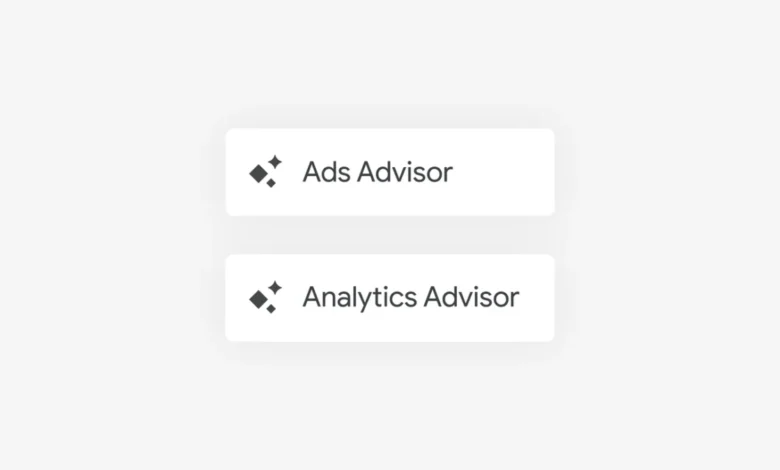
The digital advertising landscape has reached a point of unprecedented complexity, driven by fragmented consumer journeys, privacy-centric data regulations, and the sheer volume of campaign variables that marketers must manage in real time. To address these challenges, Google has announced the impending launch of two sophisticated AI-driven tools—Ads Advisor and Analytics Advisor. Powered by the latest iterations of the Gemini model, these "agentic" tools are designed to move beyond passive reporting, instead offering proactive, actionable interventions within the Google Ads and Google Analytics ecosystems. Starting this December, these features will become available to English-language accounts globally, marking a significant shift in how businesses interact with their marketing data.
The Evolution of Agentic AI in Marketing
For years, the promise of marketing technology has been the democratization of data analysis. However, even with advanced dashboards, the "last mile" of marketing—taking a raw insight and executing a change in a campaign—remains a manual, labor-intensive process. The introduction of agentic tools represents a fundamental change in the relationship between human marketers and machine learning.
Unlike traditional generative AI, which typically answers queries with text or code, "agentic" AI is defined by its ability to execute tasks. In the context of Google’s new suite, this means the system does not just tell a user that a campaign is underperforming; it identifies the root cause, suggests a precise optimization, and, upon user approval, implements the fix directly within the account. This capability is powered by Gemini’s enhanced reasoning, which allows the models to interpret business context and historical account performance to offer recommendations that are not merely generic best practices, but specific to the advertiser’s goals.
Ads Advisor: Closing the Loop on Campaign Optimization
Ads Advisor is engineered to serve as an in-platform consultant, designed to bridge the gap between performance analysis and campaign execution. According to Google, the tool functions through four primary pillars: proactive management, creative generation, performance diagnosis, and policy troubleshooting.
The tool’s ability to handle Performance Max campaigns is perhaps its most significant feature. As advertisers face pressure to maximize return on ad spend (ROAS) during high-stakes periods like the holiday season, the speed of iteration becomes a competitive advantage. Ads Advisor can process natural language requests—such as "How can I optimize my campaign for an upcoming seasonal event?"—and translate them into tangible adjustments, such as suggesting the addition of sitelink extensions.
Furthermore, the tool addresses the persistent pain point of ad policy compliance. When an advertisement is disapproved, the traditional workflow involves reading complex policy documentation, identifying the potential violation, and manually editing the asset. Ads Advisor simplifies this by diagnosing the specific reason for the disapproval and, in many instances, performing the necessary edits to bring the asset into compliance, requiring only a final verification click from the user.
Analytics Advisor: From Data Silos to Strategic Action
If Ads Advisor is the tactical engine, Analytics Advisor is the strategic compass. For many organizations, the hurdle is not a lack of data, but the inability to synthesize that data into a cohesive narrative. Analytics Advisor, which will be available in both GA Standard and Google Analytics 360, acts as a high-level data analyst.
The tool’s primary value proposition is its ability to perform "key driver analysis." For example, if a business sees a sudden spike in traffic or a drop in conversions, the user can query the tool to understand the "why" behind the numbers. Instead of forcing a marketer to navigate through dozens of reports to correlate events, the AI performs a multivariate analysis, identifying the specific segments or user behaviors that contributed to the anomaly.
This functionality serves to shorten the feedback loop between data analysis and strategic pivot. By prioritizing insights based on their impact on stated business goals, Analytics Advisor ensures that the user is not just looking at noise, but focusing on high-leverage opportunities. As noted by early adopters in the industry, this capability effectively transforms hours of manual data mining into a conversational, rapid-fire Q&A session.
Industry Context and Strategic Implications
The introduction of these tools comes at a critical juncture for the advertising industry. Data from various market research firms indicates that businesses are increasingly consolidating their ad tech stacks to reduce overhead and improve data integration. By embedding agentic AI directly into the platforms where marketers spend the majority of their time, Google is reinforcing the "all-in-one" value proposition of its ecosystem.
The move also aligns with the broader industry trend of "AI-first" marketing, where the objective is to lower the barrier to entry for small-to-medium-sized businesses (SMBs). While large enterprises have historically relied on teams of data scientists and agency partners to optimize their digital presence, tools like Ads Advisor and Analytics Advisor provide these capabilities to smaller organizations that may lack deep technical expertise.
Implementation Timeline and Future Roadmap
The rollout scheduled for early December is expected to be a phased, global release. While the initial features will be restricted to English-language accounts, the architecture of the Gemini-powered models suggests that multilingual capabilities will likely follow in subsequent updates.
Google has signaled that this release is merely the first phase of a broader commitment to agentic AI. The company has indicated that it plans to iterate on these tools through 2026, with a roadmap focused on increasing the autonomy of the agents. As these models learn from wider datasets and more varied user interactions, the expectation is that they will become increasingly "predictive"—anticipating potential issues before they manifest as performance dips, rather than simply reacting to them.
Analyzing the Impact on Marketing Roles
The shift toward agentic AI raises questions about the changing nature of the marketing profession. Critics and proponents alike note that while these tools eliminate the "drudgery" of manual reporting and basic troubleshooting, they elevate the importance of strategic oversight. The role of the digital marketer is shifting from a technician—someone who clicks buttons and adjusts bids—to a "curator" or "orchestrator," responsible for defining the goals and verifying the AI’s proposed actions.
For advertising agencies and consultants, the introduction of these advisors necessitates a pivot toward higher-value services. If the AI can handle routine optimizations and basic performance analysis, the human expert must focus on high-level brand strategy, complex creative direction, and long-term business model integration.
Ultimately, the success of Ads Advisor and Analytics Advisor will hinge on the quality of their recommendations. In the highly competitive world of digital advertising, trust is the currency of the realm. By grounding its AI in the specific context of the user’s account and providing transparent justifications for its suggestions, Google aims to ensure that these tools are viewed not as "black boxes," but as reliable extensions of the marketing team. As the holiday season approaches—a period often defined by high stakes and limited margins for error—the performance of these tools will provide an early, vital benchmark for the future of AI-assisted commerce.
Related posts: