The rapid evolution of artificial intelligence in web development has introduced a new paradigm, allowing users to swiftly conceptualize and build front-end websites using innovative platforms like Lovable, Bolt.new, or Base44. These AI-powered tools excel at generating aesthetically pleasing and functional interfaces with unprecedented speed. However, a significant chasm has historically existed between these quickly crafted frontends and the robust, feature-rich content management systems (CMS) required for long-term site management, scalability, and enhanced user experience. Until the advent of solutions like PressMeGPT, the conventional and often arduous path involved a complete manual reconstruction of the AI-generated design within a native WordPress environment. This labor-intensive process, fraught with inefficiencies, presented a substantial bottleneck for individuals and agencies alike, effectively negating many of the initial time-saving benefits offered by AI design tools.
The Evolving Web Development Landscape and the WordPress Imperative
The digital landscape has undergone a dramatic transformation over the past decade. What once required extensive coding knowledge and significant development cycles can now be partially automated through AI. This shift has democratized web design, empowering entrepreneurs, small businesses, and creative professionals to launch visually appealing sites without deep technical expertise. Platforms leveraging AI for website generation focus primarily on the aesthetic and structural elements of the frontend, offering rapid prototyping and design iterations.
However, the utility of a website extends far beyond its initial visual appeal. For sustained growth, content marketing, e-commerce integration, user management, and advanced search engine optimization (SEO), a powerful and flexible CMS is indispensable. WordPress, commanding over 43% of all websites on the internet, remains the undisputed leader in this domain. Its vast ecosystem of plugins, themes, and community support offers unparalleled versatility for everything from personal blogs to complex corporate portals and online stores. The challenge arises when an AI-generated site, while visually compelling, lacks the underlying infrastructure for dynamic content, plugin integration, or comprehensive SEO tools – functionalities that WordPress provides natively. The absence of a seamless pathway from an AI-generated design to a production-ready WordPress theme has meant that designers and developers were often forced into the time-consuming and costly exercise of rebuilding, rather than converting, these nascent designs.
PressMeGPT: Bridging the Divide with Intelligent Conversion
Recognizing this critical gap, PressMeGPT emerges as a pivotal innovation, specifically engineered to streamline the migration of diverse web designs into a WordPress framework. It represents a paradigm shift from manual reconstruction to intelligent conversion, fundamentally altering the workflow for developers, agencies, and content creators. PressMeGPT is designed to take an existing website, an AI-generated project, or even a simple plain text prompt, and transform it into a fully functional WordPress theme or an Elementor template. This output is not merely a static rendering but a dynamic, editable framework that users own and can host independently.

The core promise of PressMeGPT lies in its efficiency. The platform claims to accomplish this complex conversion process in mere minutes, delivering approximately 80% of a finished design. This significant head start means that valuable development time can be reallocated from foundational reconstruction to refinement, customization, and the intricate human touches that elevate a website from functional to exceptional. This efficiency is particularly impactful for agencies and freelancers managing multiple client projects, where cumulative time savings can translate into substantial operational advantages and increased project throughput.
A Deeper Dive into Functionality and Workflow
The versatility of PressMeGPT’s input mechanisms is a key strength. Users are not restricted to a single source but can initiate the conversion process from a variety of starting points:
- Existing Website URL: By simply providing the URL of an active website, PressMeGPT can analyze its structure and design to generate a corresponding WordPress theme. This is invaluable for migrating sites from proprietary platforms or older, less flexible systems to WordPress.
- AI-Generated Projects: Designs created on modern AI-powered builders such as Lovable, Bolt.new, or Base44 can be directly ingested and translated. This capability directly addresses the core problem of moving from AI-frontend to WordPress-backend.
- HTML/CSS Code Snippets: For developers working with custom code or specific design elements, the ability to input raw HTML and CSS offers a high degree of control and flexibility.
- Plain Text Prompts: Emulating the intuitive nature of many AI tools, users can describe their desired website design in natural language, and PressMeGPT will interpret this prompt to generate initial theme variations.
Furthermore, PressMeGPT has ambitious plans for future integrations, with Canva and Figma support slated for upcoming releases across all subscription plans. This will extend its utility to graphic designers and UI/UX professionals, allowing them to convert their visual mockups directly into functional WordPress themes, further bridging the gap between design and development.
Regardless of the input method, each generation cycle produces three distinct design variations. This provides users with options and a starting point for further customization, rather than a single, immutable output. The final product is a native WordPress theme or an Elementor template, ready for refinement using the user’s preferred builder – be it the native Gutenberg block editor or Elementor. This crucial distinction sets PressMeGPT apart from earlier AI website builders that often focused solely on prompt-based generation from scratch. PressMeGPT’s capacity to convert existing designs is what truly positions it as a powerful migration tool, offering a tangible solution for moving established online presences into the WordPress ecosystem.
Addressing Key Challenges in Web Design: The 80% Solution
The fundamental problem PressMeGPT addresses stems from a mismatch in the lifecycle of web design: the speed of initial creation versus the demands of long-term management. AI builders excel at rapid design output but often leave users with limited CMS capabilities, proprietary platform lock-in, and frequently, a lack of inherent SEO optimization. The moment a business needs to publish regular blog posts, manage user roles, integrate e-commerce functionalities, or install crucial plugins for security and performance, WordPress becomes the logical, often indispensable, platform. Historically, this transition necessitated a laborious manual recreation of layouts, section by section, within the WordPress environment.

This friction is not exclusive to AI-generated sites. Even traditional web development, involving manual assembly in page builders like Elementor or the block editor, can consume countless hours. Developers familiar with premium themes from marketplaces like ThemeForest often find that the elaborate demo designs rarely translate seamlessly to their actual content without significant custom work.
PressMeGPT mitigates this by providing a generated draft that already closely resembles the original design or the user’s vision. This allows designers and developers to invest their expertise and time into the final 20% – the critical human-centric aspects of branding, content integration, and bespoke functionality. It shifts the focus from foundational construction to strategic refinement, optimizing the allocation of skilled labor.
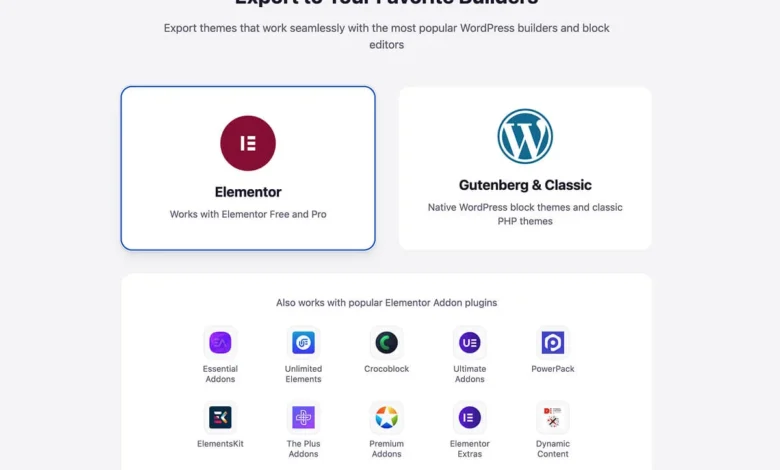
Crucially, PressMeGPT is designed to work with existing page builders, not replace them. It acts "upstream," handling the initial theme generation. For teams already invested in Elementor, the template export option seamlessly integrates into their familiar workflow. Notably, these templates are compatible with Elementor’s free version, eliminating the need for a Pro license solely to utilize PressMeGPT’s output. However, it’s worth noting that Elementor export capabilities commence with the Freelance plan, while the entry-level Creator plan supports Gutenberg and classic theme exports.
A significant benefit is the outright ownership of the generated themes. PressMeGPT provides genuine theme files, not pages hosted on a third-party platform. This means users have complete control over their assets, can install them on an unlimited number of sites, and retain the freedom to switch hosting providers at will. This level of autonomy is vital for long-term scalability and security, whether for personal projects or client deliverables.
The Conversion Workflow in Practice and Technical Underpinnings
The practical workflow within PressMeGPT is structured into three clear steps:
- Input Selection: Users begin by choosing their input method – providing a website URL, uploading HTML, or entering a text prompt.
- Theme Generation: PressMeGPT’s AI engine then processes this input, generating three distinct design variations in minutes.
- Refinement and Export: Users select their preferred variation, make any necessary adjustments within the PressMeGPT interface (or later in WordPress), and then export the theme or template.
A particularly noteworthy detail is PressMeGPT’s output of proper block themes. These themes leverage WordPress’s native Full Site Editing (FSE) capabilities, featuring genuine header and footer template parts that are fully editable within the WordPress interface. This is a significant advantage over many AI tools that only generate individual blocks or sections, leaving users to construct the overarching site structure manually.

The platform’s FAQ further emphasizes that the generated themes adhere to modern block theme standards and operate without requiring any additional plugins or subscriptions. This commitment to lean, native WordPress integration is crucial for fostering faster site speeds, minimizing potential plugin conflicts, and enhancing overall security – a critical consideration given that third-party plugins are frequently a vector for security vulnerabilities. This approach aligns with WordPress’s strategic direction towards a more integrated and performant core experience.
Targeting the Professional Market: Agencies and Freelancers
The economic implications of PressMeGPT are particularly compelling for professional web development entities. For agencies, the promise of an 80% complete draft translates into exponential time savings across a portfolio of client projects. If the average website build time is significantly reduced, agencies can take on more projects, improve delivery timelines, and enhance profitability. The Elementor export feature is especially beneficial, as it allows junior team members, already proficient in Elementor, to handle the refinement stage without needing to delve into complex theme code, thus optimizing resource allocation.
Freelancers stand to gain similar advantages. In a competitive market, efficiency is paramount. By automating the repetitive aspects of layout creation, freelancers can dedicate more time to bespoke functionalities, advanced integrations, and strategic consulting – services for which clients are willing to pay a premium. This positions PressMeGPT as a valuable addition to the growing suite of AI tools designed to augment and accelerate WordPress development workflows.
Empowering Content Creators and Bloggers
Beyond professional developers, PressMeGPT also democratizes web design for content creators, bloggers, and small business owners who may lack extensive technical skills or the budget for custom development. The ability to simply describe a desired website, receive a functional theme, and then make adjustments without needing to learn theme development or hire expensive consultants is a transformative proposition. This empowers individuals to establish a professional online presence quickly and cost-effectively, focusing their energy on content creation and audience engagement rather than technical complexities.
The 80% Problem: Expectations and Limitations

While PressMeGPT offers substantial advantages, it is crucial to approach its capabilities with realistic expectations. The claim of delivering "about 80% of a design in minutes" is a powerful testament to its efficiency, but the remaining 20% is equally significant. This final percentage represents the nuanced polish, precise branding, unique stylistic elements, and critical attention to detail that imbue a website with its distinctive identity and user experience. This "human touch" remains entirely the responsibility of the user. Setting this expectation upfront is vital to avoid disappointment and to ensure that users allocate appropriate time for the crucial refinement phase.
Furthermore, while the tool is robust, certain features are still on the roadmap. A "Theme Checker" feature, designed to review themes against accessibility guidelines and Core Web Vitals, is anticipated for higher-tier plans. Until then, users must independently verify these crucial performance and usability metrics for any generated theme before deploying it to a live environment. This is a standard best practice in web development and should be integrated into the post-generation workflow.
A practical consideration highlighted in the PressMeGPT knowledge base pertains to media handling. By default, exported themes reference images and videos via their remote paths. Localizing this media into the WordPress media library is a separate step that consumes credits and is not included in the free plan. While manageable, this detail is important for project planning and credit allocation, particularly for larger sites with extensive media assets.
Understanding the Investment: Pricing, Credits, and Theme Ownership
Like many AI-powered services, PressMeGPT operates on a credit-based system. Generating a new theme, which yields three design variations, costs 3 credits. Each AI modification or refinement within the platform typically costs at least 1 credit, and converting an existing website via URL consumes 2 to 3 credits. PressMeGPT estimates that a fully customized theme might utilize anywhere from 7 to 10 credits in total, depending on the complexity and number of iterations.
For those looking to evaluate the platform, a free plan is available, offering 5 credits per month. This allows users to generate a test theme and explore the basic functionalities. However, it’s important to note that themes generated on the free plan are public, media migration is excluded, and exports are limited to classic themes, not block themes or Elementor templates.
Paid plans offer more extensive capabilities and credit allocations, billed annually with monthly and one-time billing options also available, backed by a 30-day money-back guarantee.

- Creator Plan: Starting at $69 per year, this plan provides 120 credits annually (approximately one completed site per month).
- Freelance Plan: This tier unlocks Elementor exports and offers a higher credit allowance suitable for professional freelancers.
- Agency Plan: Priced at $399 per year, this plan includes 1,800 credits annually, designed to support agencies managing around 15 sites per month.
A cornerstone of PressMeGPT’s value proposition is the principle of theme ownership. Once a theme is exported, it belongs entirely to the user. There are no per-site fees, ongoing subscriptions tied to the theme itself, or mandatory plugins required for its functionality. This ensures that the generated themes are genuinely future-proof, providing long-term stability and freedom from vendor lock-in – a critical factor for any sustainable web presence.
Conclusion: A Strategic Tool for Modern Web Development
PressMeGPT addresses a genuine and growing pain point in the modern web development ecosystem. The proliferation of AI-driven design tools has highlighted the need for efficient bridges to robust CMS platforms like WordPress. For agencies and freelancers navigating client requests for rapid prototyping and seamless migration, or for content creators seeking an accessible path to a professional online presence, PressMeGPT offers a compelling solution.
Its ability to convert existing designs from diverse sources into native WordPress block themes or Elementor templates, coupled with the promise of significant time savings and outright theme ownership, positions it as a strategic tool. The free plan provides an accessible entry point for testing its capabilities on a real project. As the web development landscape continues to evolve, tools like PressMeGPT are poised to play an increasingly vital role in streamlining workflows, enhancing productivity, and democratizing access to powerful web publishing platforms. The ongoing comparison of results from early adopters will undoubtedly shape its future development and solidify its place in the developer’s toolkit.