B2B Procurement Platforms: Navigating the Divide Between Internal Workflow Software and Buying Marketplaces

A B2B procurement platform is software or an online marketplace a business uses to request, approve, order, and pay for what it buys from other businesses. However, the industry suffers from a persistent nomenclature crisis: the term is frequently used to describe two distinct technological categories. On one hand, there is procure-to-pay (P2P) software—internal workflow engines like Procurify, Precoro, Coupa, and SAP Ariba—designed to manage corporate governance. On the other, there are B2B buying marketplaces like Amazon Business, Alibaba.com, and Faire, which function as digital storefronts for consolidated supplier access.
The confusion between these two categories carries significant financial weight. It is not uncommon for a mid-sized organization of 15 employees to engage in lengthy sales cycles for an enterprise-grade suite starting at $50,000 annually, when a free Amazon Business account integrated with native purchase order features in accounting software like QuickBooks Online Plus would satisfy their operational requirements. This guide clarifies these distinctions, examines the integration of punch-out catalogs, details cost structures, and identifies the objective "trigger points" that signal a small business has outgrown its manual processes.
Defining the Categories: Internal Workflow vs. External Marketplaces
When vendors promote a "procurement platform," they are almost exclusively referring to P2P or source-to-pay (S2P) software. These platforms are designed for internal control. They manage the life cycle of a purchase: from the initial requisition and hierarchical approval to the generation of a purchase order (PO) and the final three-way matching of the invoice against the original order and receipt of goods. Vendors like Procurify and Precoro focus on the small-to-mid-sized business (SMB) segment, while platforms such as Zip, Coupa, and SAP Ariba cater to the complex, multi-layered hierarchies of mid-market and enterprise entities.
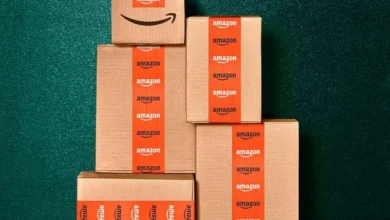
In contrast, B2B buying marketplaces act as centralized hubs for procurement. They provide a unified catalog, competitive pricing, and standardized payment mechanics across diverse suppliers. Amazon Business is the archetype, offering business-specific pricing and logistics for operating supplies. Alibaba.com serves as an international intermediary, providing escrow services through Trade Assurance to mitigate the risks inherent in overseas manufacturing, while Faire facilitates the wholesale market for independent retailers, often extending Net 60 payment terms to qualifying buyers.
The two categories are not mutually exclusive. In fact, for companies managing physical inventory, the most efficient architecture involves using a marketplace to discover and source goods, while utilizing procurement software to govern the spending authority and budget compliance of the personnel placing those orders.
The Mechanism of Procure-to-Pay: Mitigating Purchasing Drift
Purchasing drift occurs when the documentation of a transaction becomes fragmented—where an order is placed via email, confirmed in a chat application, delivered without a formal receiving log, and billed inconsistently. This lack of centralized visibility is the primary driver for adopting P2P software.
The lifecycle of a purchase under a formal P2P system follows a rigorous six-step sequence:
- Requisition: An employee submits a request within the system, specifying the item, vendor, and budget code.
- Approval Workflow: The system automatically routes the request to the appropriate manager based on predefined spending limits and departmental budgets.
- Purchase Order Issuance: Upon approval, the system generates a formal PO, ensuring the vendor has a binding document that matches the request.
- Goods Receipt: The warehouse or office manager confirms the arrival and condition of the items, updating the record to reflect what was actually received.
- Invoice Matching: The accounts payable module receives the supplier’s invoice.
- Payment Authorization: The system performs a "three-way match."
The three-way match is the cornerstone of procurement integrity. By comparing the purchase order (what was ordered), the goods receipt (what was delivered), and the vendor invoice (what is being billed) for discrepancies in quantity and unit price, the system prevents overpayment. If the PO lists ten units, the receipt records five, and the invoice claims six, the system flags the error, preventing the disbursement of funds until the discrepancy is resolved. Most organizations require this level of scrutiny to ensure financial accuracy.
Punch-Out Catalogs: Bridging the Gap
To harmonize the marketplace experience with internal governance, enterprises utilize "punch-out" catalogs. This technology allows a user to initiate a purchase within their internal procurement system, "punch out" to an external vendor’s live website (such as Amazon Business), fill a shopping cart with contract-compliant items, and return the cart data to the procurement system as a pending requisition.
This bridge eliminates the need for manual data entry and ensures that employees are shopping only from pre-approved catalogs. The data exchange typically relies on cXML (the standard in modern SaaS environments like Coupa) or OCI (a legacy EDI-based standard common in SAP-heavy environments). By configuring a punch-out integration, an organization can provide its staff with the user-friendly interface of a major marketplace while maintaining the oversight of an internal approval workflow.
Economic Implications and ROI
The financial justification for moving to a dedicated procurement platform is often rooted in the cost per purchase order. According to benchmarks from the American Productivity & Quality Center (APQC), the administrative cost to process a single purchase order can range from $14 to over $54, depending on the level of automation.
For a company processing 200 invoices per month, the transition from a manual, spreadsheet-based process to an automated system can result in significant annual savings. If a firm reduces its processing cost per invoice from $50 to $20, the annual savings total $72,000. Even after accounting for a mid-tier subscription cost of approximately $15,000 and an implementation fee of $8,000, the investment generates a positive ROI within the first year. However, for a smaller firm processing only 20 invoices per month, the software subscription fees would likely outweigh the administrative labor costs saved, reinforcing the argument that smaller teams should rely on native accounting features until they reach a higher volume threshold.
Cost Structures and Market Realities
Procurement software pricing is rarely transparent. Vendors typically employ one of four models:
- Per-user pricing: Scalable for growing teams.
- Flat-tier pricing: Fixed monthly costs based on volume buckets.
- Custom quotes: The standard for enterprise suites, often exceeding six figures.
- Bundled spend management: Offered as an add-on to existing corporate card platforms like Ramp.
The discrepancy between a $12-per-user tool and a $100,000 enterprise contract is immense. While platforms like Procurify and Precoro provide published pricing suitable for SMBs, players like Zip and Coupa operate in the "quote-only" space. These enterprise suites offer advanced capabilities—such as AI-driven intake agents and complex contract lifecycle management—that are typically unnecessary for companies with fewer than 100 employees.
Implementation and Adoption: The Human Factor
The failure of a procurement system is rarely a failure of technology; it is almost always a failure of adoption. A realistic rollout typically spans 4 to 12 weeks for mid-market firms, while enterprise-level integrations can stretch to a year.
The two most common failure points are supplier onboarding and data hygiene. If a company fails to mandate that suppliers adopt the new PO and invoicing protocols, the "maverick spending" continues, rendering the software ineffective. Furthermore, if the system is populated with duplicate vendor records and outdated pricing, the "garbage in, garbage out" principle applies.
Before committing to a platform, organizations should follow a disciplined selection checklist:
- Pilot the messiest purchase: Test the software with a real-world, complex transaction.
- Evaluate the approver interface: If the UI is cumbersome, managers will circumvent the system.
- Verify ERP integration: Ensure the platform natively syncs with the existing accounting system (e.g., NetSuite, Sage Intacct).
- Assess vendor cooperation: Confirm that key suppliers are willing to interact via the platform’s portal or punch-out mechanism.
The Decision Matrix: When to Upgrade
Small businesses should resist the urge to over-engineer their procurement stack. For organizations with fewer than 30 staff members and a limited number of suppliers, a spreadsheet-based tracking system coupled with the native PO features of QuickBooks Online is often sufficient.
As the business scales, the indicators for a necessary upgrade become clear: frequent invoice mismatches, a growing number of locations or departments requiring separate approval chains, and a reliance on ad-hoc, off-contract spending. When two or more of these signs appear, the organization should transition from manual tracking to a published-price, SMB-focused P2P tool. By adhering to this incremental approach, businesses can avoid the "procurement platform trap"—the acquisition of enterprise-grade complexity before the operational scale justifies the investment.
Related posts: