Mark Rober Reveals How Creators Can Beat AI Slop Through Real-World Authenticity and Innovation

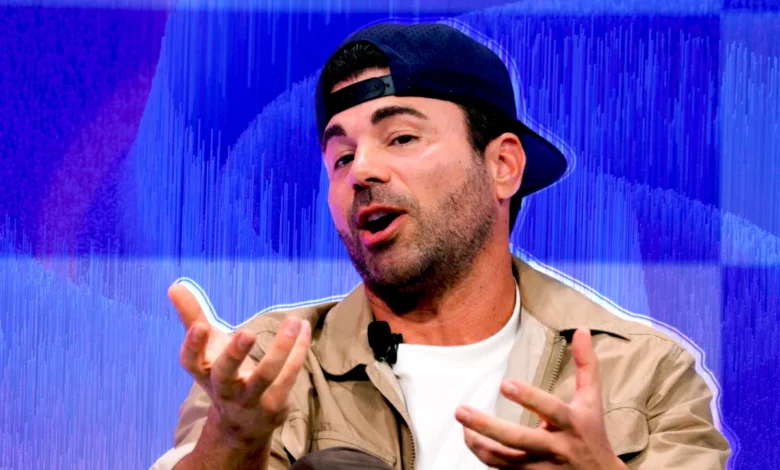
The digital landscape is undergoing a profound structural transformation, driven by the rapid proliferation of artificial intelligence tools that have democratized video production while simultaneously threatening to oversaturate the internet with low-quality synthetic media, commonly referred to as "AI slop." Amid this seismic shift, industry veterans are speaking out about how human creators can protect their livelihoods and maintain audience engagement. Mark Rober, a prominent science communicator, former NASA engineer, and YouTube powerhouse boasting over 85.7 million subscribers, has articulated a clear strategy for weathering the AI storm: a resolute commitment to real-world authenticity, tangible physical experiments, and undeniable human endeavor.
Drawing from a career built on captivating, high-production-value science experiments—such as surviving a simulated grenade blast or attempting to swim through pools of gelatin—Rober argues that the intrinsic value of content lies not merely in its visual polish, but in the undeniable truth of its execution. As algorithms and generative video models become increasingly sophisticated, the competitive advantage for digital creators is shifting away from technical wizardry and toward genuine, physical-world ingenuity.
The Rise of the Science Communicator: From NASA to YouTube Stardom
Mark Rober’s journey to becoming one of the most recognizable and respected figures in digital media is a testament to the power of combining technical expertise with engaging storytelling. Before captivating hundreds of millions of viewers on YouTube, Rober spent nearly a decade working as a mechanical engineer at NASA’s Jet Propulsion Laboratory (JPL), where he contributed significantly to the Curiosity rover project that successfully landed on Mars in 2012.
Transitioning from aerospace engineering to digital content creation, Rober leveraged his deep understanding of physics, engineering, and design to demystify complex scientific concepts for the general public. His early videos quickly captured the public imagination through sheer scale and creativity. Projects like "How to Survive a Grenade Blast," which has amassed over 100 million views, and "Can you swim in Jello?", which pulled in a staggering 224 million views, established a new benchmark for educational entertainment on the internet.
Over the years, Rober’s channel evolved from a personal passion project into a massive media operation. Last year alone, his YouTube channel generated approximately $17 million in revenue, an impressive figure that roughly matched the substantial production costs required to pull off his ambitious, real-world engineering feats. Furthermore, Rober has successfully translated his personal brand into a thriving physical enterprise with CrunchLabs, a company that designs and sells subscription maker kits intended to spark curiosity and introduce young people to fundamental science and engineering principles. Today, CrunchLabs employs more than 200 people, cementing Rober’s transition from a solo creator to a serious business leader.
The AI Conundrum: Threat and Opportunity for Digital Creators
The meteoric rise of generative artificial intelligence has introduced a complex set of challenges and opportunities for the creator economy. On one hand, AI tools have provided unprecedented efficiencies, allowing creators to scale their operations, localize content, and streamline post-production workflows.
A prime example of AI integration within the creator space is the rise of translation and localization startups. Companies like Linguana have capitalized on the demand for global reach by utilizing advanced AI dubbing and translation tools to build and manage localized YouTube channels for top creators. These services automatically translate audio, video descriptions, and thumbnails into multiple languages, enabling creators to tap into lucrative international markets without shouldering the prohibitive costs of human translation teams. In April 2025, Linguana reported generating roughly 10,000 video translations every month for hundreds of prominent YouTubers, operating on a revenue-sharing model that takes half of the newly generated income rather than charging upfront fees.
However, the democratization of production tools has a darker side. As generative video models—such as OpenAI’s Sora and various automated content generation pipelines—become cheaper, faster, and more accessible, platforms are experiencing an influx of low-effort, synthetic media. This phenomenon, widely criticized as "AI slop," threatens to drown out original voices and commoditize video production.
According to Rober, channels that rely heavily on anonymous narration, stock footage, generic animations, or purely digital simulations are facing an existential threat. When anyone can generate a slick, hyper-realistic video of a basketball trick shot or a scientific demonstration using a text prompt, the technical execution alone loses its value.
The Ultimate Defensibility: Real-World Authenticity
During a recent interview with Business Insider, Rober addressed the core philosophy that allows his channel to remain resilient in the face of algorithmic automation. He emphasized that the magic of his content rests entirely on the fact that the events depicted actually happened in the physical world.
"Do you want to see a simulation of someone dunking a basketball with a sick trick, or do you want to see someone actually do it?" Rober posed in the interview. "The fact that you know it’s real is what makes it crazy."
This principle forms what Rober describes as a "moat" around his YouTube channel—at least for the foreseeable future. By anchoring his content in physical experiments that require months of engineering, precise calculations, and genuine human risk or triumph, he creates a defensible barrier that purely synthetic media cannot replicate. While an AI can instantly generate a video of a robot solving a complex puzzle, the emotional resonance of watching a human team spend weeks building a physical contraption and experiencing genuine elation—or failure—upon testing it remains uniquely compelling.
Rober suggests that creators fighting back against the tide of AI-generated saturation must lean into hyper-authenticity, distinct personal perspectives, and tangible, real-world actions that cannot be easily replicated by a server farm running a generation model.
Fostering Curiosity in the Age of Artificial Intelligence
Beyond content creation and product manufacturing through CrunchLabs, Rober maintains a broader perspective on the psychological and educational implications of the artificial intelligence boom. As automated systems increasingly take over routine tasks, coding, and basic content production, Rober argues that human value will shift heavily toward soft skills, critical thinking, and an innate drive to understand the world.
"Curiosity is so important in this new age of AI," Rober noted, stressing that the rapidly changing economic landscape demands a commitment to continuous, lifelong learning. In an era where information can be instantly retrieved and synthesized by a machine, the ability to ask the right questions, identify novel problems, and care deeply about finding real answers becomes the ultimate human superpower.
This philosophy directly informs the mission of CrunchLabs, where educational toys and maker kits are designed not just to teach children how to build circuits or gears, but to encourage an experimental mindset. By teaching young minds how to embrace trial and error in the physical world, Rober hopes to prepare the next generation for a workforce where adaptability and hands-on problem-solving are paramount.
Industry Implications and the Future of Digital Media
The insights shared by Rober reflect a broader conversation taking place across the digital media ecosystem as platforms grapple with the influx of automated content. Media analysts note that as algorithmic feeds become saturated with synthetic material, audiences are increasingly experiencing fatigue, driving a counter-trend toward hyper-personalization, raw vlogging, community building, and verified human experiences.
Platforms like YouTube, TikTok, and Meta are simultaneously racing to implement clearer labeling systems for AI-generated content, attempting to help users distinguish between authentic human media and synthetic creations. However, the onus increasingly falls on individual creators to establish distinct brand identities that transcend mere visual presentation.
As the lines between real and synthetic media continue to blur, Mark Rober’s blueprint offers a clear path forward for creators navigating the AI era. By stepping away from the screen, engaging directly with the physical world, and delivering experiences grounded in genuine human effort, creators can build resilient brands that endure long after the novelty of synthetic media fades. In a world where anyone can prompt an algorithm to generate an illusion, the hard work of making reality happen remains the ultimate differentiator.