The digital landscape has shifted significantly since the inception of blogging, yet the core psychological driver for audience retention remains unchanged: readers subscribe to platforms that offer a promise of future value. Converting a first-time visitor into a loyal, long-term subscriber is the primary metric of success for content creators, and the most effective way to secure this commitment is by leveraging a repository of high-quality, historical content to build an expectation of ongoing excellence.
The Psychology of Audience Subscription
The decision to subscribe to a blog is rarely impulsive. It is an investment of the reader’s time and digital attention. When a visitor arrives at a blog, they are evaluating the site’s potential to enhance their knowledge, entertainment, or professional utility. To capture this interest, creators must establish credibility rapidly. Data from contemporary content marketing studies suggest that the "attention span" of a first-time web visitor is approximately eight seconds; if the value proposition is not immediately clear, the user will navigate away.
Building anticipation, therefore, is not merely a creative flourish—it is a strategic necessity. By curating the user experience to highlight the most impactful work a creator has produced, the blog transforms from a chronological feed of posts into a structured, authoritative resource.
Establishing Authority Through Historical Content
The most reliable predictor of future content quality is past performance. When a reader encounters a piece of content that resonates with their specific needs or interests, they are statistically more likely to seek out more of the same. By proactively placing the best content—often referred to as "evergreen" content—in the direct line of sight of new visitors, bloggers can bridge the gap between a single visit and a long-term subscription.

This strategy requires a departure from the "chronological trap," where the newest post is automatically the most prominent. While freshness is a component of search engine optimization, it is not always the best indicator of value for a new reader.
Strategic Implementation: The Sneeze Page Methodology
One of the most effective structural tools for managing user experience is the "Sneeze Page." A Sneeze Page is a dedicated index or category hub that aggregates a creator’s most influential, comprehensive, or popular posts on a specific topic. The term, coined in early blogging circles, suggests that a reader should be able to "catch" the value of a blog’s entire history by browsing these centralized hubs.
Technically, these pages serve three distinct purposes:
- Navigation: They reduce the friction for new users trying to find relevant information within a large archive.
- Authority Building: By grouping disparate posts into a cohesive theme, the blogger demonstrates depth of knowledge and comprehensive coverage of a subject.
- Conversion: Because Sneeze Pages are curated for maximum impact, they act as high-conversion landing zones. When placed within a sidebar or header, they provide a clear call to action for the reader to subscribe, based on the demonstrated quality of the content listed.
The Role of Data and Heat Mapping in UX Design
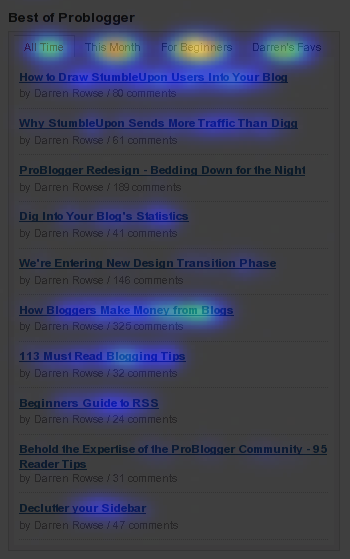
In the evolution of digital publishing, the use of heat mapping software—such as tools that track mouse movement and click frequency—has revolutionized how bloggers arrange their interfaces. In the mid-2000s, early adopters utilized heat maps to observe how readers interacted with sidebar "Best Of" sections. The data was conclusive: visitors consistently gravitated toward curated lists of popular content rather than the most recent chronological entries.
This shift in behavior led to the development of "Best Of" sidebars, which are now standard in modern web design. By isolating a subset of posts that have historically high engagement rates, bloggers can effectively "prime" a new reader. A visitor who clicks on a "Best Of" article is demonstrating a higher level of intent and interest than a passive reader, making them significantly more likely to convert to a subscriber.

Advanced Content Discovery: Landing Pages and Interlinking
Beyond static sidebars and hubs, modern content management systems allow for dynamic, context-aware content delivery. Landing page plugins can detect the source or search query of an arriving reader and serve them a customized list of posts related to their specific search terms. This creates a sense of immediate relevance, as the site appears to be a bespoke resource tailored to the reader’s specific intent.
Furthermore, internal linking strategies serve as the connective tissue of a blog’s ecosystem. By consistently hyperlinking to foundational articles within new, current posts, a creator creates a "breadcrumb" trail that encourages deeper exploration. This practice serves a dual purpose: it improves the site’s internal search engine ranking through keyword association, and it keeps the reader engaged for longer periods, increasing the statistical likelihood that they will encounter a "must-read" post that triggers the subscription action.
Chronology of Audience Engagement Strategies
The shift toward deliberate anticipation-building can be categorized into three distinct phases of blog development:
- Phase 1: The Chronological Era (Pre-2005): Blogs were primarily journals. The focus was on the "now." Subscription rates were largely organic and low-frequency.
- Phase 2: The Structural Era (2005–2010): Creators began implementing Sneeze Pages, sidebar widgets, and "Best Of" lists. The focus moved toward content curation and site architecture.
- Phase 3: The Data-Driven Era (2010–Present): The integration of behavioral analytics, AI-driven content recommendations, and personalized landing pages allows for a highly granular approach to user retention.
Official Observations on Content Strategy
Industry analysts and successful content creators have long held that the "Subscription Wall"—the psychological barrier between a reader and a subscriber—is best broken by utility. According to observations from digital media specialists, the most successful newsletters and subscription-based blogs are those that clearly state the value proposition at the point of conversion.
For instance, a blog that promises, "Receive our weekly deep-dive into [Industry X], including our top-rated guides on [Topic A] and [Topic B]," is more effective than a generic "Subscribe for updates" prompt. This transparency regarding the future value of the subscription, backed by the evidence of past quality, is the hallmark of a mature content strategy.
Broader Implications for the Digital Creator
The implications for the independent creator are clear: the content production process is only half of the equation. The other half is content management and presentation. If a creator fails to expose new audiences to their legacy work, they are essentially discarding their most valuable assets.
By treating a blog not as a fleeting news feed, but as a growing library of professional knowledge, creators can build a sustainable brand. This requires a periodic audit of existing content to ensure that the "entry points" for new readers are always optimized. When a reader feels that a blog is a living, breathing, and highly organized archive of information, the sense of anticipation for future installments becomes a natural byproduct of their experience.
Ultimately, creating anticipation is about proving to the reader that their time is being respected. When a creator takes the time to curate, link, and structure their history, they provide the audience with a map of their expertise, making the decision to join the mailing list or RSS feed an logical step in the reader’s own professional or personal development.