How Symphony AI Agents Are Transforming Small Business Operations Through Automated Orchestration

For many small business owners, the intersection of peak sales periods and operational capacity represents a critical failure point. The competing demands of strategic planning, website development, marketing execution, and customer service often lead to fragmented workflows and missed opportunities. Recent advancements in artificial intelligence have begun to address these inefficiencies, most notably through the deployment of AI-driven orchestration platforms such as Symphony. By moving beyond simple chatbot interfaces, Symphony utilizes a centralized "Maestro" architecture to manage a specialized team of AI agents, effectively delegating administrative and creative tasks to autonomous digital workers.

The Mechanism of AI Orchestration
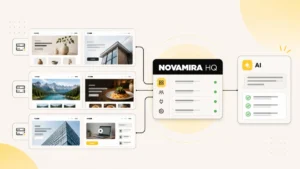
The fundamental premise of Symphony lies in its hierarchical structure. When a business owner defines a business goal—such as a Black Friday promotional campaign—the platform’s core intelligence, Maestro, decomposes this high-level objective into actionable tasks. These tasks are then assigned to specific agents, each possessing distinct roles in finance, design, content creation, or market research. This departure from single-model AI represents a shift toward "agentic workflows," where software systems do not merely answer questions but actively execute projects across connected third-party applications.
Data from industry analysts suggests that small-to-medium enterprises (SMEs) that adopt integrated AI automation can reduce administrative overhead by up to 30%, allowing human leadership to focus on long-term strategy rather than tactical implementation. The Symphony platform facilitates this transition by requiring the business owner to act as an executive, providing approval for agent-generated milestones before they are finalized.

Chronology of an Automated Sales Campaign
The implementation of an AI-driven sales strategy follows a structured, multi-phase timeline designed to ensure human oversight.
-
Phase I: Strategic Briefing (T-minus 14 days)
The process begins with an intensive prompt, where the business owner provides specific constraints. For instance, a pottery studio seeking to maximize gift voucher sales might define a clear budget, a 20% maximum discount threshold, and a specific timeframe of November 27–30. During this phase, Maestro parses these constraints to generate a project roadmap.
-
Phase II: Team Assembly and Integration (T-minus 12 days)
Maestro assembles the specialized agent team. At this stage, the user must authenticate third-party services, including Gmail, Google Calendar, and the WordPress environment via Jetpack. The integration of the Jetpack AI feature is essential here, as it provides the necessary API access for agents to modify website drafts directly. -
Phase III: Content Generation and Staging (T-minus 10 days)
Agents draft the sales page content, offer terms, and promotional copy. The system creates a draft in the WordPress Site Editor. Industry standards for AI content deployment dictate that, while AI is highly capable of drafting, the final publishing step should remain under manual control to ensure brand voice consistency and legal compliance with local consumer protection laws.
-
Phase IV: Marketing and Outreach (T-minus 7 days)
The agents produce multi-channel marketing assets, including newsletters and social media posts. These are saved as drafts within the relevant platforms, such as Gmail or social media management tools, awaiting final human approval before public release. -
Phase V: Automated Lead Management (Active Campaign Period)
Throughout the sale, agents monitor incoming inquiries and email traffic. By utilizing pre-defined logic, the agents draft responses to customer queries and offer to schedule appointments using integrated calendar data. This eliminates the "bottleneck effect" where owners are overwhelmed by manual correspondence during high-traffic events.
Technical Infrastructure and Connectivity
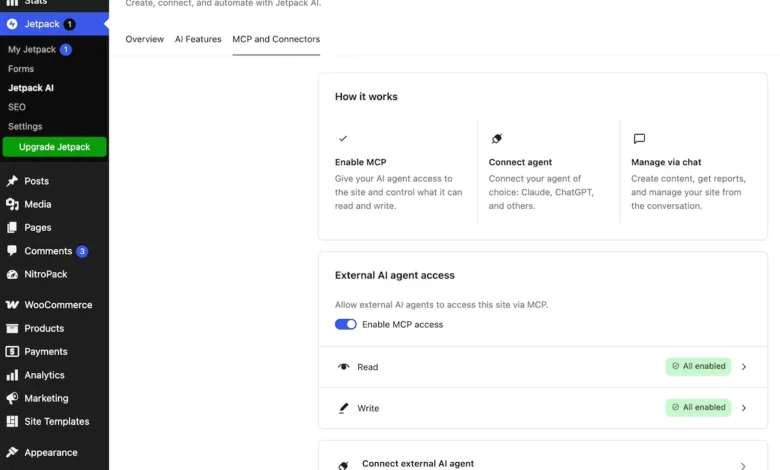
The efficacy of these AI teams is tethered to the quality of their connections. Symphony relies on the "Connectors and MCPs" (Model Context Protocol) framework to interact with external tools. A critical component of this infrastructure is the "External AI agent access" toggle within the WordPress environment. Without the proper configuration of these permissions, the agents are unable to pull live data from the website or push updates to the backend.
Security professionals emphasize that while these connections enhance productivity, they require strict adherence to data hygiene. Because agents are granted access to read and organize emails, businesses with shared inboxes are advised to create dedicated service accounts. This practice ensures that the AI interacts only with relevant business communications, isolating sensitive personal data.

Implications for Business Productivity
The shift toward agentic AI has profound implications for the scalability of small businesses. Previously, scaling a business required either a linear increase in headcount or a significant sacrifice in the quality of customer interaction. Symphony allows for a "force multiplier" effect, where a single operator can manage the output of what would traditionally require a three-person marketing and administrative team.
However, the reliance on AI credits presents a new variable in operational costs. Advanced, multi-step processes—such as continuous email monitoring and automated follow-up sequences—consume more credit resources than simple text generation. Therefore, professional-tier subscriptions are generally recommended for businesses that intend to maintain these automated workflows on a permanent basis.

Official Perspectives and User Feedback
Early adopters of Symphony have noted that the system’s primary value is not in its ability to generate perfect output on the first attempt, but in its ability to "learn" from corrections. When a business owner provides feedback—such as requesting a change in tone for a social media post—the system incorporates those preferences into its latent model for the duration of the project.
This feedback loop is central to the "Maestro" design. By allowing users to toggle "Routines" on and off, the platform avoids the common pitfall of over-automation. Business owners maintain the ability to intervene in the agent’s decision-making process at any time, which is a critical feature for maintaining brand authenticity.

Broader Economic Impact
The rise of platforms like Symphony mirrors a broader trend in the global digital economy: the democratization of high-level management tools. By embedding sophisticated project management capabilities into a chat-based interface, these tools lower the barrier to entry for solo entrepreneurs. As these AI agents become more adept at handling complex, multi-modal tasks, the gap between the operational capabilities of a small business and a large corporation is expected to narrow significantly.
Furthermore, the requirement for human oversight ensures that these tools function as assistants rather than replacements. The "human-in-the-loop" model remains the standard for responsible AI deployment, particularly in sectors where direct customer engagement and financial transactions are involved.

Future Outlook
As these tools evolve, the next generation of AI orchestration is expected to feature deeper integration with e-commerce analytics, potentially allowing agents to adjust pricing strategies in real-time based on inventory levels and customer demand. For now, the current iteration provides a robust framework for managing the logistical complexities of seasonal sales.
Small business owners looking to adopt these technologies should prioritize establishing a clear digital foundation—ensuring that their websites, calendars, and email systems are properly structured—before integrating AI agents. By viewing the AI team as a human-like department that requires clear instructions, regular briefings, and periodic performance reviews, owners can successfully transition from manual task management to a highly efficient, orchestrated operation.

The integration of such systems is no longer a matter of competitive advantage, but rather an emerging necessity for those looking to survive in an increasingly fast-paced digital marketplace. As the technology matures, the ability to effectively "manage" an AI team will likely become as essential as any traditional business management skill.