Sender vs Brevo: A Comprehensive Analysis of Leading Email Marketing Platforms for Modern Businesses

The landscape of digital marketing has undergone a profound transformation over the last decade, evolving from simple newsletter distribution into a complex ecosystem of automated customer journeys, multichannel communication, and artificial intelligence-driven engagement. As businesses increasingly prioritize retention and direct-to-consumer relationships, the selection of an email service provider (ESP) has become a critical strategic decision. Among the most prominent contenders in this space are Sender and Brevo (formerly known as SendinBlue), both of which have established dominant positions by offering distinct value propositions to small-to-medium enterprises (SMEs) and scaling ecommerce operations.
The Evolution of Email Marketing Infrastructure
To understand the current competition between Sender and Brevo, one must look at the historical trajectories of both platforms. Brevo began its life as SendinBlue, a company that carved out a niche by focusing on transactional email reliability—a vital necessity for growing web applications and online stores. Over the years, it transitioned into an all-encompassing marketing suite, integrating a Customer Relationship Management (CRM) system, WhatsApp, and SMS capabilities to address the "all-in-one" platform trend.
Conversely, Sender has positioned itself as the high-utility, low-friction alternative. It was built with a philosophy of accessibility, aiming to remove the technical barriers that often plague beginners. While Brevo expanded its footprint by adding complex layers of CRM functionality, Sender focused on refining the core user experience: the drag-and-drop editor, automation workflows, and high-deliverability templates that allow businesses to launch campaigns within minutes rather than hours.

Side-by-Side Comparison: Strategic Feature Sets
When analyzing these platforms for enterprise or small business adoption, the disparity in their architecture becomes clear. Brevo operates as a unified communication hub. Its architecture is built around a centralized CRM that tracks every touchpoint, from live chat inquiries to WhatsApp messages and email opens. This makes it an ideal candidate for firms that require a granular view of the customer lifecycle.
Sender, by contrast, operates with a laser focus on email and SMS efficiency. It does not attempt to replicate the full breadth of a dedicated CRM; instead, it offers robust segmentation tools that allow users to group subscribers based on behavior, purchase history, and engagement. This approach significantly reduces the "feature bloat" that often leads to higher learning curves in competing platforms.

| Feature | Sender | Brevo |
|---|---|---|
| Primary Focus | Email & SMS Marketing | Multichannel CRM Suite |
| Pricing Model | Subscriber-based | Volume-based (Email) |
| CRM Integration | External via API/Zapier | Native, Built-in |
| Automation | Unlimited Workflows | Tiered/Limited Workflows |
| Transactional Email | Native support | Native support |
| Ideal User | Small/Mid-sized Business | Scaling/Multichannel Firm |
Financial Implications and Scaling Models
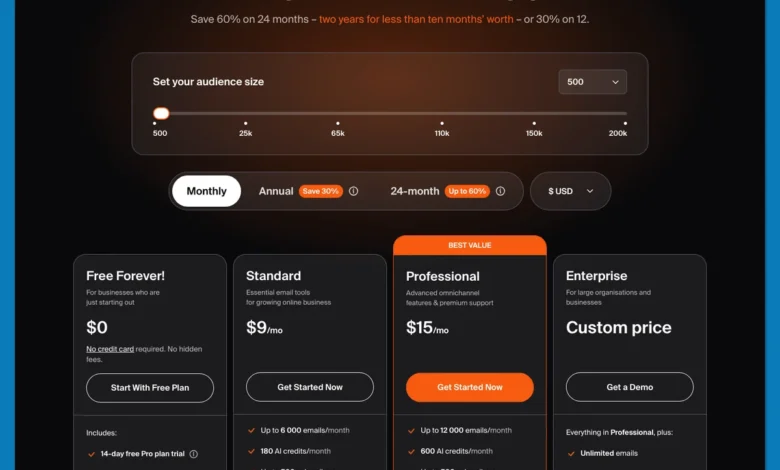
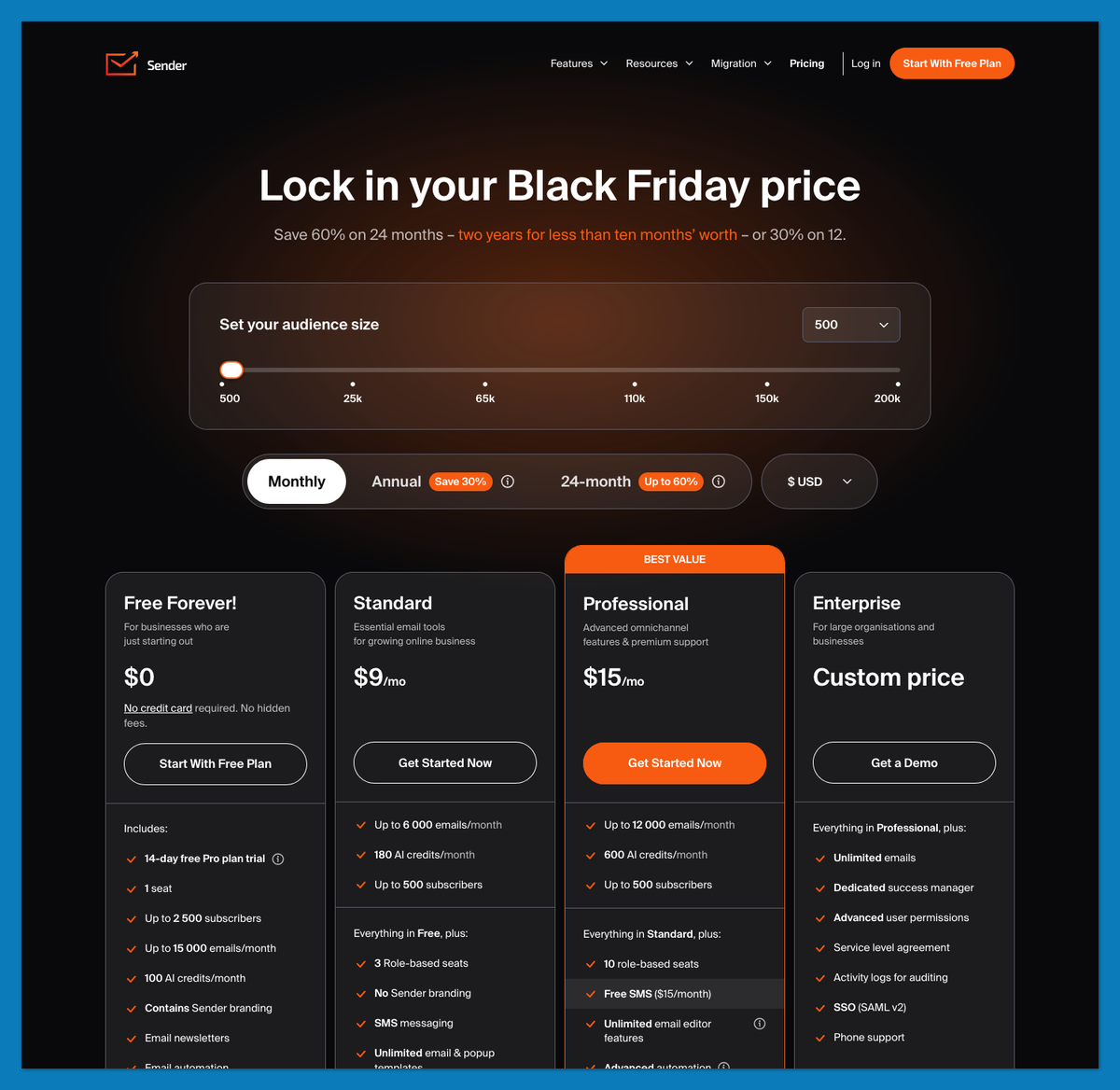
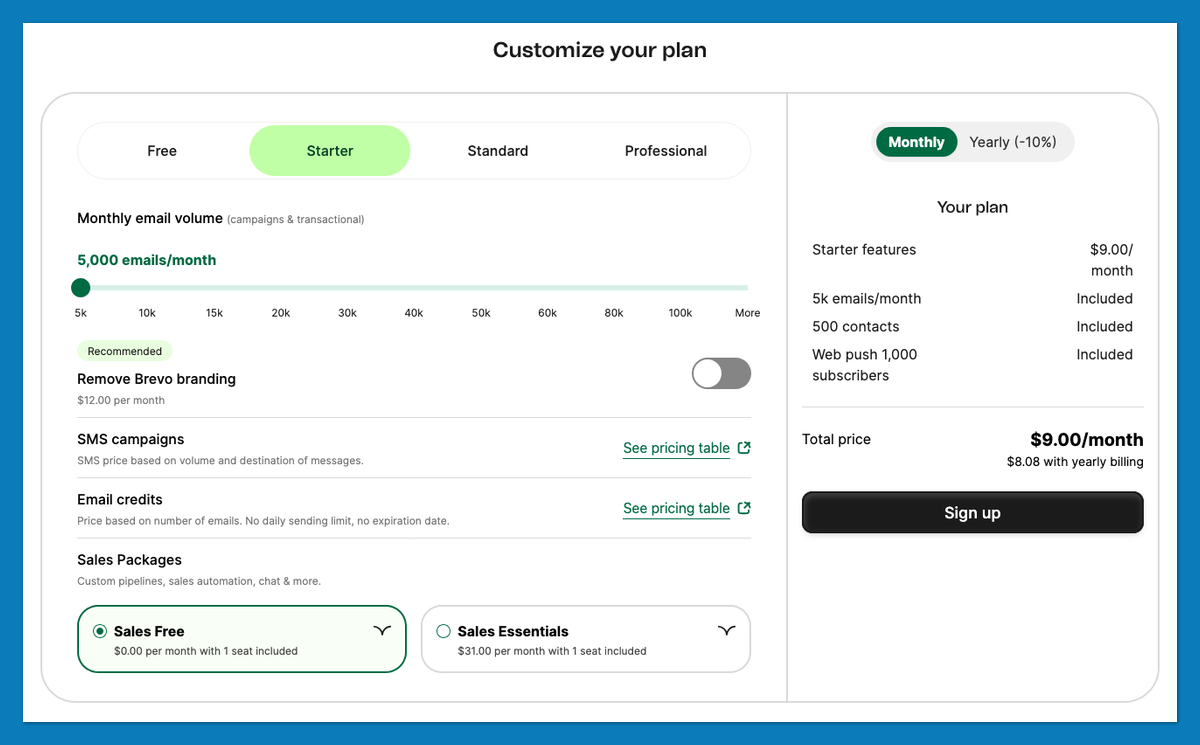
The pricing models employed by these two providers represent fundamentally different strategies for revenue growth. Sender utilizes a subscriber-based model. For a small business with 2,500 subscribers, this is exceptionally cost-effective, often allowing for 15,000 emails per month on a free tier that includes access to most premium features, such as automation and segmentation. This model favors businesses with a steady, predictable audience size.
Brevo utilizes a volume-based pricing model, which is often more advantageous for high-volume senders who do not necessarily have a large list of unique subscribers. Because Brevo caps contacts differently based on the volume of emails sent, it creates a unique scalability path. A company sending high-frequency transactional alerts but maintaining a smaller list of contacts will often find Brevo to be the more economical choice. However, the requirement to pay additional fees to remove platform branding on lower tiers—a cost that is often built into higher-tier plans elsewhere—is a factor that prospective users must account for in their annual budgeting.
Analyzing the Impact of AI and Automation
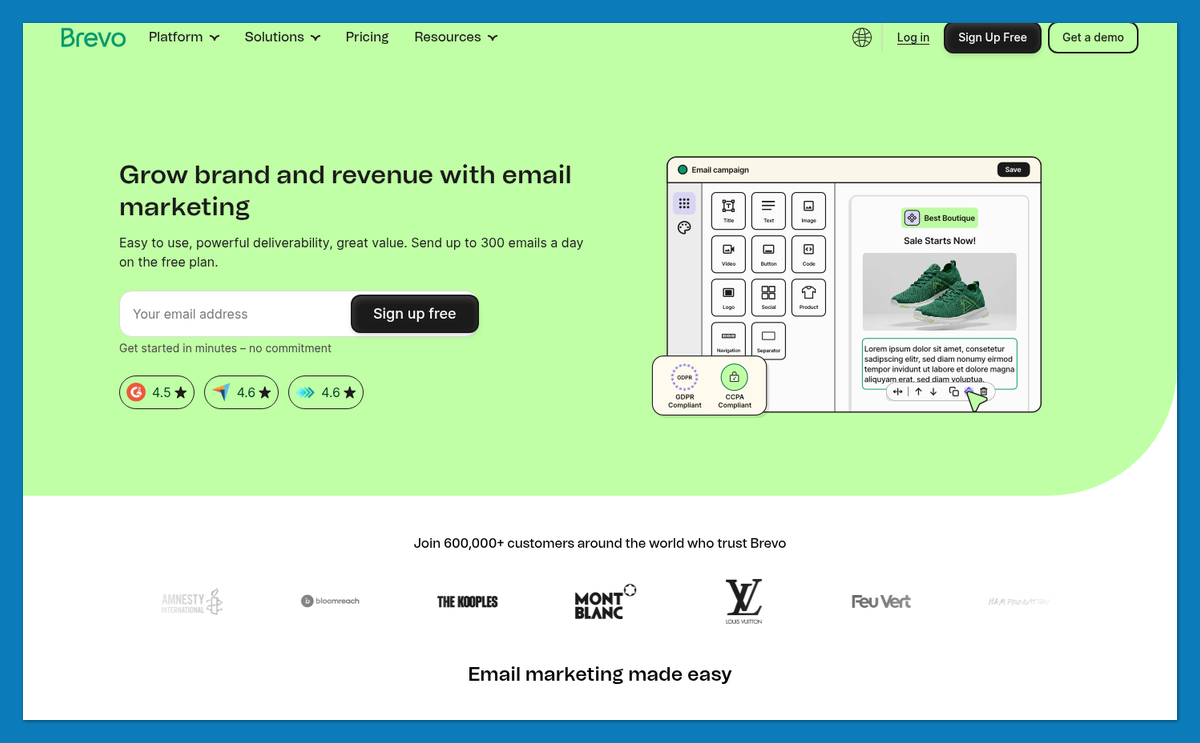
The integration of artificial intelligence is the current frontier for both platforms. Brevo’s "Aura AI" has been designed to act as an automated marketing assistant, offering predictive send times, subject line optimization, and automated content generation. This is particularly valuable for teams that lack dedicated copywriters or data scientists, as it allows for the implementation of complex, data-backed strategies with minimal manual intervention.
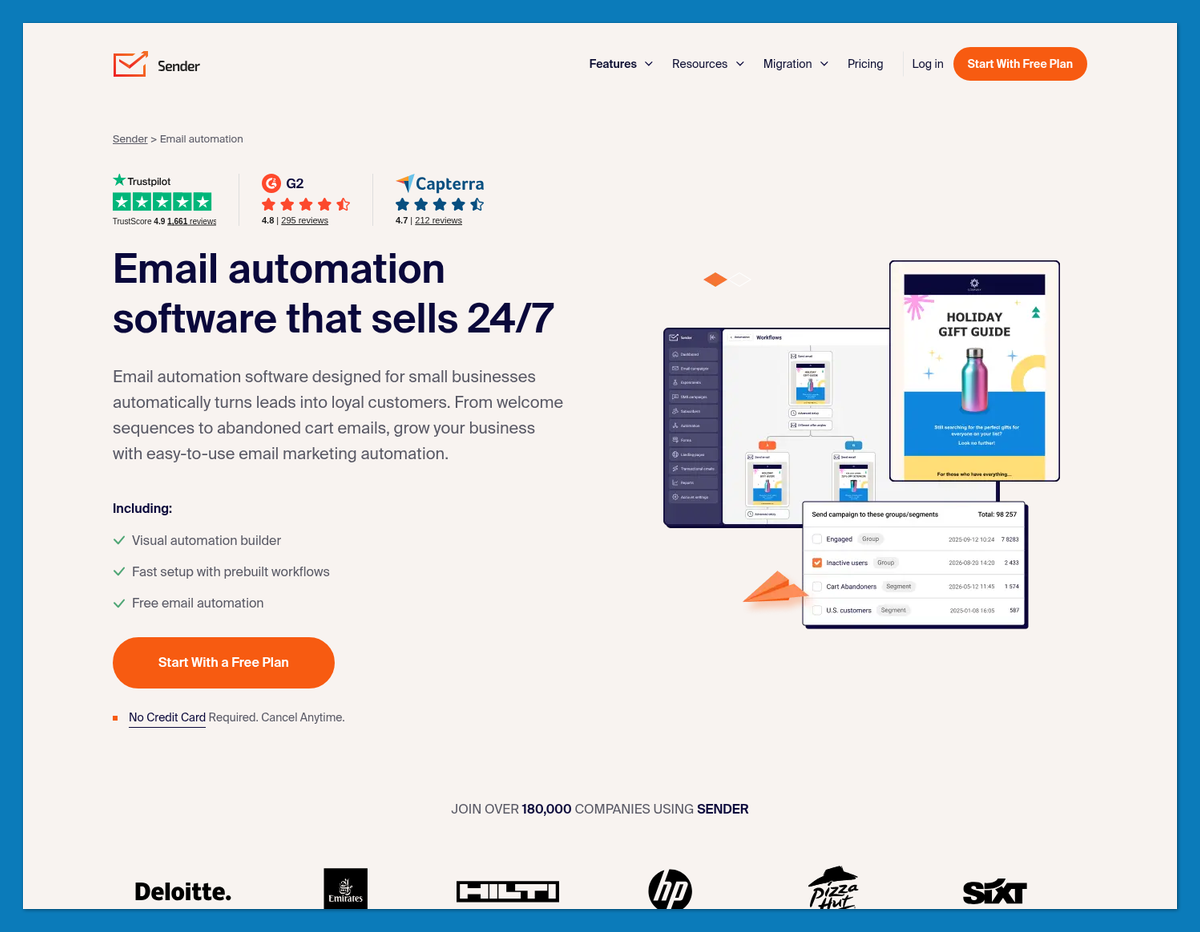
Sender has adopted a more targeted approach to automation. Rather than focusing on expansive, multi-layered AI, it provides a comprehensive library of 79 pre-made automation templates. These templates cover the most critical ecommerce needs, such as abandoned cart recovery, welcome sequences, and win-back campaigns. By focusing on these proven workflows, Sender allows users to deploy high-converting strategies immediately, relying on the platform’s ease of use to offset the need for more complex, AI-driven predictive modeling.
Deliverability and Technical Reliability
Deliverability remains the single most important metric for any ESP. Both Sender and Brevo maintain high standards for domain authentication (SPF, DKIM, DMARC), which are essential for avoiding spam filters. However, their approaches to infrastructure management differ.
Brevo’s history as a transactional email service gives it a structural advantage for firms requiring high-volume, reliable delivery for time-sensitive communications, such as order confirmations or password resets. The platform offers sophisticated IP management and warmup plans, though these are typically reserved for higher-tier users.
Sender, while perhaps less focused on the enterprise-grade infrastructure of massive global firms, has cultivated a strong reputation for reliability among SMEs. By providing dedicated IP access at lower tiers compared to many competitors, it allows smaller businesses to protect their sender reputation without the prohibitive costs associated with enterprise email services.
Strategic Recommendations for Business Adoption
The decision between Sender and Brevo should be dictated by the business’s current stage of growth and its long-term communication strategy.
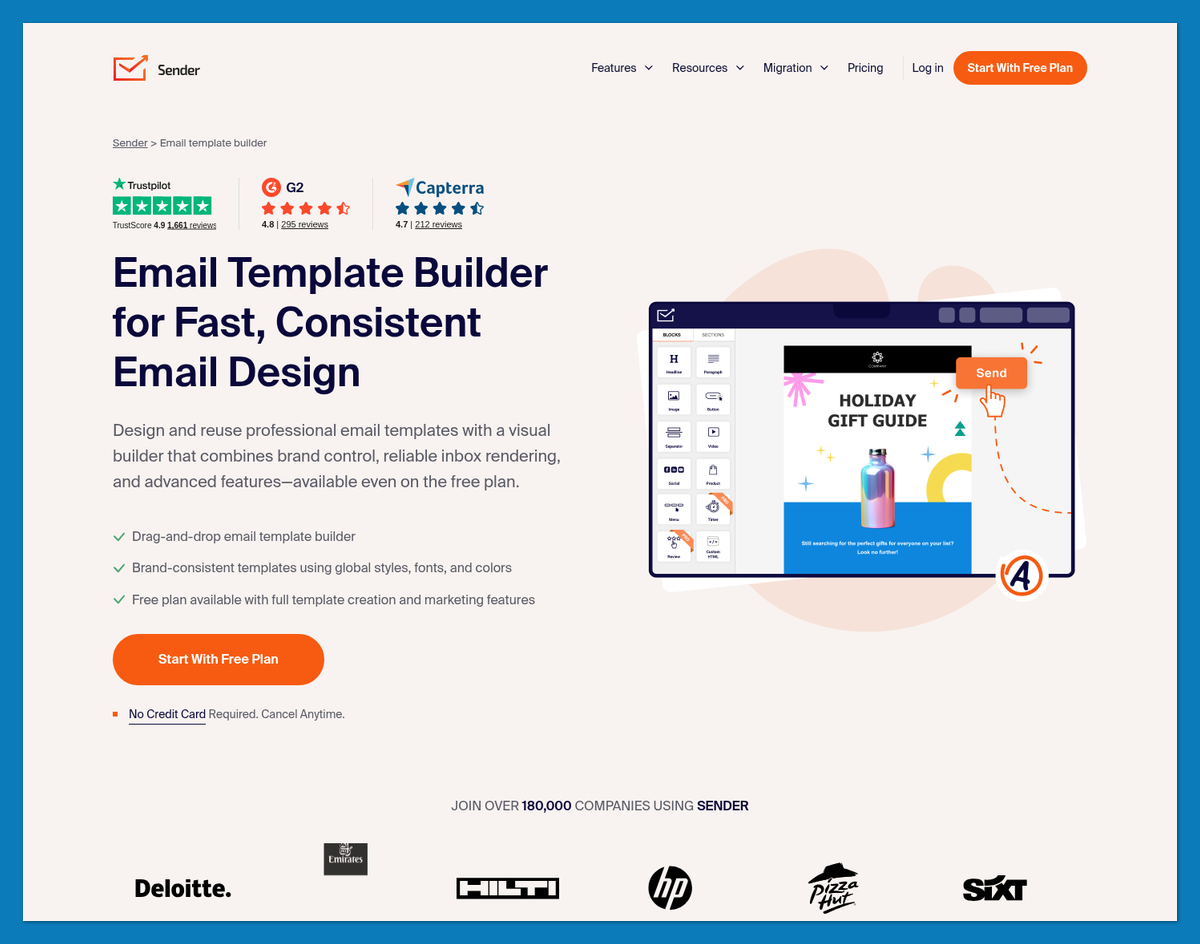
For startups and small businesses that require a lean, efficient, and cost-effective way to engage their audience, Sender is the logical choice. Its intuitive interface and generous free tier mean that a business can achieve professional-level results without needing a dedicated IT team. The inclusion of free heatmaps and automation on lower tiers is a significant value-add that provides immediate insight into customer behavior.
For larger organizations or companies that are rapidly scaling, Brevo is the superior solution. Its ability to manage multiple communication channels—SMS, WhatsApp, and live chat—from a single CRM dashboard is a competitive advantage that can significantly reduce the complexity of customer support and marketing operations. While it carries a steeper learning curve and a more complex pricing structure, the long-term benefits of a consolidated customer data profile often outweigh the initial training and implementation costs.
Conclusion
The competition between Sender and Brevo reflects the broader maturation of the digital marketing industry. As platforms become more specialized, the burden of choice shifts from "which tool is better" to "which tool is better aligned with my organizational goals." Businesses that prioritize ease of use and rapid deployment will find an ideal partner in Sender, while those that require deep integration and a unified multichannel communication strategy will find the capabilities of Brevo to be an essential asset. As both platforms continue to iterate on their AI capabilities and automation tools, the gap in technical performance continues to narrow, leaving the user experience and strategic fit as the final arbiters of success.