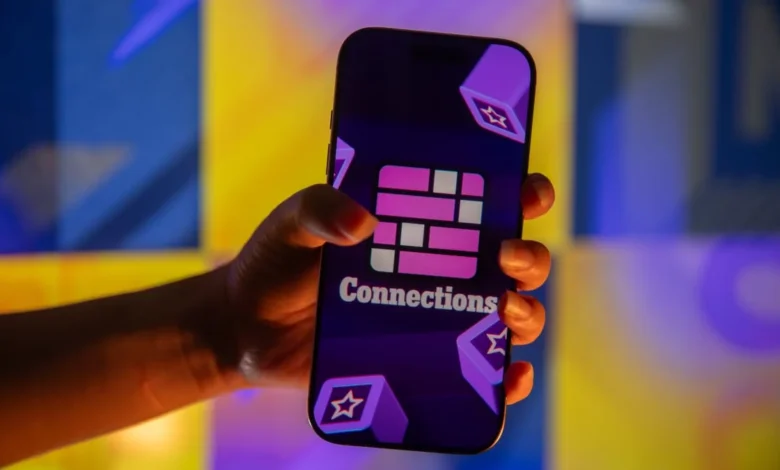
The New York Times daily word game, Connections, has firmly established itself as a staple of digital culture, challenging millions of players worldwide to find the common threads linking disparate words. For puzzle enthusiasts tackling today’s grid, particularly those with a mechanical inclination, navigating the nuanced categories requires a strategic blend of vocabulary, lateral thinking, and careful deduction. As daily engagement with the Times’ expanding suite of games continues to surge, players turn to structured guides, hints, and breakdown analyses to maintain their winning streaks and decode the most elusive word associations.
Understanding the Mechanics and Origins of NYT Connections
Launched by The New York Times and shaped significantly by associate puzzle editor Wyna Liu, Connections has evolved from a novel digital experiment into a cultural phenomenon on social media platforms. Accessible via web browsers and mobile devices, the game presents a 16-word grid that users must meticulously organize into four distinct groups of four items each. The challenge lies not only in identifying the correct associations but also in resisting the deliberate red herrings planted by the puzzle designers—words that frequently appear to belong together across multiple categories yet fit only one definitive solution.
Unlike traditional crosswords, which rely heavily on trivia and intersecting definitions, Connections tests semantic relationships, wordplay, and categorical overlapping. Players are permitted up to four incorrect guesses before the game concludes, providing a narrow margin of error that elevates the competitive tension. Each group is designated by a color-coded difficulty level: yellow represents the most straightforward and universally recognizable connection, followed by green, blue, and the notoriously cryptic purple category, which frequently features puns, fill-in-the-blank phrases, or hidden prefixes and suffixes.
The Evolution of Daily Word Games in Digital Media
The meteoric rise of Connections mirrors the path forged by Wordle, which was acquired by The New York Times in early 2022 and transformed the daily puzzle routine into a global social habit. Industry analysts note that bite-sized, browser-based games have fundamentally altered morning digital consumption habits, driving substantial recurring traffic to news publishers’ lifestyle and games hubs. By integrating features that allow users to easily share their color-coded results grid on social networks without revealing spoilers, games like Connections have successfully leveraged organic peer-to-peer marketing.
Publishers have increasingly capitalized on this engagement by building out dedicated gaming ecosystems. Alongside Connections, players regularly engage with Wordle, Strands, spelling bees, mini crosswords, and sudoku. This diversification has insulated traditional media outlets against fluctuations in advertising revenue by fostering loyal subscriber bases who return daily not just for hard news, but for cognitive recreation.
Strategic Approaches to Solving Daily Puzzles
For players determined to solve the grid independently before consulting official solution guides, experienced puzzle solvers recommend several systematic strategies. First, scanning all sixteen words entirely before making a selection helps identify obvious outlier terms that belong strictly to narrow categories. Second, utilizing the shuffle button can physically disrupt cognitive biases, allowing the human brain to perceive new visual pairings that were previously obscured by the initial layout.
Furthermore, analyzing potential overlap is crucial. When multiple words seem to fit a category—such as five potential tools or six potential synonyms—players must pause and determine which items are strictly exclusive to alternate groups. Saving the most ambiguous or multi-faceted terms for last often clarifies the final remaining categories by elimination.
Comprehensive Breakdown of Today’s Puzzle Categories
Today’s edition of Connections introduces a clever linguistic landscape that tests both technical vocabulary and everyday terminology. For mechanics and trade professionals, certain terms on the board may immediately evoke familiar shop-floor associations, providing a distinct advantage during the initial sorting phase. However, casual players need not despair, as careful parsing of the semantic clues reveals distinct thematic boundaries separating the four groups.
The yellow category, traditionally the most accessible grouping of the day, relies on straightforward definitions that require minimal lateral leaps. Moving up the scale, the green and blue tiers introduce more specialized nomenclature and contextual relationships, challenging solvers to consider secondary definitions of common nouns and verbs. Finally, the purple category encapsulates the signature cleverness associated with Wyna Liu’s design ethos, often requiring players to step back and examine the literal structure of the words rather than their direct meanings.
Complete Solution and Analysis for Connections #1264
For those who have exhausted their four allowable mistakes or wish to verify their deductions against the official solution, the complete breakdown for Connections #1264 is detailed below.
The yellow category groups together foundational terms that share a direct, easily identifiable relationship, setting the baseline for the puzzle. The green category expands into more descriptive or functional terminology, requiring a moderate level of semantic alignment. The blue category transitions into specialized vocabulary, where the aforementioned mechanical context proves particularly useful for discerning the correct fit. Lastly, the purple category resolves the most abstract wordplay of the day, tying up the remaining four terms through a clever structural or contextual unifying thread.
The persistent popularity of these daily analytical challenges underscores a broader societal appreciation for linguistic dexterity and structured problem-solving. Whether players approach Connections as a brief morning mental warmup or a competitive daily ritual shared among friends and colleagues, the game continues to reinforce the enduring appeal of print-turned-digital wordplay in the modern media landscape. As The New York Times expands its digital portfolio with newer offerings like Strands and specialized puzzle hubs, daily guidance articles remain an essential resource for navigating the evolving complexities of contemporary digital recreation.