How An Unconventional Career Path And Strategic Retrenchment Built Unreal Candy Into America’s Leading Health-Conscious Confectionery Brand

The modern consumer packaged goods landscape is notoriously unforgiving, especially for emerging brands attempting to disrupt legacy giants that have dominated grocery store shelves for generations. Yet, amidst the fiercely competitive confectionery market, Unreal Candy has managed to carve out a dominant position as the largest better-for-you chocolate brand in the United States. Behind this meteoric rise is a masterclass in strategic contraction, relentless product quality focus, and unconventional leadership. At the helm is CEO Kevin McCarthy, whose improbable journey from political campaigns to the boardroom offers a compelling blueprint for modern entrepreneurial success.
McCarthy’s trajectory challenges the conventional corporate wisdom that a specialized resume and decades of industry experience are prerequisites for executive leadership. Entering the food and beverage sector at just 22 years old with zero background in manufacturing, supply chain logistics, or culinary arts, McCarthy joined Unreal Candy in 2014 when the enterprise was operating with a skeletal staff of only three employees. Fresh from working on a congressional campaign, he brought an outsider’s perspective to an industry historically bound by rigid traditions. Over the subsequent decade, that perspective helped scale Unreal into a ubiquitous presence, with its products now stocked in approximately 35,000 retail locations across the United States and Canada.
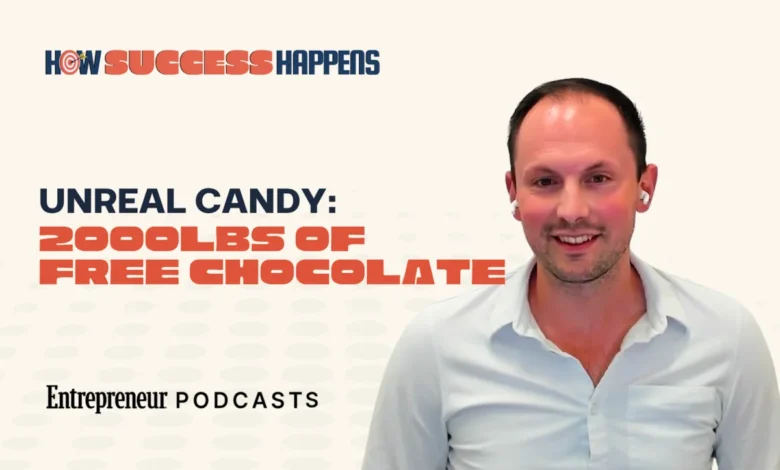
The story of Unreal Candy’s ascent was recently detailed during an episode of the business and leadership podcast How Success Happens, where McCarthy outlined the calculated risks, operational recalibrations, and cultural philosophies that transformed a struggling startup into a category leader. Analyzing McCarthy’s insights reveals five fundamental operational pillars that propelled the brand to national prominence, offering actionable lessons for founders navigating early-stage growth and market expansion.
The Origins and Early Vulnerabilities of Unreal Candy
To understand the magnitude of Unreal’s current market penetration, one must examine the volatility of its early years. Founded in 2011 with a mission to eliminate artificial ingredients, high-fructose corn syrup, and hydrogenated oils from traditional candy favorites, the brand initially experienced a massive wave of consumer interest. Capitalizing on the growing public demand for cleaner, more transparent food options, the company expanded at a breakneck pace, quickly securing distribution in tens of thousands of retail outlets.
However, this rapid early expansion proved to be a double-edged sword. The company’s foundational infrastructure, supply chain stability, and organizational learning curves failed to keep pace with its commercial footprint. According to McCarthy, the business was attempting to scale operations before mastering the foundational mechanics of sustainable growth. The enterprise lacked the operational maturity required to support nationwide distribution effectively, leading to critical friction points in quality control, inventory management, and consumer retention.
Faced with mounting operational strain, leadership made a bold, counterintuitive decision that ultimately saved the company: they radically contracted their market presence.
Strategic Retrenchment: Why Shrinking Can Be the Smartest Growth Move
When McCarthy stepped into his role in 2014, the brand made the drastic decision to pull back from the national stage. Unreal plummeted from a peak distribution of approximately 34,000 stores down to a mere 38 retail locations. For many venture-backed startups, such a dramatic retraction would signal an impending death spiral. For Unreal, it was a deliberate strategy of operational triage.
"We were trying to do way too much way too quickly, and we weren’t learning at an appropriate pace," McCarthy explained during his podcast appearance.
By pulling back to a localized, manageable footprint, the leadership team created a controlled environment in which they could closely monitor supply chains, evaluate consumer feedback loops, and refine product formulations without the overwhelming pressure of national inventory demands. This intentional cooling-off period allowed the company to master the fundamentals of its business model. Once the core operational metrics were optimized and profitability was secured at a micro level, Unreal methodically began rebuilding its retail footprint, stepping back onto shelves one region at a time.
Business analysts frequently point to Unreal’s strategic shrinkage as a textbook example of disciplined enterprise management. In an economic climate that often encourages startups to prioritize top-line revenue growth and vanity metrics over sustainable unit economics, Unreal’s willingness to scale backward in order to move forward underscores the critical importance of operational readiness.
The Bite Test: Prioritizing Product Integrity Over Marketing Spend
In the consumer-packaged-goods sector, emerging brands often allocate massive proportions of their early capital to digital advertising, influencer partnerships, and aggressive promotional campaigns. McCarthy, however, maintains that no amount of marketing expenditure can compensate for a subpar product experience, particularly within the food and beverage industry.
Unreal’s core philosophy hinges on the concept that healthier alternatives to beloved comfort foods must not feel like a compromise. If a consumer purchases a healthier chocolate peanut butter cup expecting an indulgence, the product must meet—or exceed—the sensory satisfaction of its mainstream, artificially laden competitors. McCarthy refers to this critical juncture as "the moment of truth."
"The bite is the moment of truth," McCarthy noted. "When you have a big name like Unreal, you need to deliver on the taste."
This uncompromising commitment to flavor and texture has driven exceptionally high repeat-purchase rates for the brand. Rather than relying on transient advertising hooks to capture first-time buyers, Unreal leverages product excellence to naturally cultivate organic brand advocacy. Satisfied consumers organically transition into the brand’s most powerful marketing engine through word-of-mouth recommendations, social media sharing, and organic retail pull. The strategic implication for early-stage founders is clear: before allocating financial resources to customer acquisition campaigns, leadership must ensure that the product possesses intrinsic merit capable of earning a secondary purchase entirely on its own.
Cultivating Market Intelligence Through Employee-Centric Perks
Corporate culture often manifests in superficial perks designed to boost morale, such as ping-pong tables, catered lunches, or generic wellness stipends. At Unreal, however, employee perks are strategically engineered to sharpen market awareness and drive collaborative product innovation.
The company maintains a unique, open-ended policy regarding product consumption: employees are permitted to take home as much chocolate as they desire—not only from Unreal’s own product lines but also from competing confectionery brands available on the market. This policy serves a dual purpose. It fosters a transparent, consumer-centric internal culture while transforming every staff member into an active market researcher.
Throughout the year, Unreal’s internal team consumes significant quantities of confectionery products, systematically analyzing competitor formulations, packaging shifts, and emerging flavor trends. This continuous exposure fuels rigorous, data-driven internal debates. For instance, when developing a new peanut butter center, the team will sample thousands of iterations, debating minute textural details such as whether the filling should lean gritty, crunchy, or ultra-smooth.
McCarthy emphasizes that while this collaborative environment ensures every team member has a voice in product development, decision-making ultimately requires decisive action. "Everyone gets a voice, but then we pick a path and we move forward," he stated. This balance of democratic ideation and executive execution prevents analysis paralysis while keeping the entire organization hyper-focused on market trends.
Maintaining Emotional Equilibrium Amid Scale and Success
Leadership burnout and corporate volatility often stem from extreme emotional reactivity to market fluctuations. A sudden surge in sales can lead to overconfidence and overexpansion, while an unexpected supply chain disruption or missed quarterly target can induce panic and erratic strategic pivots.
McCarthy’s leadership philosophy is anchored in radical emotional equilibrium. He advocates for maintaining a steady, even keel regardless of external circumstances, famously articulating a philosophy that views both extreme highs and lows with guarded caution.
"You can never get too excited. You can never get too down," McCarthy observed. Expanding on this mindset, he added a nuanced perspective on corporate milestones: "I don’t like surprises that are bad. I also don’t like surprises that are good because probably we’re not prepared for them."
This philosophy reframes how an organization processes major commercial victories. When Unreal secures a massive distribution partnership with a retail behemoth like Costco, leadership does not treat the achievement as a finish line to be celebrated indefinitely. Instead, landing a major retail account is viewed strictly as the activation point of a demanding new operational phase—a signal that the enterprise must immediately rise to meet heightened volume demands and execution standards. By treating success as the beginning of a new to-do list rather than a cause for complacency, Unreal safeguards itself against the operational vulnerabilities that plague rapidly growing consumer brands.
Actionable Frameworks for Aspiring Entrepreneurs
For independent creators, home-kitchen entrepreneurs, and early-stage founders who frequently hear encouragement from peers to commercialize their products, McCarthy offers a grounded, step-by-step methodology.
The initial phase of building a scalable brand requires absolute clarity regarding target demographics and unique value propositions. Founders must explicitly define who their product serves and articulate precisely why it offers a superior alternative to existing market options. While it is vital to harbor expansive, long-term ambitions of building a nationally recognized household brand, founders must remain anchored in the unglamorous, day-to-day operational realities required to achieve those goals.
"You’re gonna take step one, but there’s gonna be step two million someday down the road," McCarthy advises. This perspective serves as a vital antidote to the overnight-success narrative frequently perpetuated in modern media. Sustainable business building requires weathering near-failures, managing microscopic details, and executing sequential, incremental milestones over extended periods.
Broader Industry Implications and Market Outlook
Unreal Candy’s trajectory reflects a broader structural shift within the global food and beverage sector. Modern consumers—particularly Millennials and Generation Z—are increasingly prioritizing transparency, ingredient integrity, and corporate social responsibility without compromising on sensory indulgence. Legacy confectionery conglomerates have been forced to reformulate traditional recipes, acquire emerging better-for-you brands, or launch dedicated health-conscious subsidiaries to counter the market share captured by independent disruptors like Unreal.
However, the challenges faced by Unreal in its early years—and subsequently overcome through strategic discipline—highlight the barriers to entry inherent in scaling physical product brands. Supply chain complexities, retail slotting fees, inventory management, and shifting macroeconomic pressures present formidable hurdles that capital alone cannot always resolve. Unreal’s success demonstrates that long-term viability in the consumer goods space requires a rare synthesis of product integrity, operational restraint, emotional resilience, and a willingness to course-correct drastically when growth outpaces capability.
As Unreal continues to expand its footprint across major retail channels—including widespread availability at Whole Foods, Target, and Costco—the brand serves as a compelling case study in modern corporate leadership. By prioritizing the consumer experience, treating employee engagement as a strategic asset, and navigating milestones with operational sobriety, McCarthy and his team have redefined what it means to build a sustainable, values-driven consumer brand in the twenty-first century.