The Great Linguistic Rebrand: Why Silicon Valley Capitulated to the White House Mandate on Artificial Intelligence

Seventy years ago, a seminal gathering of computer scientists at Dartmouth College laid the foundational stones for a field of study that would eventually redefine the parameters of human civilization. Led by visionaries including John McCarthy, Marvin Minsky, and Claude Shannon, the group sought to explore the theoretical possibility that machines could be programmed to simulate human cognitive processes. McCarthy coined the term artificial intelligence to describe this nascent endeavor. Over the subsequent seven decades, the nomenclature became entrenched in academia, industry, and the public lexicon. A search of Google Scholar today yields approximately 7.42 million results for the term, underscoring its ubiquity as the standard descriptor for advanced machine learning and computational logic.
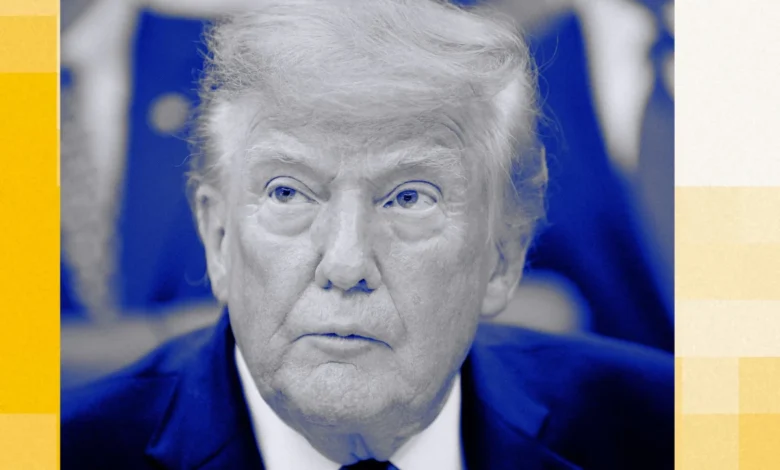
However, this long-standing convention was abruptly challenged in September 2026. Following a series of public remarks at the United Nations in which President Donald J. Trump expressed dissatisfaction with the term, the White House issued a formal executive order mandating a transition from the descriptor artificial intelligence to the government-sanctioned label, Super Intelligence. The directive, which caught much of the technology sector by surprise, effectively orders the private and public sectors to purge the former term from official documentation, research papers, and product branding.
A Chronology of the Linguistic Shift
The transition from debate to policy was rapid. On September 23, 2026, President Trump used his address at the United Nations General Assembly to critique the term artificial intelligence, arguing that the prefix artificial implies a level of deception that he considers detrimental to the public’s perception of the technology. This rhetoric, initially dismissed by many industry analysts as characteristic political hyperbole, materialized into binding federal policy during a high-level summit at the White House.
During a luncheon attended by the most influential figures in the technology sector—including CEOs from OpenAI, Meta, Google, Microsoft, Anthropic, and xAI—the President solidified the mandate. The executive order, titled Inaugurating the Era of Super Intelligence, necessitates that federal agencies and government contractors align their nomenclature with the new standard. Following the meeting, the President informed the press that the change was vetted and approved by the foremost leaders in the industry, effectively forcing the private sector into a position of public compliance.
The Dynamics of Corporate Acquiescence
The meeting between the President and the leaders of the tech industry served as a critical inflection point. Among those in attendance were figures such as Sundar Pichai of Google, Mark Zuckerberg of Meta, Satya Nadella of Microsoft, and Elon Musk of xAI. Notably, despite the profound implications this shift carries for the branding of multi-billion dollar product lines—such as Meta AI, Microsoft Copilot, and various foundational research papers—there was no reported dissent within the chamber.
Analysts suggest this silence reflects the delicate power dynamic currently existing between the White House and Silicon Valley. Jacob Weisberg, in his recent analysis of corporate governance and political pressure, characterizes the event as a classic test of loyalty. By compelling these executives to adopt a new, scientifically imprecise term under the guise of an executive order, the administration effectively measured the willingness of the private sector to prioritize access and regulatory leniency over technical accuracy and organizational autonomy.
Scientific and Technical Implications
The move has drawn significant criticism from the scientific community, which argues that the new terminology is fundamentally inaccurate. Nick Bostrom, a philosopher and author who has written extensively on the concept of superintelligence, notes that the terms are not synonymous. In professional discourse, superintelligence is a technical designation for a system that surpasses human cognitive capabilities across all domains. Conversely, artificial intelligence remains a broad, descriptive category encompassing everything from basic email spam filters and deterministic navigation algorithms to modern large language models.
By forcing a conflation of these terms, the executive order risks creating significant confusion in both research and regulatory oversight. If the government mandates that all machine-learning tools be classified as superintelligent, it obscures the necessary distinctions between simple automation and advanced, potentially autonomous systems. This lack of nuance could hinder the development of effective, risk-based safety frameworks, as regulators struggle to define what constitutes a high-stakes deployment when all software is branded under the same monolithic, superlative label.
Economic and Regulatory Consequences
The potential costs of this transition are substantial. For major technology firms, the cost of rebranding software, adjusting legal contracts, updating academic research repositories, and modifying public-facing user interfaces is estimated to reach into the hundreds of millions of dollars. More importantly, the mandate creates a period of regulatory uncertainty.
While some industry observers posit that the executives may privately welcome the move as a way to distance their products from the increasingly controversial reputation of AI, the logistical hurdles are daunting. A request for comment from major industry players—including Amazon, OpenAI, and Anthropic—regarding their specific timelines for compliance yielded no official response. Many industry experts anticipate a strategy of minimal compliance: firms may adopt the new terminology in official correspondence with the federal government while continuing to utilize established terminology in global markets and technical documentation to avoid alienating users and the international scientific community.
The Role of Regulatory Capture
The failure of the industry leaders to challenge the directive has led to broader questions regarding the nature of the current regulatory environment. Critics argue that the executives’ silence was a calculated trade-off: in exchange for the White House granting the industry the right to pursue self-regulation—an approach the administration favors—the companies agreed to surrender control over their own branding and terminology.
This "lamb-like silence," as it has been described by some political commentators, undermines the credibility of the tech sector’s commitment to objective, fact-based innovation. If the leaders of the world’s most powerful companies cannot defend the integrity of the foundational terminology of their own field, skeptics argue that they are unlikely to defend more substantive safety standards when those standards conflict with profit margins or government demands.
Broader Societal Impact
The President’s insistence on the change is rooted in a belief that the word artificial carries a pejorative connotation, equating it with "fake" or "dishonest." This interpretation aligns with the administration’s broader skepticism toward various institutional descriptors. However, the linguistic shift does little to address the real-world challenges posed by these systems, such as data privacy, the potential for misinformation, and the displacement of labor.
By focusing on the nomenclature, the administration may be creating a veneer of control over a technology that is moving faster than current legislative mechanisms can track. The long-term success of this policy remains to be seen. Whether it will be remembered as a significant shift in the discourse or as an ephemeral political gesture that will be abandoned by subsequent administrations depends on the degree to which the private sector internalizes the mandate.
As the technology continues to evolve, the distinction between human intelligence and machine-generated output will become increasingly critical. Whether that distinction is labeled as "artificial," "super," or some other nomenclature, the core technical challenge remains unchanged. For now, however, the industry is entering a new chapter, defined not by the breakthrough of the machine, but by the politics of the name. As the dust settles, the question remains: will the industry find the resolve to prioritize the integrity of its craft, or will it continue to align its identity with the shifting priorities of the political establishment? The silence in the room at the White House suggests that for the leaders of the modern technological age, the path of least resistance is the one most likely to be followed.