Tool Calling vs. Code Execution for AI Agents Choosing the Right Action Primitive

The rapid evolution of autonomous AI agents has shifted the focus of development from basic prompt engineering to the sophisticated mechanics of how these models interact with the external world. As enterprises integrate AI into complex workflows, the distinction between two primary "action primitives"—tool calling and code execution—has emerged as a critical architectural decision. Choosing between these methods is no longer a matter of preference; it is a fundamental engineering choice that dictates the cost, latency, reliability, and security of automated systems.
An action primitive serves as the bridge between a Large Language Model (LLM) and the digital environment, allowing the model to trigger database writes, perform API lookups, or execute system commands. While both tool calling and code execution allow an agent to interact with external tools, they operate through fundamentally different logic, with distinct implications for system efficiency.
The Mechanics of Traditional Tool Calling
Tool calling is the established standard for agent interaction. In this framework, an LLM is trained to identify when a specific action is required, outputting a structured JSON payload that describes the function to be called and the necessary arguments. A host application intercepts these tokens, executes the function in a real-world environment, and feeds the result back into the model’s context window.
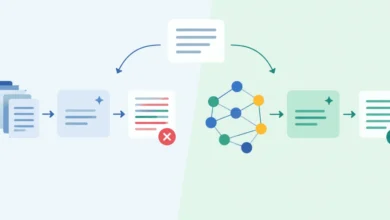
This process is inherently iterative. If an agent is tasked with a multi-step project—such as auditing twenty employees’ travel expenses—it must execute a tool call for each individual receipt. This creates a "ping-pong" effect: the model makes a request, waits for the application to provide the data, processes that data, and then decides on the next step. While this approach is highly auditable and allows for human-in-the-loop oversight at every stage, it is computationally expensive. As the number of items increases, the model’s context window becomes saturated with raw, often redundant data, leading to "context bloat" that increases token costs and latency while potentially obscuring the model’s reasoning capabilities.
The Rise of Code Execution as a Scalable Alternative
Code execution, a more recent advancement in agentic architecture, flips this paradigm. Rather than forcing the model to describe an action as a JSON-formatted request, this approach allows the model to write and execute actual programs—typically in Python or TypeScript—within a sandboxed, isolated environment.
This development, championed by research from Anthropic and others, introduces the concept of Programmatic Tool Calling. By defining specific tools as "allowed callers," developers empower the agent to write a script that performs loops, conditionals, and error handling entirely outside the model’s immediate context. Instead of the model seeing every intermediate piece of data, it only receives the final output of the script.
For instance, if an agent needs to calculate the average temperature across fifteen different global cities, a standard tool-calling agent would struggle through fifteen round-trips. A code-execution agent, however, would write a brief Python script to fetch the data in parallel, calculate the average, and return only the requested aggregate. This eliminates the need for the model to "memorize" or parse fifty separate data points, significantly reducing the token footprint.
Historical Context and Industry Evolution
The shift toward code execution reflects a broader trend in AI development: the move from "model-centric" logic to "system-centric" reliability. In early 2024, the CodeAct paper authored by Wang et al. provided the foundational evidence for this shift, demonstrating that agents utilizing executable code achieved up to 20% higher success rates on complex, multi-step tasks compared to those reliant solely on JSON tool calls.
Following this, the release of Anthropic’s Model Context Protocol (MCP) in late 2025 further solidified code execution as a production-grade strategy. By treating tools as a code API, developers can integrate complex, multi-functional libraries into agent workflows, moving away from the fragile, one-step-at-a-time nature of traditional JSON schema mapping. This transition has been met with positive industry reaction, as it addresses one of the primary criticisms of early agentic frameworks: the tendency of models to "hallucinate" logic when handling large datasets.
Data-Driven Performance Comparisons
The performance disparity between these two primitives is significant when measured at scale. Internal benchmarks shared by industry leaders suggest that shifting from traditional tool calling to programmatic code execution can reduce token usage by as much as 37% to 98% in document-heavy or data-intensive workflows.
Beyond cost savings, the primary benefit is accuracy. When an agent is forced to keep intermediate values in its active "memory" (context), it is prone to calculation errors or "forgetting" parameters. By offloading these calculations to a deterministic execution environment, the agent avoids the inherent risks of probabilistic reasoning in mathematical or logical tasks. For example, in research-heavy workflows, using code execution has been shown to increase knowledge retrieval accuracy by several percentage points, as the model remains focused on the synthesis of information rather than the rote management of data strings.
Operational Implications and Security
Despite the advantages of code execution, it introduces new operational complexities. A sandboxed environment requires robust security infrastructure to prevent malicious code injection or unintended system access. Organizations that lack existing containerization or sandboxing capabilities may find the initial implementation cost of code execution to be a significant barrier.
Furthermore, auditability remains a point of contention. In highly regulated industries—such as banking or healthcare—every action an agent takes must be logged and explainable. Traditional tool calling provides a granular, chronological record of every request, which is easily ingested by compliance software. In contrast, debugging a complex, agent-generated script that runs autonomously can be substantially more difficult, as the "reasoning" behind a specific sub-routine is obscured by the code’s execution.
Choosing the Right Primitive: A Decision Framework
To determine the appropriate architecture, developers should evaluate their specific use case against several key factors:
- Task Scope: If a task requires a single lookup, such as checking a current stock price, tool calling is the superior, lower-latency choice. For complex tasks involving aggregation, sorting, or iterative data processing, code execution is mandatory.
- Data Sensitivity: Large, sensitive datasets are better handled within a secured, isolated code execution environment, minimizing the exposure of PII (Personally Identifiable Information) within the model’s context.
- Infrastructure Maturity: Teams with existing, secure sandboxing (e.g., Docker, Kubernetes, or specialized serverless functions) should leverage code execution. Teams starting from scratch may find tool calling more accessible.
- Transparency Requirements: If the process requires human-readable logs of every interaction, the structured nature of tool calling is preferable for audit trails.
The Hybrid Reality of Modern Production Agents
The most effective production-grade agents do not rely exclusively on one primitive. Instead, they operate on a hybrid model. A well-designed agent uses standard tool calling for high-level, natural language-oriented interaction and switches to code execution for backend data processing and analytical heavy lifting.
Anthropic’s recent suite of "advanced tool use" features supports this modularity. By integrating a Tool Search Tool alongside code execution, developers can create agents that dynamically select the right tool for the job. This allows for a "smart" architecture where the agent decides whether to use a simple API call or a full script based on the complexity of the query.
Looking Ahead
The distinction between tool calling and code execution will likely continue to blur as models become more adept at autonomous software development. We are moving toward a future where the distinction between "writing code" and "requesting an action" becomes a seamless spectrum managed by the AI itself. However, for current engineering teams, mastering the trade-offs between these two primitives is essential.
As the industry matures, the focus will shift from simply making agents "work" to making them efficient, reliable, and secure. By choosing the correct primitive, developers can avoid the common pitfalls of excessive latency and context bloat, ensuring that their agents perform optimally even as they are tasked with increasingly sophisticated and multi-layered operations. The goal of modern AI engineering is no longer just to build an agent that can speak, but to build an agent that can act with the precision and logic of a developer, efficiently navigating the complexity of the modern digital landscape.