Apple’s annual hardware refresh cycle has once again pushed the boundaries of mobile computing architecture, headlined by the official release of the iPhone 18 Pro and Pro Max. At the core of these new devices lies the heavily anticipated A20 Pro system-on-chip (SoC), a component that has immediately established a commanding lead in synthetic benchmark evaluations across the global technology sector. Fabricated using an advanced 2-nanometer (2nm) semiconductor manufacturing node, the A20 Pro represents a major generational milestone in thermal efficiency, raw compute capability, and dedicated on-device artificial intelligence processing.

Main Facts and Architectural Breakdown of the A20 Pro
Independent laboratory stress-testing and benchmark evaluations confirm that the A20 Pro outpaces every competing mobile processor currently available on the commercial market. The chipset’s internal architecture is configured with a 6-core central processing unit (CPU), comprising two performance-focused "super cores" alongside four high-efficiency cores designed to preserve battery longevity during low-intensity background tasks. Furthermore, the graphics processing unit (GPU) features a 7-core layout integrated with specialized Neural Accelerators, backed by a dual 16-core Neural Engine engineered to handle heavy computational workloads associated with generative machine learning models and real-time spatial computing features.
To ensure absolute accuracy and eliminate anomalies caused by background software processes, baseline evaluations were conducted using a freshly initialized iPhone 18 Pro unit running an unpopulated software environment. Synthetic testing suites—specifically Geekbench 6 and Geekbench 7—were deployed to quantify single-core CPU execution, multi-core processing throughput, and graphical rendering capacity.

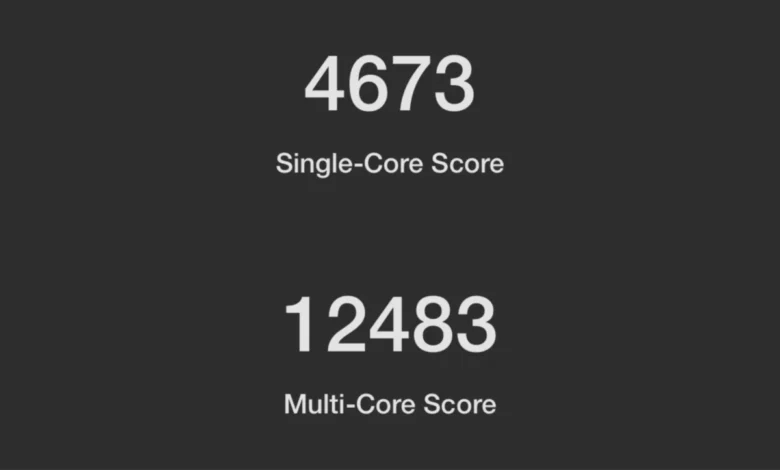
In the modern Geekbench 7 evaluation environment, the iPhone 18 Pro delivered a single-core CPU score of 3,959 and a multi-core score of 10,854. Concurrently, the integrated GPU architecture achieved a graphic rendering score of 61,194. When subjected to the legacy Geekbench 6 framework to enable direct historical comparisons against prior generations, the device registered an extraordinary 4,673 for single-core tasks and 12,483 for multi-core performance. These metrics illustrate a consistent generation-over-generation performance increase of approximately 25 percent across all primary computing vectors compared to its predecessor, the A19 Pro utilized within the iPhone 17 lineup.
Chronology and Context of Apple Silicon Development
The meteoric rise of Apple’s custom silicon division traces back over a decade, representing one of the most strategically significant pivots in consumer electronics history. Under the leadership of former hardware engineering executives and current executive leadership—including CEO John Ternus, whose oversight of the company’s proprietary processor transition stands as a defining achievement of his tenure—Apple systematically phased out third-party silicon dependencies.

The timeline of this transition began with the introduction of the A4 chip in 2010 for the iPad and iPhone 4. Over the ensuing years, Apple iteratively scaled its internal design teams, culminating in the historic 2020 announcement to transition its entire Mac ecosystem away from Intel processors in favor of proprietary M-series architecture. This unified architectural philosophy—sharing underlying principles across mobile A-series and desktop M-series silicon—has allowed the corporation to leverage massive economies of scale and optimize software-hardware integration more effectively than any competitor in the smartphone industry.
The arrival of the 2nm A20 Pro in late 2026 follows years of refinement in gate-all-around (GAA) transistor technology. As physical scaling limits traditional silicon architectures, Apple’s partnership with primary foundries to secure early access to the 2nm node has provided a distinct competitive advantage, enabling higher transistor density without triggering runaway thermal dissipation issues inside a passively cooled handheld chassis.

Comparative Industry Landscape
When positioned against primary market rivals, the performance gap remains stark. The closest competing consumer handset, Samsung’s Galaxy S26 Ultra equipped with Qualcomm’s customized Snapdragon 8 Elite Gen 5 for Galaxy chipset, demonstrates impressive capabilities of its own but consistently trails Apple’s silicon in single-core CPU benchmarks and standardized web-rendering workloads. Other flagship Android alternatives utilizing standard ARM Cortex-based architectures likewise fall short of matching the raw instruction-per-clock (IPC) efficiency exhibited by Apple’s custom-designed core microarchitecture.
Despite the dominance demonstrated in benchmark charts, industry analysts note that the practical implications for everyday consumers are nuanced. For standard operations such as web browsing, messaging, media consumption, and social media navigation, the performance delta between the iPhone 18 Pro and devices from two or three generations prior is virtually imperceptible. Because modern mobile operating systems are already exceptionally responsive, the primary beneficiary of the A20 Pro’s immense computational headroom is not the casual user, but rather the ecosystem of advanced AI applications, on-device large language model execution, and console-quality gaming titles capable of utilizing hardware-accelerated ray tracing.

Broader Implications and Upcoming Hardware Form Factors
The deployment of the A20 Pro is not restricted to the traditional bar-form-factor iPhone 18 Pro and Pro Max models. Apple has integrated the identical silicon architecture into the newly announced foldable iPhone Duo, a device that introduces an expansive, flexible internal display to the company’s hardware portfolio.
The inclusion of the A20 Pro in a foldable chassis introduces unique engineering variables. Industry observers and hardware reviewers have expressed significant interest in whether the thermal constraints and physical geometry of a folding device will impact sustained performance stability compared to the rigid, vapor-chamber-cooled enclosures of the standard Pro lineup. Comprehensive evaluations of the iPhone Duo’s sustained thermal performance and battery endurance are anticipated following its commercial retail launch scheduled for the coming weeks.

Furthermore, the commercial availability of these devices has been paired with aggressive carrier promotions. Major telecommunications providers, including T-Mobile, have introduced promotional trade-in structures allowing qualified consumers to secure substantial statement credits—ranging up to $1,200—toward the acquisition of both the iPhone 18 Pro and Pro Max models, mitigating the financial barrier associated with premium tier smartphone upgrades.
Fact-Based Analysis of Market and Technological Impact
From a strategic standpoint, Apple’s continued dominance in mobile silicon benchmarking reinforces its brand positioning within the premium consumer electronics market. By maintaining a decisive lead in processing efficiency and AI computation readiness, the corporation insulates itself against commoditization pressures affecting the broader smartphone industry.

However, this widening gap between hardware capability and software demand raises questions regarding software ecosystem utilization. As mobile operating systems and third-party developers work to capitalize on the processing power of the A20 Pro, the pressure mounts on software engineers to deliver applications that justify the advanced hardware capabilities. For enterprise users, content creators, and mobile developers who regularly leverage heavy multitasking, high-resolution video export pipelines, and local machine learning model training, the A20 Pro establishes a new benchmark for what a pocket-sized computing device can achieve, cementing Apple’s position as the technological pace-setter in modern mobile silicon engineering.