Fourthwall vs Gelato: A Comprehensive Analysis of Print-on-Demand and E-commerce Infrastructure

The modern creator economy has forced a paradigm shift in how entrepreneurs bring merchandise to market. As demand for personalized, high-quality goods continues to climb—a sector projected to reach a valuation exceeding $39 billion by 2031—the infrastructure supporting these businesses has bifurcated. Today, creators and business owners are choosing between two distinct technological philosophies: the integrated, all-in-one brand-building ecosystem provided by Fourthwall and the specialized, high-velocity production network offered by Gelato.
The Evolution of Fulfillment and Storefronts
The history of the Print-on-Demand (POD) industry traces back to the early 2000s, but it has only been in the last five years that the technology has moved from a peripheral business model to a primary revenue stream for independent creators. Gelato, founded with a focus on localized production to mitigate environmental impact, represents the "fulfillment-first" model. Its architecture is designed to integrate into pre-existing retail environments. Conversely, Fourthwall emerged as a "creator-first" platform, seeking to solve the fragmentation of the creator stack by bundling storefront hosting, payment processing, and fulfillment into a single interface.
Comparative Infrastructure: How the Platforms Function
Gelato operates as a sophisticated supply chain partner. It does not provide the digital storefront; rather, it provides the bridge between the customer and a massive, decentralized network of over 140 production hubs spanning 32 countries. By utilizing local production, Gelato minimizes the carbon footprint associated with long-haul shipping—a critical metric for brands prioritizing sustainability. Its core value proposition is integration: it connects seamlessly with Shopify, WooCommerce, Squarespace, and Etsy, allowing businesses to treat Gelato as a silent partner that handles the logistics of printing, packaging, and global distribution.
Fourthwall represents a more holistic approach. It is categorized as an e-commerce platform that includes native POD capabilities. When a user creates a store on Fourthwall, they are launching a standalone website with a custom domain. Unlike Gelato, which relies on the merchant to configure the front-end store, Fourthwall provides a drag-and-drop site builder, integrated payment gateways, and the ability to sell a hybrid catalog—combining print-on-demand items with internally sourced physical goods, digital downloads, and recurring membership programs.
Data-Driven Comparison: Pricing and Operational Costs
For the emerging entrepreneur, cost analysis is the primary determinant of platform choice. Both companies utilize a "freemium" model, yet the underlying economics differ significantly.
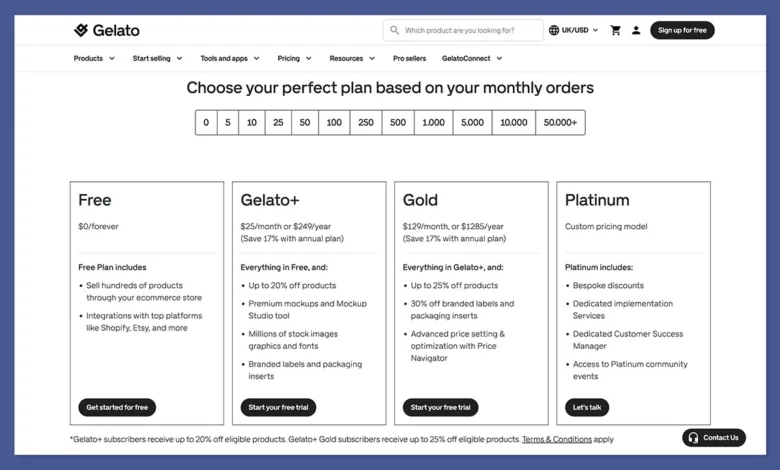
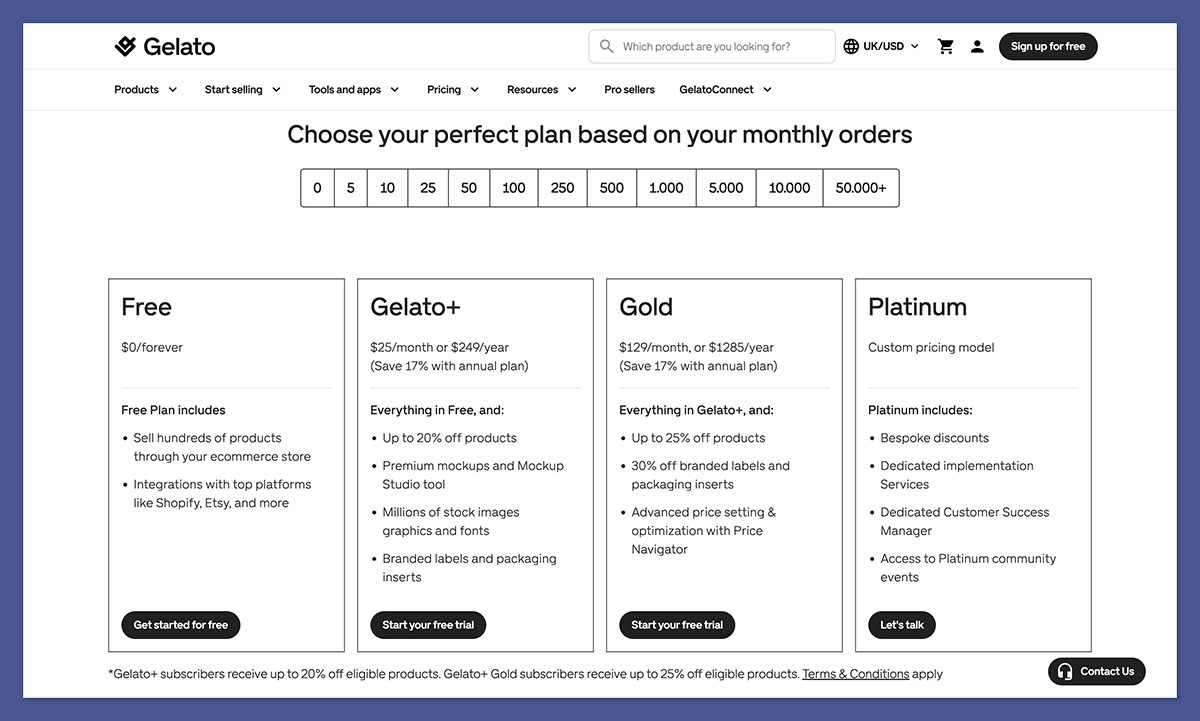
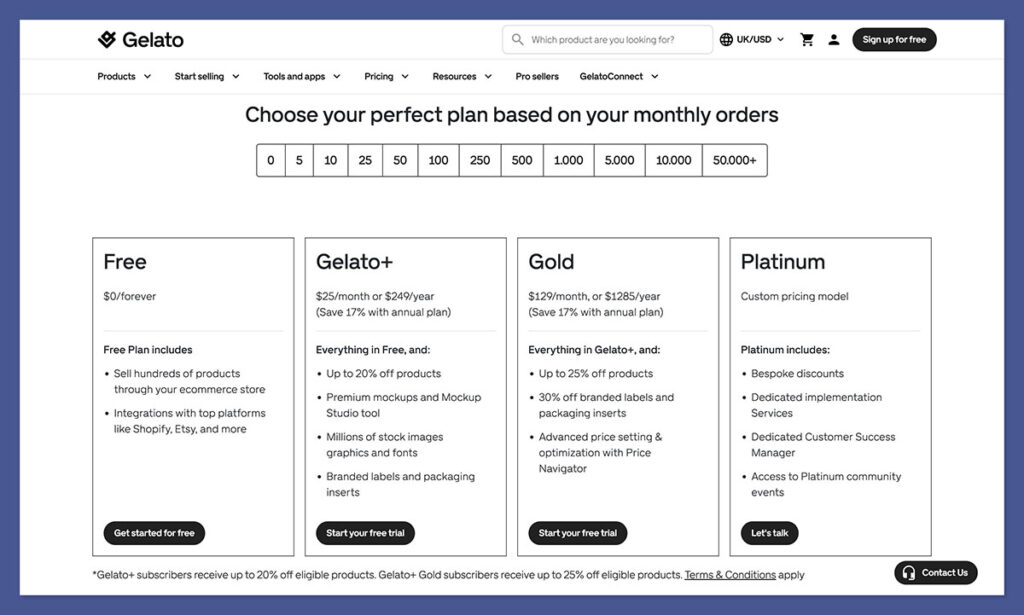
Gelato’s free plan offers a robust entry point for users already established on other platforms, providing access to their entire POD catalog and basic design tools. The strategic value of Gelato emerges at the paid tier, Gelato+, which carries a monthly subscription fee of $29.99. This tier is designed for scaling operations, offering up to 33% discounts on product base costs, advanced mock-up generators, and the "Personalization Studio," which enables customers to add custom text or graphics to products. The financial implication here is clear: Gelato is a cost-saver for high-volume sellers who benefit from the lower base prices and reduced shipping zones.
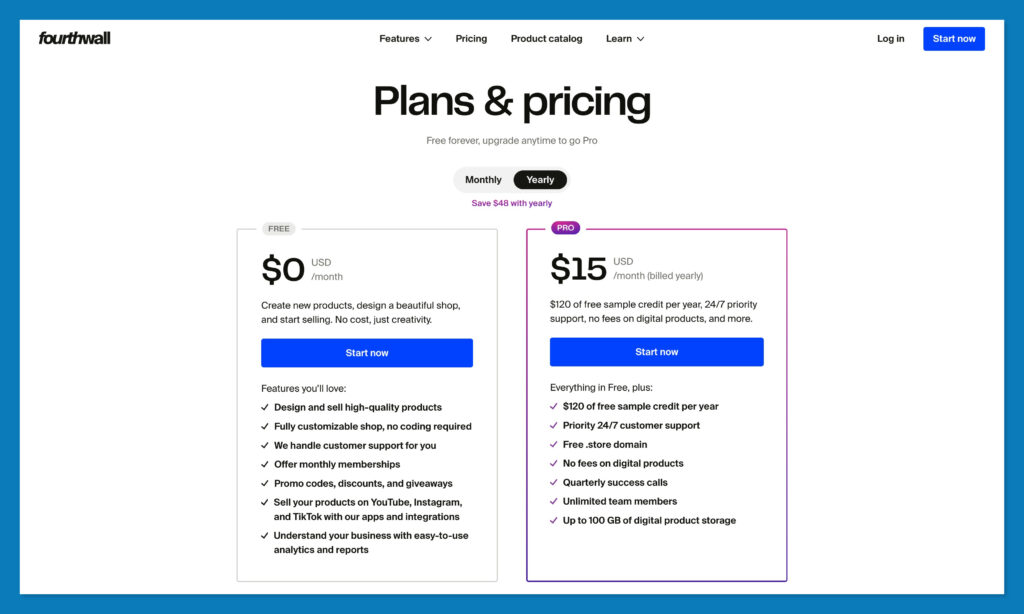
Fourthwall’s pricing structure is built for simplicity. The platform is free to sign up, but it retains a percentage-based fee on specific transactions—notably 5% on digital products and memberships. For users seeking to avoid transaction fees, the Pro plan is available at $19 per month. This subscription includes advanced analytics, priority customer support, and, crucially, $10 in monthly sample credits. When considering the total cost of ownership, Fourthwall is often more economical for new entrants, as it eliminates the need to pay for third-party hosting, SSL certificates, and separate e-commerce platform subscriptions.
Product Quality and Sustainability Metrics
The market for high-quality, custom merchandise has matured. Consumers no longer accept the "cheap" quality often associated with early-generation POD.
Gelato’s primary differentiator is its commitment to sustainability. By producing 90% of orders locally, the company claims a significantly reduced transit time, with an average delivery window of five days. Their catalog emphasizes eco-conscious materials, and their quality control processes are standardized across their global production network.
Fourthwall maintains a smaller, more curated catalog, but prioritizes "retail-grade" quality. Because Fourthwall manages the entire user journey, they have tighter control over the packaging and unboxing experience, which is a major factor in brand loyalty for content creators. While Fourthwall also provides eco-friendly options, it does not market itself primarily as a sustainability-first logistics company, focusing instead on the flexibility of its product offerings—including the ability to print on unconventional locations, such as sleeves or hoods.
The Role of the Merchant of Record
One of the most significant, yet often overlooked, distinctions between the two platforms is the "Merchant of Record" (MoR) status.
Fourthwall acts as the Merchant of Record. This means the platform assumes the legal and financial responsibility for collecting and remitting sales tax in multiple jurisdictions. For a creator with an international audience, this is a massive administrative relief. If a product arrives damaged or if there is an issue with an item from the Fourthwall catalog, the company handles the customer service and resolution process directly.
Gelato operates differently. As a fulfillment partner, the merchant remains the Merchant of Record. The creator is responsible for the store’s tax settings, shipping configurations, and direct communication with customers regarding refunds or logistics inquiries. This requires a higher degree of technical literacy and operational oversight but grants the merchant total control over the brand’s customer experience.
Technological Advancements and AI Integration
Both platforms have aggressively integrated artificial intelligence to reduce the barrier to entry for creators.
Gelato has deployed an AI-driven mockup tool that allows sellers to visualize products in realistic settings, alongside an "enhanced analytics" dashboard designed to track conversion rates and regional sales trends. These tools are tailored for sellers who treat their shop as a data-driven retail operation.
Fourthwall has introduced "Eli," an AI assistant capable of managing administrative tasks such as updating product descriptions, adjusting pricing strategies, and drafting promotional content. Furthermore, Fourthwall’s integration with platforms like RSS.com for podcasters and their dedicated designer marketplace suggests a broader focus on the "creator economy" rather than just the "e-commerce" sector.
Strategic Implications: Which Platform Fits Your Needs?
The decision between Gelato and Fourthwall is ultimately a decision about business maturity and operational goals.
For the established retailer—the brand that already has a presence on Shopify, Etsy, or TikTok Shop—Gelato is the superior choice. Its ability to integrate into existing workflows, combined with its unmatched global production network, makes it the gold standard for fulfillment. It allows the merchant to focus on marketing and brand identity while outsourcing the complexities of global logistics.
For the creator or entrepreneur starting from scratch, Fourthwall is the logical choice. It minimizes the "administrative headache" of building an online store from the ground up. By providing the storefront, the backend, the payment processing, and the fulfillment under one roof, it allows the creator to focus on content creation rather than technical infrastructure.

In summary, Gelato is a tool for fulfillment excellence, while Fourthwall is a comprehensive engine for brand building. Both platforms have fundamentally lowered the cost of entry for global retail, but they serve distinct stages of the business lifecycle. As the e-commerce landscape continues to evolve, the distinction between production partners and platform providers will likely continue to blur, but for the present, the choice rests on whether the user needs a partner to build a store, or a partner to power an existing one.
Related posts: