The digital economy has undergone a structural transformation over the last decade, with dropshipping emerging as a primary entry point for entrepreneurs seeking to minimize overhead while testing market demand. Unlike traditional retail models that require significant capital expenditure for inventory procurement, warehousing, and logistics infrastructure, dropshipping operates on a fulfillment-on-demand basis. By decoupling the act of selling from the physical management of goods, small-scale sellers can theoretically launch a storefront with negligible upfront costs. However, the transition from a concept to a sustainable revenue stream requires a disciplined approach to niche selection, platform integration, and customer acquisition.
The Evolution of the Dropshipping Model
The dropshipping industry experienced a period of exponential growth during the COVID-19 pandemic, as physical retail closures forced a rapid migration to e-commerce. Data from industry analysts suggests that the global dropshipping market size, valued at approximately $243 billion in 2023, is projected to reach over $476 billion by 2026. This growth is driven by the low barrier to entry, which continues to attract first-time business owners.
Historically, early e-commerce pioneers faced prohibitive costs related to stocking and shipping. The shift toward a "just-in-time" supply chain model has democratized retail. Yet, the misconception that dropshipping is an entirely cost-free endeavor remains prevalent. While the initial capital outlay can be near zero, operational reality necessitates future investment in payment processing, domain registration, and marketing as the enterprise scales.
Strategic Framework for Market Validation
To begin without initial capital, an entrepreneur must prioritize market research over impulsive product sourcing. Successful dropshipping operations are rarely successful because they offer a broad, generic catalog; they succeed by solving specific problems for a targeted audience.
Chronologically, the first step for any entrant is the identification of a viable niche. Market validation involves leveraging freely available tools such as Google Trends, which allows sellers to monitor search volume fluctuations, and industry reports from firms like Grand View Research. For instance, the outdoor furniture sector has shown a consistent compound annual growth rate (CAGR) of approximately 6.4%, signaling sustained consumer interest. By narrowing a broad category like "Home and Garden" into "compact, modular furniture for urban apartment dwellers," a seller reduces the scope of competition and increases the likelihood of reaching a highly qualified customer base.
Product Selection and Quantitative Analysis
Once a niche is validated, the process of product curation must follow a data-driven methodology. Relying on "best-seller" lists provided by dropshipping platforms is often discouraged, as these lists are frequently lagging indicators of past trends rather than predictors of future profitability.
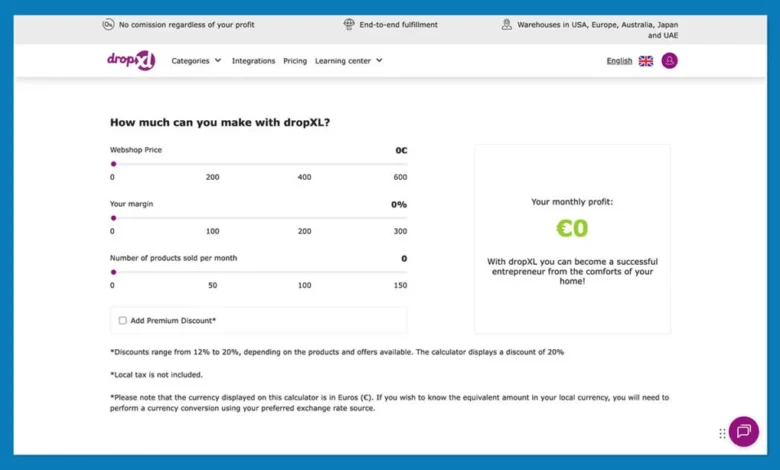
A rigorous analysis requires calculating the "net margin" per unit. This involves accounting for the wholesale cost, payment gateway fees (which typically hover around 2.9% plus a fixed transaction fee), and potential tax liabilities. Platforms like dropXL provide a comprehensive data feed that includes real-time stock levels, pricing, and logistical parameters. Experienced sellers apply a scoring matrix to their potential product list, evaluating items based on:
- Demand Stability: Does the product serve a permanent need or a fleeting trend?
- Delivery Risk: Is the supplier capable of fulfilling orders within a reasonable timeframe?
- Price Elasticity: Can the product support a margin that covers marketing and operational costs?
- Logistical Complexity: Does the product require special handling or assembly?
Digital Infrastructure and Platform Selection
Choosing a platform is a critical juncture for a zero-budget startup. For those with absolutely no capital, marketplace giants like Etsy, eBay, and Amazon provide an immediate audience. While these platforms charge transaction or listing fees, they often require no upfront subscription costs.
Alternatively, for those seeking to build a brand, a tiered approach to platform selection is recommended. Big Cartel offers a free tier suitable for small-scale operations, while platforms like Shopify provide a more robust ecosystem, albeit with a short-term trial or low-cost introductory period. For users with technical inclination, WordPress combined with the WooCommerce plugin remains a highly flexible, open-source solution. Integrating specialized plugins, such as the dropXL extension for WooCommerce, allows for the automated synchronization of inventory, pricing updates, and order routing, which significantly reduces the administrative burden on the store owner.
Logistics and Supplier Relationships
The reliance on third-party suppliers is the most significant operational risk in a dropshipping model. A failure in the supply chain—such as a delayed shipment or poor product quality—is attributed to the storefront owner, not the supplier. Consequently, vetting a supplier based on proximity to the end customer and fulfillment reliability is essential.
Industry experts note that while competitive wholesale pricing is important, the "cost of failure" is higher. If a customer receives an inferior product, the costs of processing returns and managing negative reviews far outweigh the savings gained from selecting a cheaper, unreliable supplier. Providers with extensive networks, such as dropXL, which manages over 90,000 products across 32 countries, offer infrastructure that supports scalability. While such platforms may charge a monthly membership fee, the lack of additional commission fees often results in a lower total cost of ownership as the business matures.
Organic Growth and Customer Acquisition
In the absence of a budget for paid advertising (PPC), organic growth must be the primary driver of traffic. A robust content strategy serves as the foundation for this growth. This includes:
- Educational Content: Creating blog posts, tutorials, or comparison guides that assist the consumer in the decision-making process.
- Social Proof: Utilizing TikTok, Instagram, and YouTube to showcase products. If physical samples are unavailable, creators are advised to focus on high-quality visual content that addresses consumer pain points, such as measurements, material specifications, and installation tips.
- Email Marketing: Implementing a lead-capture mechanism on the website, such as a discount for newsletter signups, allows the seller to build an owned audience, reducing reliance on third-party algorithms.
Long-Term Sustainability and Scaling
The transition from a startup to a stable enterprise is marked by the shift from manual labor to data-driven optimization. Once the first sale is recorded, the revenue should be reinvested into the business rather than withdrawn.
Key metrics to monitor during this phase include the Customer Acquisition Cost (CAC) and the Lifetime Value (LTV) of a customer. If specific products are yielding high conversion rates, the seller should focus on expanding the variety within that sub-niche. Conversely, if a product consistently triggers high return rates, it should be removed from the catalog immediately to protect the brand’s reputation.
Common Pitfalls and Risk Mitigation
Even with a sound strategy, common errors can derail a new dropshipping venture:
- The "Zero-Budget" Trap: Treating $0 as a permanent state is unsustainable. Professionalism requires eventually investing in professional domain names, better web hosting, and potential marketing automation tools.
- Catalog Overextension: Managing too many products prematurely leads to operational chaos and diluted focus. A lean, curated catalog is superior during the initial growth phase.
- Neglecting Logistics: Failing to monitor the delivery status of orders directly undermines customer trust.
- Content Duplication: Using generic, supplier-provided descriptions hurts SEO performance. Unique, value-driven descriptions are essential for ranking in search engines.
Conclusion: A Realistic Path Forward
The dropshipping model remains a viable pathway for entrepreneurs, provided it is approached with the rigor of a traditional business. While the financial barriers to entry are significantly lower than in traditional retail, the requirements for success—product quality control, customer service excellence, and strategic marketing—remain unchanged. By starting with a focused niche, selecting reliable supply chain partners, and focusing on organic audience growth, a seller can move from a zero-dollar budget to a sustainable, revenue-generating enterprise. The key is not to avoid expenses indefinitely, but to reach a point of consistent profitability where the business can effectively finance its own evolution.