Navigating the Modern Web: How to Balance AI Crawler Traffic and Server Performance Without Sacrificing SEO


The rapid expansion of artificial intelligence has fundamentally altered the digital landscape, forcing website owners, digital agencies, and hosting providers to reconsider how automated traffic is managed. For years, the decision facing web administrators regarding automated crawlers was binary: allow them to ensure visibility or block them to conserve server capacity. However, as artificial intelligence platforms scale up operations, treating these two options as mutually exclusive has become an untenable strategy for site reliability and search visibility.
Recent industry data highlights a critical shift in web traffic composition. According to comprehensive metrics released by Cloudflare, AI training crawlers alone accounted for a staggering 52 percent of all crawler requests by June 2026. Meanwhile, mixed-use crawlers represented more than 36 percent of automated traffic, leaving search-only indexing bots with a smaller, albeit vital, share of discoverability traffic. This shifting paradigm has rendered blanket allow-or-block policies obsolete. Web administrators must now implement nuanced traffic management frameworks that evaluate the precise purpose, cost, and return on investment of every automated request hitting their servers.
The Evolution of Automated Web Traffic and the Breakdown of Categories
To understand the current challenges of bot management, it is essential to examine the historical evolution of web crawling. Traditionally, search engines deployed dedicated bots—such as Googlebot and Bingbot—whose primary function was to index web pages for keyword-based retrieval systems. The operational footprint of these traditional search crawlers was relatively predictable, focusing heavily on static content, cached pages, and structured sitemaps.

However, the advent of generative AI, large language models (LLMs), and agentic internet systems has introduced entirely new classes of automated traffic. Modern AI crawlers generally fall into three distinct operational buckets: training crawlers, search and retrieval crawlers, and agentic or mixed-use bots. Training bots scour the web to gather massive corpuses of text, imagery, and code for foundational model development. Search and retrieval crawlers, by contrast, fetch real-time information to power AI-driven answers, product recommendations, and conversational search summaries.
The distinction between these categories is critical because their operational impact and value propositions vary wildly. Training crawlers often siphon vast computational resources without driving direct referral traffic back to the originating website. Conversely, search and retrieval crawlers provide a direct pipeline to emerging AI discovery channels, making an outright block potentially detrimental to a brand’s long-term digital footprint. Consequently, infrastructure providers and content management platforms have accelerated the development of granular controls, moving away from monolithic switches toward multi-tiered protection matrices.
Evaluating the Economic and Operational Tradeoff of Bot Access
The core dilemma for website administrators lies in the economic and infrastructural tradeoff of serving automated requests. While allowing a crawler can theoretically land a brand inside an AI-generated summary or a search engine results page, the raw cost of servicing those requests can escalate quickly. This disparity is vividly illustrated by Cloudflare’s crawl-to-referral data gathered throughout 2025 and 2026.
Statistical analyses from major web infrastructure monitors reveal vast discrepancies in how efficiently AI platforms drive traffic relative to the number of pages they harvest. For instance, data indicates that platforms like Anthropic and OpenAI frequently execute tens of thousands of page requests for every single measurable referral click delivered to a publisher. Other platforms, such as Perplexity, have historically shown tighter crawl-to-referral ratios, though these metrics fluctuate continuously as algorithms and user behaviors evolve.

Furthermore, attributing traffic accurately remains a significant technical challenge. Many native AI applications and conversational interfaces do not pass a traditional HTTP Referer header when users interact with cited content. As a result, a substantial portion of brand exposure generated by AI citations remains dark, lacking a measurable click-through metric. This structural blind spot forces webmasters to look beyond simple click analytics when evaluating bot value.
Beyond visibility, the nature of the requested endpoint heavily influences server load. A bot that periodically requests static HTML articles places minimal strain on hosting infrastructure, especially when content is served from an edge cache. However, malicious or poorly configured crawlers frequently target dynamic, resource-intensive endpoints. These include internal search result pages, filtered e-commerce product catalogs, shopping cart URLs, checkout sequences, and REST API endpoints.
Real-world traffic analyses underscore the severity of this issue. Internal telemetry from managed hosting providers like Kinsta revealed that automated traffic generated a staggering 7.67 million requests targeting add-to-cart URLs within a single 24-hour window on monitored WooCommerce stores. In that specific instance, individual AI user agents, such as ClaudeBot, accounted for nearly half of those dynamic requests. When millions of automated hits force a content management system like WordPress to generate fresh, uncacheable database responses rather than serving static assets, server performance degrades, latency spikes, and legitimate human shoppers suffer from sluggish load times or outright downtime.
Regulatory Shifts and Industry Responses to Automated Scraping
As the tension between publishers and AI developers intensifies, major web infrastructure and security leaders are reshaping industry standards. In July 2026, Cloudflare overhauled its bot management architecture, retiring its generalized AI bot-blocking toggle in favor of highly segmented controls. The updated framework empowers domain owners to independently manage Search, Agent, and Training traffic across their entire digital properties or restrict them selectively on specific monetization zones, such as ad-supported landing pages.
By mid-September 2026, these protocols established a new baseline standard, wherein newly onboarded domains automatically permit search indexing while strictly gating agentic and model-training traffic on revenue-generating pages. This regulatory and technical pivot acknowledges a fundamental reality: content creators demand the autonomy to permit indexation for discovery while withholding proprietary assets from being harvested for third-party commercial model training without fair compensation.
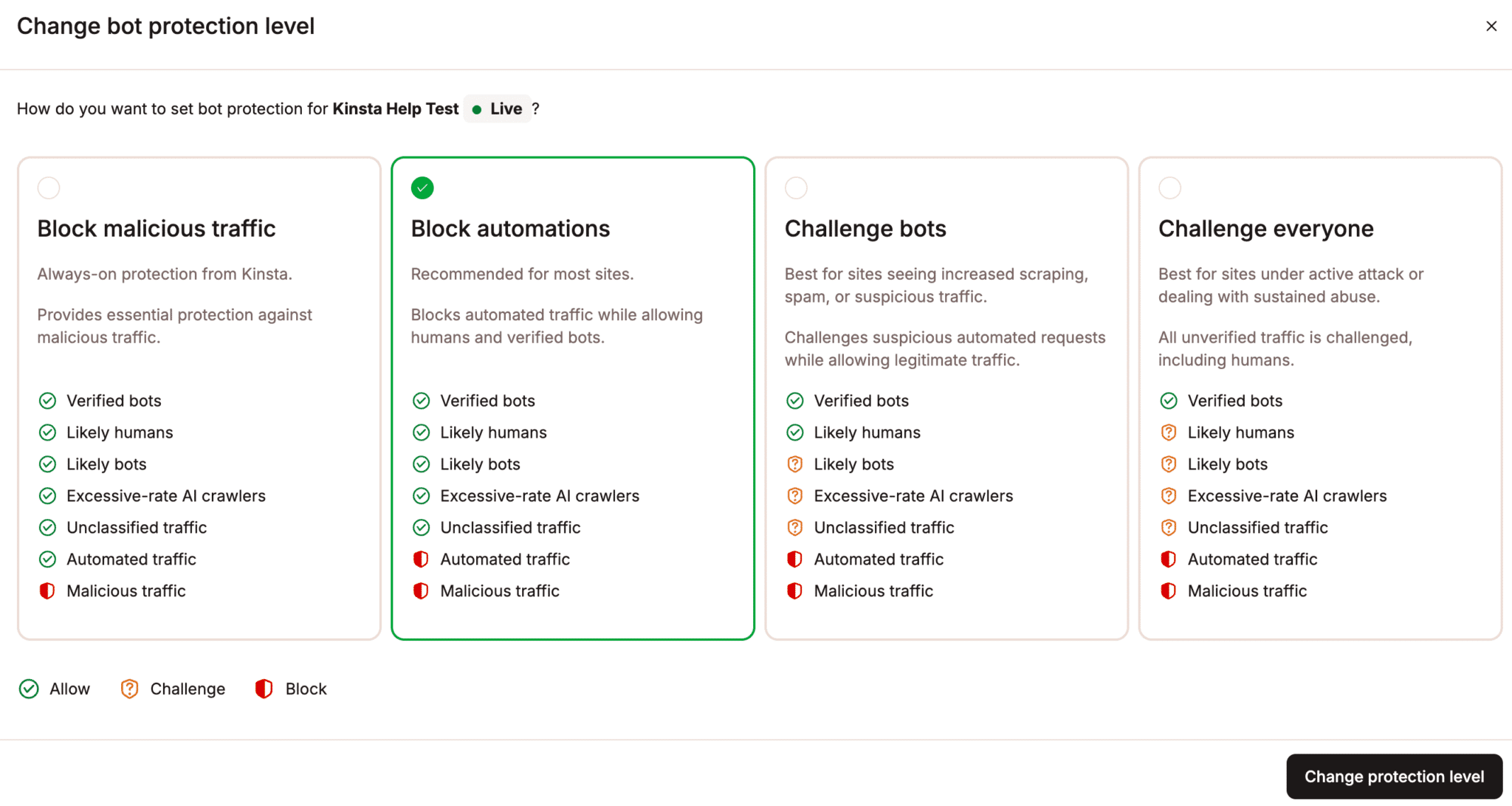
Managed WordPress hosting providers have similarly adapted their security toolkits. Platforms like Kinsta have integrated advanced Bot Protection suites designed specifically to help administrators strike a delicate balance between visibility and site performance. Rather than forcing a binary choice, these systems provide tiered protection levels that can dynamically challenge or block anomalous request volumes without interrupting critical background operations.
Crucially, modern hosting-level mitigations are engineered to safeguard traditional search engine visibility. Features such as dedicated AI crawler toggles successfully intercept and neutralize aggressive AI scrapers while intentionally preserving access for essential search engines like Googlebot and Bingbot. This surgical separation ensures that website owners do not inadvertently damage their organic search engine optimization (SEO) standing while attempting to mitigate the resource drain caused by resource-intensive AI data collection.
Strategic Implications for Digital Agencies and Enterprise Web Management
For digital marketing agencies and enterprise development teams overseeing dozens or hundreds of client websites, a one-size-fits-all bot policy is no longer viable. The optimal configuration depends entirely on the unique business model of each specific web property.

Consider the contrasting requirements of digital publishers versus high-volume e-commerce merchants. A content-heavy news publisher or blog may willingly absorb higher AI crawler activity if empirical data suggests that presence in conversational AI outputs drives meaningful brand awareness and readership. Conversely, a high-traffic WooCommerce retail store operating on tight margins cannot afford to let automated scrapers consume database resources during peak shopping hours, as server latency directly translates to lost revenue and abandoned carts.
Industry case studies underscore the stakes involved. When enterprise clients—such as major digital agencies managing rapidly scaling e-commerce brands—transition to optimized hosting environments, robust bot management becomes a cornerstone of high-availability architecture. As businesses scale past tens of millions of dollars in annual revenue, maintaining fault-tolerant uptime during unexpected traffic spikes is paramount. Security policies must therefore be customized, continuously monitored, and iteratively adjusted based on real-time server telemetry.
Best Practices for Implementing a Sustainable Bot Management Policy
Establishing a resilient, long-term bot policy requires an iterative approach centered on observation, analysis, and strategic adjustment. Administrators should avoid static configurations, opting instead for a dynamic cycle of traffic review.
The first step in this process involves conducting a granular request breakdown. Using native hosting analytics tools, such as Kinsta’s Request Breakdown dashboard, administrators can categorize incoming automated traffic into verified search bots, AI crawlers, excessive-rate scrapers, and standard background automations. Reviewing top traffic reports helps pinpoint which specific URLs, IP addresses, and user agents are disproportionately consuming server resources.
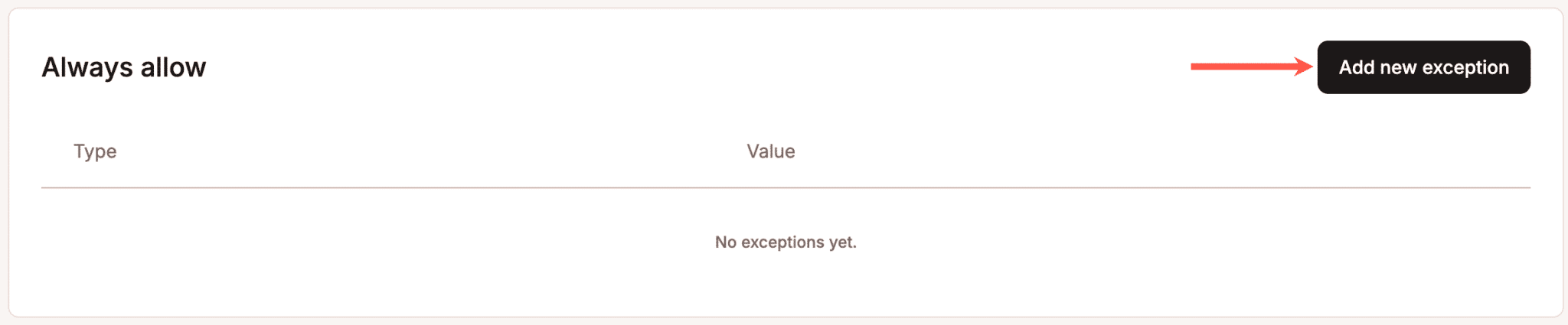
Once high-cost, low-value traffic is identified, administrators can apply targeted restrictions. When deploying stricter bot protection tiers, it is vital to whitelist essential background workflows. WordPress sites inherently rely on scheduled cron jobs, external payment gateway webhooks, REST API integrations, and uptime monitoring services. Advanced security tooling often includes options such as "Allow typical WordPress automations" to ensure that administrative safeguards do not inadvertently break core site functionality. Furthermore, custom "Always Allow" exceptions can be established for trusted partners, specific IP ranges, or necessary integration paths.
The broader outlook for web administration suggests that automated traffic will only increase in volume and complexity as agentic AI applications mature. Success in this evolving ecosystem requires moving past rigid, reactionary blocks and embracing sophisticated traffic governance. By carefully assessing the true cost and return of every automated request, webmasters can protect their infrastructure, preserve vital discovery channels, and maintain peak performance in an increasingly automated digital world.