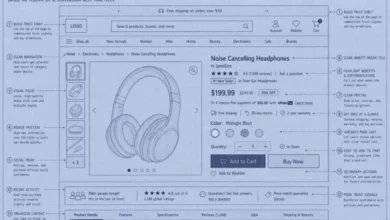
Google product carousels vanish across the European Economic Area in major compliance shift


The digital retail landscape across Europe has undergone a seismic transformation as Google has effectively dismantled its prominent product carousel features within the European Economic Area (EEA). This abrupt removal, which has left online retailers scrambling to adjust their digital strategies, serves as a direct response to the stringent requirements of the European Union’s Digital Markets Act (DMA). For thousands of e-commerce businesses, the change represents the sudden evaporation of a primary source of organic traffic, marking what some industry analysts describe as the most significant disruption to search result utility in the history of the platform.
The Scope of the Change and DMA Compliance
The Digital Markets Act, which came into full effect for designated "gatekeepers" like Google earlier this year, is designed to ensure fair competition and prevent dominant platforms from favoring their own services over those of third-party competitors. By removing the integrated product carousels—which previously displayed a curated list of goods directly from the search results page—Google is attempting to distance its search engine from its internal Shopping vertical.
The rollout has impacted all 27 member states of the European Union, alongside Norway, Iceland, and Liechtenstein. While users in the United Kingdom, the United States, and other global markets continue to see the familiar interactive blocks, EEA-based users are now greeted with a starkly different interface. Instead of visual product grids that allow for immediate price comparison and direct clicks to retailers, the search engine now directs users toward lists of third-party aggregators and price-comparison websites.
Chronology of the Implementation
The shift was not an overnight software patch but the culmination of months of regulatory pressure.
- Early 2024: Google begins preliminary adjustments to its search interface in anticipation of the DMA enforcement deadline, introducing labels to distinguish between its own services and external links.
- Mid-2024: Ongoing dialogue between the European Commission and Google regarding the "self-preferencing" of Google Shopping results.
- Late 2024: Industry observers begin noting a gradual decrease in the frequency of product carousels appearing for specific high-intent search queries.
- September 2025: The current, near-total phase-out commences. Analytics platforms like Productrise report that between 90% and 100% of organic product carousels have been purged from search results in the EEA.
Data-Driven Analysis of the Decline
The impact of this change is quantifiable and severe. According to data tracked by Productrise, a Dutch analytics firm specializing in organic shopping visibility, the drop-off in carousel visibility occurred within a matter of days. Hugo Huijer, founder of the platform, emphasized that the data collected from Germany, France, the Netherlands, Belgium, and Sweden shows a nearly total collapse of these organic entry points.
This statistical decline is particularly damaging because it targets "high-intent" traffic. Historically, users who interacted with product carousels were further along in the purchasing funnel, often ready to make a transaction. By removing the visual, low-friction entry point, Google has forced a structural change in user behavior. Analysts suggest that the "clicks" required to move from a search query to a product page have increased, which inevitably leads to a higher bounce rate and reduced conversion efficiency for independent retailers who lack the brand recognition of major marketplaces.
Shifts in User Experience and Navigation
The removal of product carousels is accompanied by a broader restructuring of Google’s search tabs. Industry expert Kristian Kunz of the German platform SEO Südwest has noted that the "Shopping" tab, which previously served as a dedicated hub for product discovery, has been largely relegated or removed from the top-level navigation bar in many EEA jurisdictions.
In its place, Google is presenting users with a more utilitarian list of links. For the consumer, this means a significantly less intuitive shopping experience. For the retailer, it means that the "Google Merchant Center"—the dashboard used to feed product data into Google’s systems—has seen a sharp devaluation. If a retailer’s product data is no longer being showcased in a carousel, the SEO efforts traditionally focused on optimizing for Google Shopping are yielding diminishing returns.

Broader Implications for the E-commerce Ecosystem
The transition raises critical questions about the future of digital marketing in Europe. Industry observers have identified several core areas of impact:
1. The Rise of Aggregators:
By stripping away the direct-to-retailer carousel, Google has inadvertently shifted the power balance toward large-scale aggregators and price-comparison sites. These platforms, which often have the technical infrastructure to dominate the standard "blue link" organic results, are becoming the primary gatekeepers for consumers who no longer have the convenience of direct product previews.
2. Direct Traffic vs. Search Traffic:
Larger retailers with established brand equity are expected to remain resilient. Consumers who know a brand will likely bypass the search engine’s interface and navigate directly to the retailer’s website. However, small-to-medium-sized enterprises (SMEs) that relied on Google’s organic visibility to level the playing field against larger competitors may face an existential threat to their online sales volume.
3. The Decline of "Free" Visibility:
The organic search landscape has been contracting for years. The introduction of AI Overviews, which synthesize information into a single text-based block, has already begun to cannibalize organic clicks. The removal of product carousels is merely the latest chapter in a trend where Google prioritizes its own compliance or generative AI interests over the traffic-driving utility that once defined the search engine for retailers.
Future Outlook and Strategy Adjustments
As the dust settles, digital marketing experts are advising companies to pivot away from a reliance on Google’s automated product features. The focus is shifting toward "Category Page SEO," where retailers attempt to rank for broader, intent-driven keywords rather than specific product listings.
Furthermore, there is a renewed emphasis on "Owned Media." Strategies that prioritize building email lists, social media communities, and direct app engagement are being viewed as essential safeguards against the volatility of search engine updates. The "fundamental shift" described by industry analysts is not just a change in display format, but a shift in the philosophy of e-commerce. Businesses can no longer assume that visibility will be granted by the search engine as a default feature of listing their products.
Conclusion: A New Era for European Search
Google’s decision to remove product carousels from the EEA is a stark reminder of the influence that regulatory bodies hold over the digital economy. While the DMA aims to curb anti-competitive behavior, the immediate result has been a complex reconfiguration of the search experience that has left many retailers in a state of uncertainty.
As Google continues to navigate its role as a "gatekeeper," the retail industry must adapt to a landscape where the familiar pathways to consumer discovery are being systematically dismantled. Whether this leads to a more competitive, diverse ecosystem as intended by the EU, or simply a consolidation of traffic toward the largest existing players, remains the central question for the European e-commerce sector heading into the next fiscal year. The era of effortless organic visibility through Google Shopping carousels has effectively ended, forcing a transition toward more direct, brand-centric marketing models.