The End of an Era: Warren Buffett Steps Down as Chairman of Berkshire Hathaway at Age 96

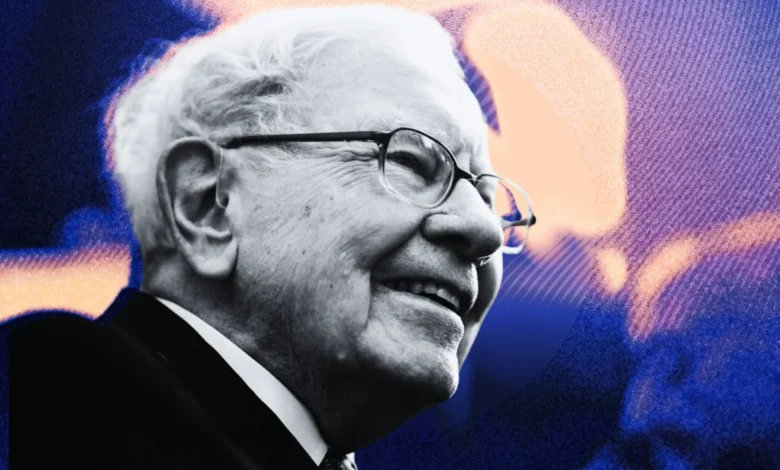
The landscape of global finance shifted permanently on a Friday in September when Warren Buffett, the legendary "Oracle of Omaha," announced he was stepping down as chairman of the board of Berkshire Hathaway, effective immediately. Marking the official close of a masterclass in modern capitalism, the decision came just weeks after Buffett celebrated his 96th birthday. In a characteristically candid letter to shareholders, Buffett quipped that a lighthearted realization—specifically, that his one-year-old great-grandchild was moving much faster than he was—helped solidify his decision to gracefully step further into the background of the trillion-dollar conglomerate he spent 61 years building.
While Buffett will transition into the role of chairman emeritus and maintain his seat as a director on the board, the move represents the final phase of a meticulously planned generational handoff. Greg Abel, who officially assumed the role of chief executive officer earlier this year, will continue to pilot the day-to-day operations of the sprawling corporate empire. Meanwhile, Buffett’s son, Howard Buffett, will step into the role of board chairman, sealing a leadership triad designed to carry the company well into the future.
The Evolution of a Trillion-Dollar Empire
To understand the magnitude of Friday’s announcement, one must look back at the improbable origins of Berkshire Hathaway. When Buffett first acquired a controlling interest in the struggling New England textile manufacturer in 1965, the company was a declining enterprise with an uncertain future. Over the next six decades, Buffett systematically transformed the firm into an economic juggernaut.
Through astute capital allocation, a steadfast adherence to value investing, and a knack for identifying undervalued businesses, Buffett expanded Berkshire’s footprint across multiple vital sectors of the American and global economy. Today, the conglomerate encompasses industry leaders in insurance—most notably GEICO—alongside major holdings in railroads (BNSF), energy utilities (Berkshire Hathaway Energy), manufacturing, and retail.
The financial scale of this transformation is staggering. In its most recent full-year financial reporting, Berkshire Hathaway posted a formidable $44.5 billion in operating earnings, accompanied by an operating cash flow of $46 billion. Although earnings dipped slightly from the $47.4 billion recorded the previous year, the company’s balance sheet remains one of the strongest and most liquid in corporate history, boasting a massive cash cushion that has long served as a fortress against market downturns.
A Measured and Methodical Succession Plan
For years, Wall Street analysts, institutional investors, and retail shareholders have obsessively speculated about the inevitable post-Buffett era. Unlike many founder-led companies that struggle with succession crises, Berkshire Hathaway’s leadership transition has been transparent, deliberate, and years in the making.
The groundwork for the current leadership structure was laid systematically. At the annual shareholder meeting in May 2025, Buffett publicly confirmed that Greg Abel would take over the reins as CEO on January 1, 2026. Abel, who previously managed Berkshire’s vast non-insurance operations, quickly proved his capability. Earlier this year, Abel broke a decades-long tradition by authoring the annual shareholder letter—a task historically reserved for Buffett—and capably helmed the May annual gathering while Buffett sat in the audience, speaking only briefly.
Reflecting on Abel’s performance in his farewell letter as chairman, Buffett expressed absolute trust in his successor. "My expectations for him were sky high from the start, and he has exceeded them," Buffett wrote. "So the timing is right to complete the transition."
With Abel managing operations, governance will be anchored by Howard Buffett. At 71 years old, Howard brings a deep institutional understanding to the board, having served as a Berkshire director for 33 years. In addition to his corporate governance experience, Howard is an accomplished agriculturalist who manages a 1,500-acre farm in Illinois and a 400-acre farm in Nebraska.
Warren Buffett highlighted the strategic division of labor between the two leaders in his shareholder address: "That is a longer apprenticeship than I served before taking the reins at the age of 34. Greg runs the company; Howard will guard its culture and values—both worth more than anything on our balance sheet."
The Chronology of Retreat
Buffett’s departure from the boardroom is the culmination of a measured scaling back that has unfolded over the past several years:
- May 2025: Buffett officially announces at the annual shareholder meeting that Greg Abel will succeed him as CEO, setting an effective date of January 1, 2026.
- January 2026: Greg Abel formally assumes the role of CEO, authoring his inaugural annual shareholder letter and initiating a new era of executive communication.
- May 2026: Abel leads the Berkshire Hathaway annual meeting as the primary figurehead, while Buffett steps back to observe from the audience.
- July 2026: Buffett reiterates his long-term philanthropic commitment, outlining plans to distribute his remaining shares to four family foundations by December 31, 2034.
- September 2026: Celebrating his 96th birthday, Buffett issues a letter to shareholders announcing his immediate resignation as chairman of the board, transitioning to chairman emeritus while retaining his position as a director.
Philanthropic Endgame and Wealth Distribution
Beyond his corporate responsibilities, Buffett has spent the latter portion of his life executing one of the largest philanthropic commitments in human history. Long pledging to give away more than 99% of his vast fortune, Buffett has systematically divested billions of dollars in Berkshire Hathaway stock to charitable causes since 2006.
In July, Buffett reaffirmed his ultimate timeline for wealth distribution, confirming his intent to donate his remaining holdings—valued at approximately $140 billion at the time of the announcement—to four designated foundations by the end of 2034. By utilizing a structured multi-year exit strategy for both his corporate leadership and his personal equity, Buffett is ensuring that the shockwaves to both Berkshire’s stock and its philanthropic beneficiaries are minimized.
Industry Reactions and Market Implications
Wall Street analysts and institutional investors have largely greeted the formal transition with calm reassurance, viewing the announcement as the orderly conclusion of a well-telegraphed succession plan rather than an abrupt crisis.
For decades, Berkshire Hathaway stock carried a distinct "Buffett premium," reflecting investors’ confidence in his singular genius for capital allocation and risk management. However, market experts note that Berkshire has spent the last decade decentralizing its operations, empowering subsidiary CEOs, and embedding a conservative corporate culture that functions independently of any single individual.
Financial analysts point out that Abel inherits an enterprise with immense financial flexibility, though he will face distinct challenges. Chief among them will be deploying Berkshire’s historic cash reserves in an environment where finding large, attractively priced acquisition targets has become increasingly difficult. Nevertheless, Abel’s deep familiarity with the conglomerate’s diverse operating units positions him well to maintain operational continuity.
Father Time Always Wins
In his closing remarks to shareholders, Buffett reflected on the passage of time with his trademark philosophical clarity and self-effacing humor.
"Father Time always wins," Buffett wrote. "He has, however, been generous with me. He has given me the opportunity to see Berkshire reach a point where I am more confident than ever about what lies ahead. The company is in excellent hands, and I look forward to remaining a shareholder alongside you."
As the sun sets on Warren Buffett’s active leadership of the board, Berkshire Hathaway stands as an enduring monument to patient investing, rigorous financial discipline, and corporate longevity. While the man who built the empire from a distressed textile mill will no longer helm the meetings from the chairman’s seat, the institutional culture he fostered remains deeply embedded in the walls of Omaha—ready for its next chapter.