Valve Steam Frame Review Roundup: High Praise for Hardware Innovation Balanced Against Steep Pricing and an Uncertain VR Market

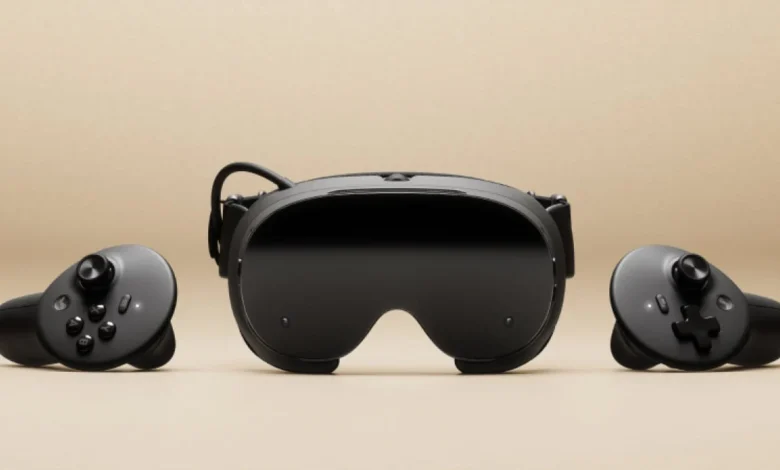
After years of rampant speculation, industry leaks, and high expectations from the PC gaming community, Valve has officially entered the next generation of virtual reality hardware. Following its initial announcement in November 2025, the Steam Frame became available to consumers on September 18, 2026. Developed by the parent company of the dominant Steam digital distribution platform, the device aims to bridge the gap between traditional desktop gaming and immersive virtual environments. Early reviews from major technology and gaming publications paint a complex picture: while critics universally laud the device’s physical design, wireless fidelity, and dual-purpose utility as a virtual monitor, they simultaneously express severe reservations regarding its high cost, lackluster software support, and questionable market timing.
Hardware Excellence and the Promise of Seamless Integration
The most striking consensus among early reviewers is that Valve has successfully engineered a comfortable, highly intuitive piece of hardware. Unlike competing headsets that historically suffered from cumbersome setup processes, tethered constraints, and steep learning curves, the Steam Frame prioritizes user accessibility from the moment it is unpacked.
Jacob Ridley of PC Gamer highlighted the physical comfort and straightforward user experience in his evaluation, noting that the hardware "gets a whole lot right" and eliminates the operational friction that typically bogs down virtual reality sessions. Similarly, Zack Zwiezen of Kotaku focused heavily on the device’s wireless PC streaming capabilities, describing the latency-free performance as a revelatory achievement for Valve. According to Zwiezen, the wireless transmission is so reliable that users can effortlessly forget they are untethered from a physical host machine, delivering high-end virtual reality experiences without the nuisance of trailing cables or visible compression artifacts.
Beyond traditional virtual reality applications, the Steam Frame functions as a versatile virtual monitor. Jacqueline Thomas of IGN pointed out that the headset allows users to access their existing non-VR Steam libraries on a massive virtual screen. Thomas reported spending nearly an equal amount of time playing conventional flat-screen titles within the headset as she did dedicated virtual reality games, effectively transforming the device into a portable, private display that can be utilized anywhere in the home.
Chris Person of Aftermath characterized the hardware as one of the most exciting innovations in the sector in recent years, praising its capacity to unify multiple distinct use cases into a single, open platform. For many industry observers, the Steam Frame essentially represents the spiritual successor to the Steam Deck—a powerful, standalone Linux-based PC gaming ecosystem optimized for facial wear rather than handheld play.
Critical Shortcomings: Battery Life, Software Bugs, and Launch Library
Despite widespread admiration for Valve’s engineering feats, reviewers were quick to highlight notable hardware and software deficiencies. Scott Stein of CNET provided a sobering assessment of the device’s shortcomings, pointing specifically to constrained battery life, occasional operating system bugs, and an anemic selection of native software available at launch.
Stein suggested that while the hardware foundation is robust, prospective buyers should exercise patience to see how Valve addresses these software instabilities through subsequent firmware updates. The consensus among technical analysts is that while the underlying architecture is sound, the polished ecosystem that users have come to expect from Steam’s desktop client has not yet fully materialized within the headset’s standalone interface.
The Economic Barrier: Pricing and Market Demographics
Perhaps the most formidable obstacle facing the Steam Frame is its commercial positioning. Starting at $1,059 for the baseline 256GB model and climbing to $1,299 for the 1TB iteration, the headset occupies the ultra-premium tier of consumer electronics. James Archer of Rock Paper Shotgun noted that these figures create a severe economic barrier, forcing consumers to carefully weigh the investment against competing hardware options, such as upgraded graphics cards or traditional high-refresh-rate monitors.
Compounding the pricing issue is the broader state of the virtual reality gaming market. Analysts and reviewers alike have observed that the massive industry push toward virtual reality in the late 2010s and early 2020s failed to achieve permanent, mainstream market dominance. Consequently, the pipeline for original, high-budget virtual reality software has slowed significantly.
Devindra Hardawar of Engadget argued that timing is ultimately the Steam Frame’s most significant hurdle. While acknowledging the headset as a competent standalone platform, Hardawar questioned whether the device arrived too late to inject vital momentum into a cooling sector where software development has largely stagnated. Rock Paper Shotgun’s Archer encapsulated this market dissonance in the opening of his review, questioning who the target demographic is for a high-end headset during a period when the supply of original virtual reality software has slowed to a trickle.
Chronology of Development and Market Context
Rumors regarding Valve’s next-generation headset—frequently codenamed or speculated upon under various monikers following the success of the Valve Index and the Steam Deck—circulated within the tech community for years. When Valve formally unveiled the Steam Frame in November 2025, it generated immense anticipation due to the company’s track record of hardware innovation.
The launch window of September 2026 places the Steam Frame in a mature consumer electronics landscape where standalone headsets like Meta’s Quest series have established dominant market shares primarily through aggressive pricing strategies. By positioning the Steam Frame at a price point exceeding $1,000, Valve is explicitly targeting enthusiasts, early adopters, and dedicated platform loyalists rather than the mass market.
Broader Impact and Industry Implications
The release of the Steam Frame holds significant implications for the future of open-platform computing and PC gaming peripherals. By maintaining an open ecosystem that permits streaming from traditional PC setups and supports non-VR titles, Valve is attempting to redefine the headset as a general-purpose entertainment display rather than a siloed gaming accessory.
However, the mixed reception regarding its price and the current state of virtual reality software underscores a persistent challenge for the technology sector: advanced hardware capabilities alone cannot sustain a hardware category without a robust, continuous flow of compelling software content. As Valve continues to refine the Steam Frame through post-launch updates, the industry will be watching closely to see if software developers rally around the new platform or if the device remains a niche luxury item for dedicated enthusiasts.
Related posts: