The Rise of Merchant of Record Services
The global expansion of ecommerce has historically been hampered by the labyrinthine nature of international tax compliance, local payment regulations, and cross-border logistics. Two major players have introduced solutions to mitigate these operational burdens.
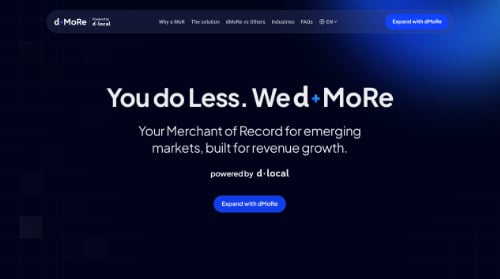
dLocal has launched dMoRe, an integrated merchant-of-record service designed to streamline entry into emerging markets. By assuming the legal and financial responsibilities of a local seller, dMoRe allows enterprises to bypass the necessity of establishing individual local entities. This service integrates dLocal’s existing payment rails with localized compliance and banking partnerships, effectively serving as a bridge for businesses looking to scale rapidly into regions with historically high regulatory barriers.

Simultaneously, Paysafe has partnered with FastSpring to offer a comprehensive merchant-of-record solution. This co-branded offering focuses on the digital goods and software sectors, where tax remittance, VAT management, and chargeback mitigation often consume significant administrative resources. By centralizing these requirements, the partnership enables software and app developers to focus on product innovation rather than international fiscal administration.
Logistics and the Integration of Freight
The logistics sector is undergoing a transition from siloed parcel shipping to holistic supply chain management. ShipStation, a cornerstone of the small-to-mid-sized merchant market, has integrated less-than-truckload (LTL) freight delivery directly into its platform. This development, marking the first major synergy since the formation of ShipStation Global, allows merchants to secure real-time freight quotes and track shipments within the same interface used for standard parcel shipping.
This move reflects an industry-wide trend toward consolidating the "last mile" with long-haul freight, allowing smaller merchants to compete on delivery speed and transparency. Complementing this is the launch of OmniSTAR by OneRail, an AI-powered delivery decisioning platform built in collaboration with NVIDIA. OmniSTAR utilizes high-speed compute to evaluate every available delivery mode—ranging from internal fleets to third-party couriers—to determine the lowest-cost option in real time, effectively automating complex logistical decision-making.
The Agentic AI Revolution
The most significant trend currently reshaping ecommerce is the emergence of "agentic AI." Unlike traditional AI, which provides information or generates text, agentic AI systems are designed to perform tasks autonomously, from managing inventory to executing marketing campaigns.
Runable, an AI agent platform that recently secured $21 million in Series A funding, is at the forefront of this shift. The platform is designed to handle the daily operations of a small business, including marketing execution, competitor analysis, and customer support. The influx of capital, led by Susquehanna Venture Capital and Nexus Venture Partners, underscores investor confidence in the transition from human-managed to agent-managed business operations.
Other notable agentic developments include:
- LTK: The creator commerce giant has introduced an agentic experience that proactively identifies trending opportunities and optimizes campaign launches, effectively removing the manual overhead previously required for influencer marketing.
- Helium 10: The platform has released an AI agent for Amazon sellers that diagnoses operational friction points and recommends corrective actions, further integrating with industry-standard models like Claude and ChatGPT.
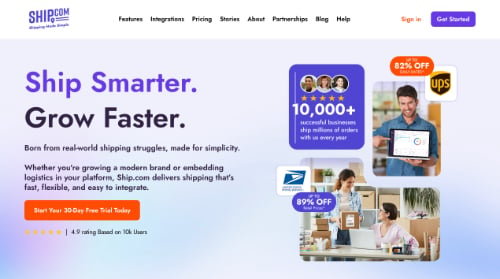
- Ship.com: The platform has introduced Ship AI, which automates shipping management, alongside tools that allow developers to bake shipping workflows directly into broader AI-driven applications.
- Atomic One: This platform has debuted an autonomous system specifically for Amazon store management, enabling sellers to query complex store data in plain language to trigger automated advertising and inventory adjustments.
Expanding the Creator Economy
The synergy between content creation and retail continues to deepen. Amazon has officially joined the YouTube Shopping Affiliate Program, allowing U.S.-based creators to tag products directly within their short-form videos and livestreams. This integration is significant because it removes the friction of external linking, allowing viewers to purchase products without leaving the YouTube environment. By enabling auto-tagging, YouTube is utilizing its own AI to identify eligible Amazon products in uploaded content, a move that is expected to scale affiliate revenue for creators significantly.
Furthermore, Broadpeak has introduced Click2Cart for connected television (CTV). By allowing viewers to interact with ads via their TV remotes to add items to a shopping cart, the technology bridges the gap between passive viewing and active purchasing, bringing the "shopper journey" into the living room.
Financial Services and CRM Evolution
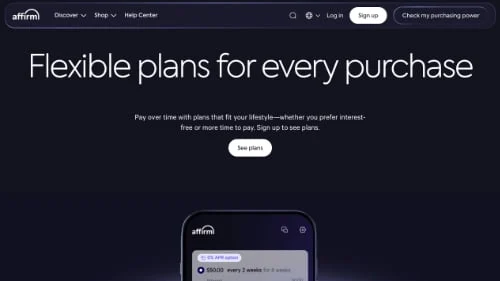
The integration of financial technology into merchant workflows remains a top priority. Affirm and Shopify have expanded their partnership to bring "Shop Pay Installments" to the Australian market. This move allows merchants to offer transparent, split-payment options to customers, a feature that has been shown to increase average order values in other global markets.
In the realm of customer management, HoneyBook has introduced a "Business Phone & SMS" add-on. By consolidating voice calls, two-way text messaging, and emails into a single client record, HoneyBook is attempting to solve the issue of fragmented communication, which often leads to lost sales or poor customer experiences for service-based independent businesses.
Infrastructure and Customization
For the technical merchant, customization is becoming easier and more accessible. Nitro Commerce has launched a platform that allows Shopify merchants to build private applications using natural language prompts. This "no-code" approach democratizes app development, allowing non-technical merchants to create bespoke tools that fit their specific operational needs without needing to hire software engineers.
Additionally, the collaboration between Ordoro and TeamCentral provides a robust framework for merchants to synchronize their data stacks. By using no-code connectors, businesses can ensure that inventory, shipping, and order data flow seamlessly between disparate systems, minimizing the risk of overselling and inventory inaccuracies.

Fact-Based Analysis of Industry Implications
The rapid proliferation of these tools suggests that the next phase of ecommerce will be defined by three key pillars:
- Automation of Administrative Labor: As seen with Cashfree Payments’ "Relay" agents, the mundane tasks of verifying cash-on-delivery orders, contacting abandoned cart buyers, and reconciling transaction records are being shifted to AI agents. This shift is likely to reduce overhead costs for small-to-mid-sized businesses by a substantial margin.
- Global Access through Abstraction: Merchant-of-record services like dMoRe and the Paysafe/FastSpring partnership are effectively "abstracting away" the complexity of international trade. By shifting the burden of tax compliance and regulatory oversight to the service provider, businesses can expand internationally with significantly lower legal risk.
- The Consolidation of the Tech Stack: Merchants are moving away from maintaining a dozen disconnected apps in favor of integrated platforms. Whether it is ShipStation’s move into freight or HoneyBook’s CRM telephony features, the market is favoring "all-in-one" solutions that provide a unified view of the business.
As these AI-driven agents become more sophisticated, the role of the merchant will likely evolve from that of an "operator" to an "orchestrator." By setting the strategic parameters—such as profit margins, shipping lead times, and brand voice—merchants can allow autonomous systems to execute the daily tactical maneuvers required to keep a business running. While this transition offers immense potential for scaling, it also places a premium on the quality of data provided to these AI systems; in an era of autonomous commerce, the accuracy of the input remains the primary determinant of the outcome.
This ongoing transformation of the ecommerce ecosystem highlights a departure from the "do-it-yourself" era of the early 2010s. Modern merchants are no longer expected to build their own integrations or manually navigate international tax law; instead, they are increasingly relying on intelligent, automated infrastructure to manage the complexities of modern, globalized trade. As these technologies mature, the barrier to entry for global ecommerce will continue to drop, further intensifying competition and necessitating higher standards of operational efficiency across the board.