Navigating the New Era of Brand Loyalty: Why Consumer Trust Is Harder to Win and Keep

Brand loyalty has long been regarded as the ultimate validation of a company’s market strategy, representing the intersection of sustained revenue, consumer advocacy, and corporate resilience. In today’s hyper-fragmented digital marketplace, however, earning that loyalty has become exponentially harder, and losing it has never been easier. Driven by shifting consumer habits, the proliferation of digital creator communities, and a growing skepticism fueled by the rapid expansion of artificial intelligence, modern brand loyalty is undergoing a fundamental transformation. Businesses can no longer rely on traditional lagging indicators—such as quarterly sales reports, lagging customer satisfaction surveys, and historical purchasing patterns—to gauge consumer sentiment. By the time these conventional metrics are compiled and analyzed by corporate strategy teams, public perception may have already shifted irreversibly, leaving brands vulnerable to sudden customer churn.
To understand the modern crisis of consumer allegiance, industry analysts examine the complex interplay between brand loyalty, brand affinity, customer loyalty, and brand awareness. While these terms are frequently conflated, they represent distinct psychological and behavioral dimensions of the consumer relationship. Brand loyalty is explicitly defined as an ongoing, conscious preference for one specific enterprise over its competitors, anchored firmly in deep-seated trust and emotional connection rather than mere convenience, geographic proximity, or habit. It manifests concretely when consumers repeatedly select a brand despite the availability of cheaper alternatives or more convenient purchasing channels. Conversely, brand affinity reflects the emotional core of the consumer relationship—the feeling that a brand reflects an individual’s personal values, lifestyle, or identity. Customer loyalty, on the other hand, describes transactional repeat behaviors driven by logistical advantages like loyalty programs, rewards points, or exceptional service infrastructure, while brand awareness measures broad market recognition of a company’s name, logo, or product portfolio.
The historical timeline of consumer trust has accelerated dramatically over the past decade. Decades ago, brand perception was largely shaped through controlled corporate channels, including television commercials, print advertisements, and direct customer service interactions. The advent of social media decentralized this narrative, and the current landscape has pushed decentralization to unprecedented extremes. Today, a prospective buyer’s first impression of a product is rarely formed on a brand’s official website. Instead, discovery frequently happens organically through a multi-layered ecosystem: a consumer might discover a product via an independent creator’s unboxing video, read polarized community discussions on forums like Reddit, and encounter a critical video review on TikTok before ever engaging directly with the corporate vendor. By the time the consumer interacts with official brand channels, their baseline perception has already been firmly established.

Compounding this fragmented discovery path is a profound crisis of authenticity and public skepticism. According to comprehensive market data from Sprout Social’s Q1 Pulse Survey, approximately 35% of active social media users report that their overall trust in digital content has measurably decreased over the past year alone. When asked to identify the primary drivers of this erosion, 30% of respondents pointed directly to the proliferation of online misinformation, while 20% cited the unregulated expansion of synthetic, AI-generated content. Furthermore, an overwhelming 88% of surveyed users agreed that the rapid evolution of generative AI video tools has fundamentally diminished their trust in the news and media they consume across social platforms. Corporate communications and marketing campaigns face this exact same rigorous scrutiny. An overly polished corporate testimonial may instantly trigger skepticism if consumers suspect underlying AI generation, while a vague or defensive response to legitimate consumer criticism can quickly ignite a broader public relations crisis. Consequently, the threshold for establishing brand credibility has risen significantly, forcing organizations to prove that their public actions consistently align with their stated corporate values across every digital touchpoint.
The operational consequences of failing to capture and interpret these shifting consumer sentiments in real-time are severe. According to data from the comprehensive Social Intelligence Report, an astonishing 86% of corporate and marketing professionals admit to having missed critical business opportunities over a recent two-year span simply because customer insights were delayed, siloed across disparate departments, or underutilized. Among these missed milestones, reacting too slowly to rapid market shifts was cited as the single most common failure, affecting 33% of organizations. Furthermore, the report highlights a striking operational bottleneck: only 10% of modern enterprises possess the technological capability to act upon a social media insight within a matter of hours. This data-lag gap is largely exacerbated by organizational friction. Different departments traditionally rely on isolated data systems—customer service platforms track direct complaints, sales teams monitor transactional volumes, and marketing divisions analyze engagement metrics—preventing a unified, real-time view of the consumer lifecycle. This structural disconnect directly validates consumer frustrations; Sprout Social’s Q4 Pulse Survey revealed that 55% of consumers believe brands listen adequately to feedback but consistently fail to act upon what they hear, with only 31% stating that enterprises excel at both listening and executing meaningful follow-up actions.
To bridge this critical gap and rebuild lasting brand equity, progressive enterprises are redefining their engagement strategies around six core pillars, shifting away from reactive marketing toward proactive, intelligence-driven operations.
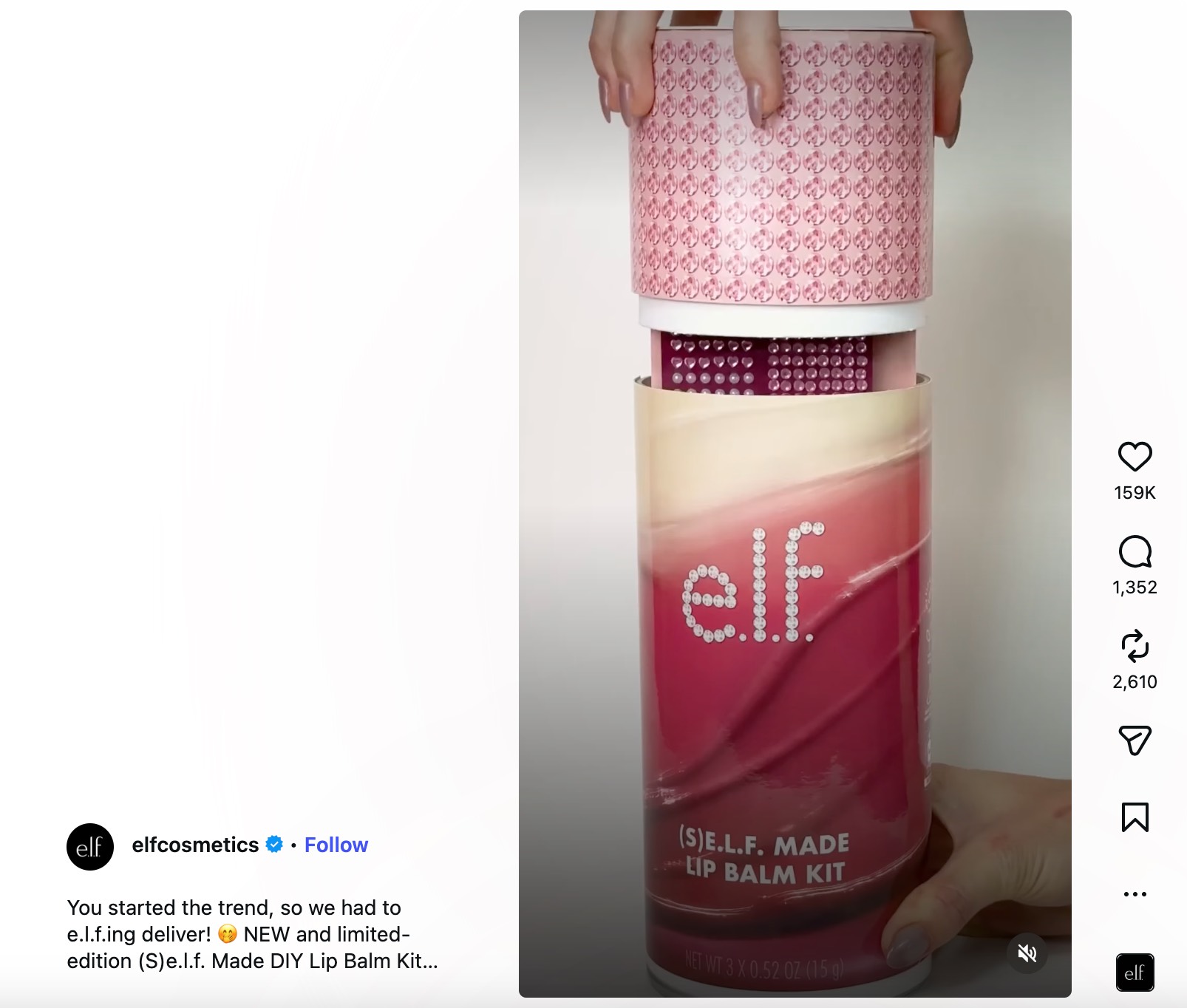
First, businesses are expanding their listening parameters far beyond owned channels. Relying solely on direct brand mentions and tagged post comments captures only a fraction of the broader market conversation. Modern social listening and media intelligence tools now enable enterprise teams to monitor organic discussions occurring within niche Reddit threads, independent creator comment sections, and broad category-wide dialogues. A prominent historical example of this strategy in action is e.l.f. Cosmetics, which successfully identified an unprompted DIY lip gloss trend gaining viral traction across social media networks. Rather than ignoring user-generated experimentation, the brand rapidly translated this behavioral pattern into a commercial product offering—the limited-edition (S)e.l.f. Made DIY Lip Balm Kit—by paying close attention to what consumers were organically doing rather than waiting for traditional focus groups or formal feedback loops.
Second, organizations are institutionalizing the practice of channeling unprompted consumer feedback directly into core product development and corporate decision-making. Public platforms regularly serve as repositories for creative product hacks, operational frustrations, and direct feature requests. When routed effectively to research and development teams, this everyday chatter transforms into invaluable operational input. A notable benchmark for this approach is Oatly’s strategic rollout of its Matcha Latte product line. The beverage brand utilized advanced social intelligence tools to detect surging consumer demand across X, Instagram, and Reddit, alongside dedicated reviews from TikTok creators demonstrating how they utilized Oatly products in specialized matcha beverages. Market research teams systematically channeled these organic findings directly into corporate innovation and R&D pipelines, utilizing real-world consumer behavior as foundational proof points to greenlight and support the new product launch.
Third, brands are embracing public accountability by transparently demonstrating how consumer feedback directly influences corporate changes. When a recurring customer complaint successfully prompts an engineering fix or a operational modification, companies are increasingly electing to announce these adjustments openly. Acknowledging previous experiential gaps publicly closes the feedback loop and provides tangible evidence that consumer voices carry genuine weight within the organization. Burger King exemplified this methodology through its strategic marketing campaigns, which openly acknowledged historical disconnects between its corporate brand promises and everyday customer restaurant experiences. By incorporating real, unvarnished social media commentary directly into promotional materials, Burger King signaled to its audience that consumer perspectives directly dictate corporate evolution, thereby strengthening overall brand credibility.
Fourth, enterprises are elevating social media from a basic marketing broadcast channel into a premier, frontline customer care infrastructure. Because modern consumer service inquiries frequently play out in public digital forums, the speed, empathy, and personalization of corporate responses directly dictate whether a customer deepens their relationship or defects to a competitor. Industry metrics from comprehensive content strategy reports emphasize that personalized customer service and active audience engagement in smaller, niche digital spaces rank among the top experiential priorities for contemporary buyers. By integrating social messaging queues directly into centralized customer relationship management systems—such as advanced Salesforce integrations—care teams can access holistic customer histories in real time without navigating disconnected software silos, ensuring a seamless and responsive support experience.
Fifth, brands are fundamentally rethinking their approach to influencer marketing by prioritizing authenticity and relatability over sheer audience reach. While mega-influencers offer massive visibility, contemporary consumer trust has shifted toward more intimate, credible sources. Industry data underscores a stark contrast: 57% of modern consumers place their highest trust in everyday users and niche micro-influencers for genuine product recommendations, compared to a mere 9% who maintain trust in mega-influencers. Despite this shift, micro-influencer partnerships remain highly effective, with approximately 67% of consumers purchasing products based on peer recommendations over the past year. By partnering with brand-safe, niche creators who possess established audience credibility, businesses can access targeted demographics without sacrificing authenticity.

Sixth, organizations are actively empowering frontline workers and internal employee voices to humanize the corporate brand. Employees offer an organic, insider perspective on the expertise, culture, and daily operations of an enterprise. Statistical insights indicate that nearly 40% of consumers discover a new product or service through employee-generated content at least once a month. Employee advocacy programs provide staff members with pre-approved corporate content while preserving creative autonomy for personal perspectives, allowing audiences to connect with the brand through real individuals who understand it from the inside out.
Measuring the success of these comprehensive initiatives requires a balanced analytical framework that evaluates both historical behavior and real-time sentiment. Lagging indicators—such as historical sales figures, repeat purchase rates, customer retention statistics, and formal survey results—reflect past consumer actions and validate long-term trends. However, because these metrics look backward, they must be paired with leading attitudinal indicators, including real-time AI-powered sentiment analysis and share-of-voice tracking, which quantify current public perception and narrative momentum. The most accurate assessment of brand health emerges when organizations synthesize historical transactional data with live social listening streams. For example, a sudden drop in repeat purchase rates carries far greater strategic urgency when correlated simultaneously with a spike in real-time social conversations highlighting emerging customer frustrations regarding pricing structures or service reliability.
Ultimately, maintaining brand loyalty once it has been established requires continuous vigilance against shifting consumer expectations and emerging market risks. Proactive social media monitoring and predictive media intelligence allow risk-management teams to identify brewing negative narratives before they escalate into full-scale retention crises. Furthermore, as enterprises accelerate their integration of generative artificial intelligence, maintaining absolute transparency regarding AI usage—such as clearly labeling synthetic content and disclosing the implementation of virtual brand influencers—is paramount, as consumer discomfort with undisclosed automation remains a significant threat to organizational trust. In a digital economy defined by constant disruption, brand loyalty is not a permanent destination, but an ongoing, dynamic journey that demands active listening, operational agility, and an unwavering commitment to authentic consumer engagement.