Wildfires in Spain Threaten NASA Deep Space Network as Climate Crisis Escalates Across Europe

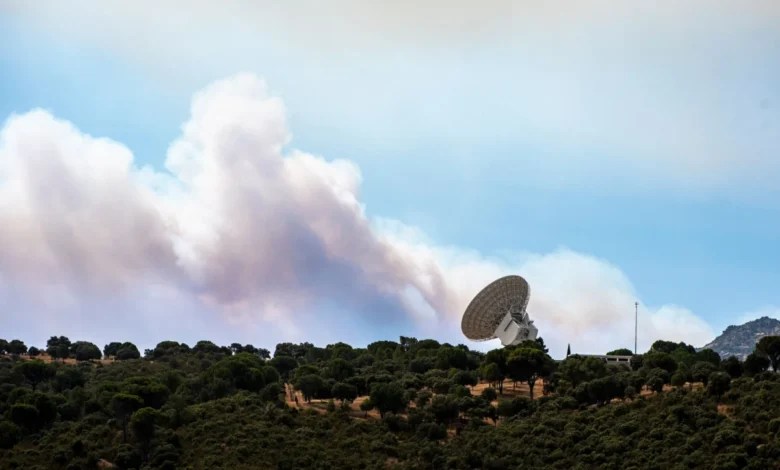
The escalating global climate crisis has reached a critical threshold where its effects are now interfering with humanity’s ability to communicate with the furthest reaches of the solar system. On Friday, intense wildfires in central Spain encroached upon the Madrid Deep Space Communications Complex (MDSCC), one of only three facilities worldwide that the National Aeronautics and Space Administration (NASA) utilizes to maintain contact with its most prestigious and distant spacecraft. The facility, located in Robledo de Chavela, plays a pivotal role in managing data and commands for iconic missions including the Voyager 1 interstellar probe, the James Webb Space Telescope (JWST), and the Artemis program, which recently completed its historic circumlunar flight.
As multiple blazes burned out of control near the Spanish capital of Madrid, the regional government declared a high-level wildfire emergency. The intensity of the fires necessitated the issuance of evacuation orders for approximately 60,000 residents across several municipalities. The Robledo de Chavela area, characterized by its rugged terrain and Mediterranean forest, became a focal point of concern as photographers captured dramatic images of towering radio antennas framed by thick plumes of smoke and approaching flames.
The Strategic Importance of the Madrid Deep Space Communications Complex
The facility in Spain is a cornerstone of the Deep Space Network (DSN), which NASA describes as the largest and most sensitive scientific telecommunications system in the world. To ensure 24-hour coverage of the sky as the Earth rotates, NASA operates three complexes spaced approximately 120 degrees apart in longitude: Goldstone, California; Canberra, Australia; and Madrid, Spain. This strategic positioning ensures that as one site "sets" from the perspective of a spacecraft, another "rises," allowing for an uninterrupted stream of data.
The Madrid complex houses several massive parabolic reflector antennas, including the 70-meter (230-foot) diameter antenna known as DSS 63. These instruments are capable of capturing the incredibly faint signals sent from Voyager 1, which is currently more than 15 billion miles away from Earth in interstellar space. Furthermore, the site is essential for the James Webb Space Telescope, which orbits the sun at the second Lagrange point (L2), and for the Artemis missions, which represent the vanguard of humanity’s return to the Moon. Beyond communication, the Madrid site is a vital hub for radio astronomy, where researchers use the sensitive equipment to study celestial phenomena and the fundamental physics of the universe.
Chronology of the Emergency and NASA’s Response
The crisis began mid-week as a record-breaking heatwave gripped the Iberian Peninsula, drying out vegetation and creating a "tinderbox" environment. By Friday, the fire near Robledo de Chavela had intensified, driven by shifting winds and high temperatures. Recognizing the immediate threat to personnel, NASA officials acted swiftly.
A NASA spokesperson confirmed that the agency successfully evacuated all staff from the Madrid complex as the flames approached the perimeter. "The safety of our personnel is our primary concern," the spokesperson stated. During the height of the fire, the facility was placed in a "safe state," with sensitive electronic equipment protected as much as possible against smoke and heat.
By Saturday morning, NASA reported that the fire had passed through the observatory complex. However, the extent of the damage remains unknown. The heat from wildfires can warp delicate metal structures, while smoke and ash can infiltrate sensitive cooling systems and optical sensors. "Any potential damage will be assessed when it is safe to do so," the spokesperson added, noting that a site assessment would be conducted as soon as local fire authorities granted clearance.
In the interim, NASA’s robust contingency protocols were activated. The agency "seamlessly transitioned support for mission operations" to the Goldstone Deep Space Communications Complex in California. This handover ensured that there was no loss of data or control for active missions. While the DSN is designed to handle such transitions, the prolonged loss of one of the three sites would significantly reduce the network’s overall bandwidth, potentially delaying some scientific data downloads or forcing mission controllers to prioritize certain spacecraft over others.
The Broader European Wildfire Crisis
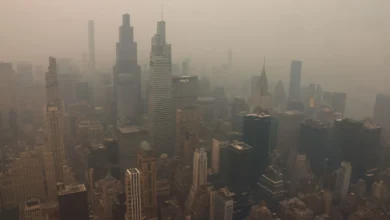
Spain is not alone in its struggle against the current wave of infernos. Across the border in France, the situation is equally dire. In the Gironde region, near the wine capital of Bordeaux, wildfires have devastated thousands of hectares of forest. The scale of the disaster has forced beachgoers along the Atlantic coast to witness surreal scenes of orange skies and ash washing up on the shore.
French Interior Minister Laurent Nunez provided a sobering update on the situation, explaining that a sudden shift in wind transformed a manageable fire into a "large, self-sustaining" blaze. "It is now moving east, toward the Bordeaux metropolitan area," Nunez told national television channel Tf1. "We are going to reorganize our response so we can fight it from the ground and prevent it from advancing."
Across both Spain and France, the total number of people displaced by the fires has reached approximately 200,000. Emergency services from multiple European Union member states have been mobilized to assist, including firefighting aircraft and specialized ground units.
Supporting Data: Climate Drivers and Record Temperatures
The current wildfire crisis is inextricably linked to the extreme weather patterns observed across Europe this summer. Meteorologists point to a series of "heat domes"—high-pressure systems that trap hot air over a region for extended periods—as the primary driver of the record-breaking temperatures.
In Spain and France, temperatures have consistently reached 40 degrees Celsius (104 degrees Fahrenheit) and above. Data from European climate monitors indicate that these temperatures are up to 10 degrees Celsius higher than historical averages for this time of year. Such extreme heat accelerates the process of evapotranspiration, stripping moisture from trees and shrubs. This creates a surplus of "fine fuels" that can ignite with a single spark, whether from a lightning strike, a discarded cigarette, or malfunctioning power lines.
The Mediterranean region is considered a climate change "hotspot," warming faster than the global average. The increased frequency and intensity of these heatwaves have extended the traditional wildfire season, making it longer and more dangerous. This trend poses a direct threat to critical infrastructure, including scientific research stations and telecommunications hubs that were often built in remote, forested areas to avoid radio frequency interference from urban centers.
Implications for Space Exploration and Infrastructure Resilience
The threat to the Madrid Deep Space Communications Complex highlights a growing vulnerability in humanity’s high-tech infrastructure. As climate change increases the frequency of natural disasters, the facilities we rely on to explore the cosmos are increasingly at risk from terrestrial environmental factors.
- Mission Continuity: While the DSN has redundancy, the loss of a major node like Madrid during a critical mission phase—such as a lunar landing or a planetary flyby—could be catastrophic. The network is already operating at near-maximum capacity due to the influx of data from the James Webb Space Telescope and the growing number of private and international moon missions.
- Economic and Scientific Costs: Repairing or replacing specialized deep-space antennas is an incredibly expensive and time-consuming endeavor. These instruments are not off-the-shelf components; they are custom-engineered precision tools. Any long-term outage at the Madrid site would result in a significant backlog of scientific data, potentially delaying discoveries for months or years.
- Strategic Vulnerability: The incident serves as a wake-up call for space agencies to invest in greater infrastructure resilience. This could include more aggressive forest management around sensitive sites, the installation of advanced fire suppression systems, or even the development of additional DSN nodes in geographically diverse locations to provide more layers of redundancy.
Future Outlook and Weather Forecasts
The immediate outlook for the firefighting efforts in Spain and France is a mix of temporary relief and renewed danger. Weather forecasts indicate that a cooler air mass will move into the Mediterranean over the weekend, potentially providing firefighters with a window of opportunity to contain the most aggressive fronts.
However, meteorologists warn that this respite will be short-lived. Temperatures are expected to climb again by Monday, with another intense heat spike projected for later in the week. If the fires are not fully contained before the next round of extreme heat, the risk of new ignitions or the rekindling of existing blazes remains high.
For NASA, the focus in the coming days will be the technical inspection of the Robledo de Chavela facility. Engineers will need to check the structural integrity of the antenna mounts and the state of the delicate receivers that operate at cryogenic temperatures. Until the Madrid complex is fully restored to operational status, the global scientific community remains on edge, reminded once again that the challenges of climate change are not confined to our planet alone—they threaten the very tools we use to understand our place in the universe.