PressMeGPT Emerges as a Critical Bridge for Migrating AI-Generated Websites to the Robust WordPress Ecosystem

In a significant development for the web design and development industry, PressMeGPT has launched a novel solution designed to bridge the growing gap between rapidly created AI-generated frontends and the comprehensive functionality of the WordPress content management system. This innovative platform addresses a long-standing challenge faced by developers, agencies, and individual creators: how to transition a visually appealing, AI-produced website into a fully manageable, extensible, and owned WordPress theme without the arduous process of manual reconstruction.
The Challenge: Bridging AI-Generated Design with WordPress Functionality
The digital landscape has witnessed an explosion of AI-powered website builders and design tools in recent years. Platforms such as Lovable, Bolt.new, and Base44 offer users the ability to conjure aesthetically pleasing websites with remarkable speed and minimal technical expertise. Similarly, clients frequently arrive with self-made sites that, while visually appealing, often lack the underlying infrastructure necessary for long-term management, scalability, and robust content publishing. The appeal of these AI-driven tools lies in their efficiency; they democratize design, allowing almost anyone to create a web presence quickly.
However, this rapid design capability often comes with significant drawbacks. A common predicament arises when these users, or their developers, seek to integrate features such as blog post management, advanced SEO tools, e-commerce capabilities via plugins, or simply gain full control over their site’s hosting and data. The answer, almost invariably, points to WordPress. With an estimated market share of over 43% of all websites on the internet, WordPress remains the undisputed leader in content management systems, renowned for its flexibility, vast plugin ecosystem, and user-friendly interface.
Historically, the path from an AI-generated frontend or a proprietary platform design to a native WordPress theme has been fraught with friction. The conventional wisdom dictated a laborious, manual rebuild, section by section, within the WordPress environment, often utilizing page builders like Elementor or the native Block Editor (Gutenberg). This process, while effective, consumed invaluable time and resources, negating much of the initial time-saving benefit offered by AI design tools. The core issue stemmed from a fundamental mismatch: AI tools excel at visual output but rarely produce structured, clean code compatible with WordPress’s dynamic content architecture. Furthermore, many AI builders lock users into their platforms, limiting ownership, portability, and the ability to integrate third-party functionalities crucial for business growth.
Introducing PressMeGPT: A Solution for Seamless Migration
PressMeGPT has been engineered specifically to address this critical workflow bottleneck. The platform positions itself as a transformative tool that can ingest various forms of website design – be it an existing live website, an AI-generated project from another platform, or even a simple plain text prompt – and intelligently convert it into a production-ready WordPress theme or an Elementor template. This output, crucially, is fully owned by the user, granting complete freedom over hosting and customization.

The company claims that this conversion process can be completed in mere minutes, delivering approximately 80% of a finished design. This efficiency allows developers and designers to shift their focus from the time-consuming task of initial reconstruction to the more nuanced and valuable work of refinement, branding, and bespoke customization. This proposition marks a significant leap forward, offering a streamlined, automated alternative to the manual rebuilding efforts that have long plagued cross-platform migrations.
How PressMeGPT Works: Inputs, Outputs, and Core Functionality
The versatility of PressMeGPT’s conversion process is a cornerstone of its appeal. The tool is designed to accept a diverse range of inputs, catering to various starting points in the web development lifecycle:
- Existing Websites (URL): Users can simply provide the URL of an existing website, regardless of its underlying platform. This is particularly valuable for clients seeking to migrate away from proprietary builders or static sites to the more dynamic and feature-rich WordPress environment.
- AI-Generated Projects: Designs created on other AI platforms, which typically produce static HTML/CSS, can be fed into PressMeGPT, transforming them into functional WordPress themes.
- HTML/CSS Code: For those with existing code snippets or static site exports, direct HTML/CSS input is supported, offering a pathway to WordPress integration.
- Plain Text Prompts: Leveraging the power of large language models, users can describe their desired website design in natural language, and PressMeGPT will generate a corresponding WordPress theme. This empowers individuals without design files or existing sites to conceptualize and realize their web presence directly within a WordPress framework.
Beyond these immediate capabilities, PressMeGPT has outlined an ambitious roadmap, with integrations for popular design tools like Canva and Figma slated for future release across all subscription plans. This will further expand the platform’s utility, allowing designers to convert their visual mockups directly into functional WordPress themes, significantly reducing the gap between design and development.
Regardless of the input method, each generation process within PressMeGPT produces three distinct design variations. This offers users immediate choices and a foundation from which to refine their preferred aesthetic. The final output is either a native WordPress theme, compatible with the Block Editor (Gutenberg) and Full Site Editing, or an Elementor template. This flexibility ensures compatibility with the most popular WordPress site-building methodologies, allowing users to continue working with their preferred tools for further customization. This approach distinctly separates PressMeGPT from earlier generations of "prompt-only" AI website builders, whose outputs often lacked the native WordPress structure or the ability to integrate existing site content. The capacity to convert an existing site is what truly positions PressMeGPT as a powerful tool for migrations, not just new site generation.
The Broader Context: Why WordPress Remains King for Management
The problem PressMeGPT aims to solve is rooted in the fundamental dichotomy between rapid design creation and long-term website management. While AI builders excel at generating visually appealing frontends quickly, they often fall short in providing a robust, flexible Content Management System (CMS). Many leave users without a proper backend for content updates, user management, or the crucial ability to install plugins for extended functionality. Crucially, a significant number of these AI-generated sites are not optimized for Search Engine Optimization (SEO) out of the box, a critical component for online visibility and business success.
The moment a small business, an agency, or an individual content creator decides to add blog posts, manage multiple users, implement e-commerce features, or enhance SEO through specialized plugins, WordPress invariably becomes the preferred, if not essential, destination. Its open-source nature, vast community support, and unparalleled ecosystem of themes and plugins provide a level of control and extensibility unmatched by most proprietary AI platforms. However, until now, leveraging WordPress’s power often meant recreating the AI-generated layout manually, a painstaking process that consumed countless hours.

This friction isn’t limited to AI-built sites. Even in traditional web development, assembling complex layouts using page builders like Elementor or the Block Editor can be time-intensive. Furthermore, anyone who has purchased a pre-made theme from marketplaces like ThemeForest understands that the polished demo site rarely translates seamlessly when populated with actual content, often requiring significant adjustments. PressMeGPT aims to circumvent these inefficiencies by providing a sophisticated draft that already closely mirrors the intended design, allowing human effort to be concentrated solely on the final, critical details and bespoke functionalities.
Integration with Existing Workflows: Elementor and Beyond
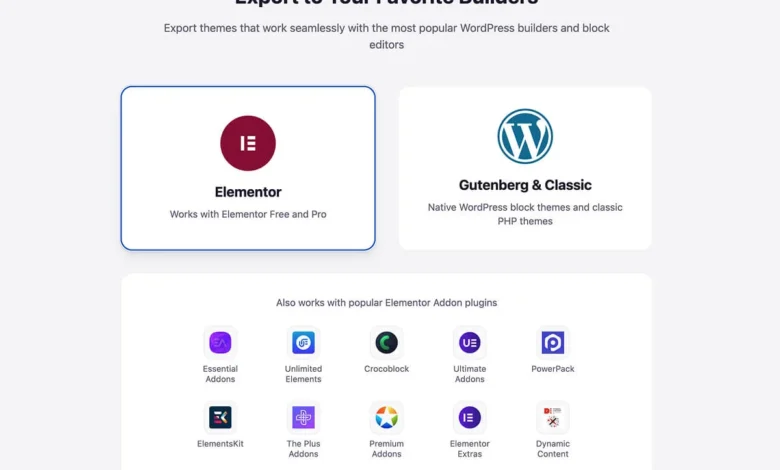
A key advantage of PressMeGPT is its ability to integrate seamlessly into existing web development workflows without requiring users to abandon their preferred tools. While it can generate initial pages and posts, it is not intended to replace established page builders. Instead, it operates "upstream," handling the initial theme generation. Once the theme or template is generated, it can be handed off to popular tools like Elementor or the native WordPress Block Editor for detailed customization.
The platform boasts compatibility with a range of popular page builder add-ons, including Essential Addons, Unlimited Elements, and Kadence Blocks. This broad compatibility ensures that teams and freelancers already invested in these ecosystems can leverage PressMeGPT without disrupting their established processes or learning new interfaces. For agencies and developers standardized on Elementor, the ability to export directly as an Elementor template means the generated work drops straight into a familiar and efficient workflow. Significantly, these Elementor templates are designed to work with the free version of Elementor, removing the barrier of needing a Pro license for basic customization. It is important to note, however, that the Elementor export feature is typically available from the "Freelance" plan upwards, with the entry-level "Creator" plan focusing on Gutenberg and classic theme exports.
The Power of Ownership: True Themes, Not Locked Platforms
Perhaps one of the most compelling aspects of PressMeGPT is its commitment to user ownership. The output is a genuine WordPress theme, not a page hosted on a third-party platform with restrictive terms. This means users receive the actual theme files, which they can install on an unlimited number of websites. This unencumbered ownership provides unparalleled freedom to switch hosting providers at any time, migrate sites effortlessly, and maintain complete control over intellectual property. This principle applies equally whether the theme is for a personal project or a client’s website, eliminating vendor lock-in and offering true long-term flexibility and security.
A Closer Look at the Conversion Process
The practical workflow within PressMeGPT is structured into three main steps, designed for clarity and efficiency:

- Input Submission: Users initiate the process by providing their chosen input – a URL, HTML/CSS code, an AI project file, or a detailed text prompt describing the desired design.
- Theme Generation: PressMeGPT’s AI engine then processes this input, analyzing the design elements, structure, and content. It then generates three distinct design variations, providing options for the user.
- Export and Refinement: The user selects their preferred variation, which can then be exported as either a native WordPress block theme (for the Block Editor and Full Site Editing) or an Elementor template.
A crucial detail in this process is the generation of proper block themes. Unlike many AI tools that merely produce individual blocks or sections, leaving users to construct the header, footer, and overall site structure manually, PressMeGPT generates complete block themes with real header and footer template parts. These are fully editable within WordPress’s native Full Site Editor, offering comprehensive control over the entire site’s layout and design without proprietary interfaces.
The company’s FAQ further emphasizes that these generated themes adhere to modern block theme standards and are designed to run efficiently without requiring additional plugins or subscriptions. This commitment to lean, native WordPress themes is a significant advantage. It contributes to faster site speeds, reduces potential plugin conflicts, and enhances security – a critical consideration given that third-party plugins are often the root cause of security vulnerabilities in WordPress installations.
Addressing the "80% Solution": Human Touch Remains Critical
While PressMeGPT’s claim of delivering approximately 80% of a finished design in minutes represents a monumental time-saving proposition, it is crucial for users to approach this figure with realistic expectations. The remaining 20% is not merely an afterthought; it represents the critical layer of polish, bespoke branding, and intricate details that imbue a website with unique identity and functionality. This final 20% — the human touch — remains entirely the responsibility of the designer or developer. It encompasses:
- Refinement of Aesthetics: Fine-tuning typography, color palettes, spacing, and visual hierarchy to perfectly align with brand guidelines.
- Content Integration and Optimization: Ensuring all content is properly formatted, placed, and optimized for readability and SEO.
- Custom Functionality: Implementing unique features, complex forms, third-party integrations, or specific interactive elements that go beyond standard design.
- Accessibility and Usability: Rigorously testing for accessibility standards (WCAG) and ensuring an intuitive user experience across all devices.
- Performance Optimization: Beyond the theme’s inherent speed, further optimizing images, scripts, and server configurations for peak performance.
Setting this expectation upfront is vital for users to maximize the benefits of PressMeGPT without falling into the trap of assuming a fully finished, ready-to-launch site will emerge without further effort.
Furthermore, while the tool is robust, certain practical considerations warrant attention. A "Theme Checker" feature, designed to review themes against accessibility guidelines and Core Web Vitals, is anticipated for higher-tier plans. Until its release, users are advised to manually check the generated themes for these crucial performance and user experience metrics before deploying them on live sites. Another point from the knowledge base highlights that exported themes initially reference images and videos by their remote paths. Localizing this media into the WordPress media library is a separate step that consumes credits and is typically excluded from the free plan. While manageable, this is an important detail to be aware of during the initial project setup to avoid unexpected workflow hitches.
Future Developments and Quality Assurance
The dynamic nature of AI development means that tools like PressMeGPT are continuously evolving. The planned integration with Canva and Figma underscores a commitment to expanding its utility for designers. The future "Theme Checker" feature will be a significant step towards ensuring the generated themes meet higher standards for accessibility and performance, critical for modern web development. As AI models become more sophisticated, it is plausible that the "80% solution" could evolve, potentially reducing the human refinement needed for certain types of websites. However, the unique creative and strategic input of human designers will always remain indispensable for truly bespoke and high-performing digital experiences.

Target Audience: Who Benefits Most?
PressMeGPT’s unique value proposition makes it particularly appealing to several key segments within the web development ecosystem:
- Web Agencies: For agencies managing a diverse client portfolio, the ability to rapidly convert existing client sites or AI-generated concepts into functional WordPress themes can lead to significant compounding time savings. If the platform reliably delivers 80% of a build, the hours saved across numerous projects can dramatically improve project profitability and turnaround times. Moreover, the Elementor export feature enables junior team members to handle the refinement process, freeing senior developers for more complex, custom coding tasks.
- Freelance Developers and Designers: Freelancers often juggle multiple projects and tight deadlines. PressMeGPT allows them to automate the foundational layout work, freeing up their valuable time to focus on the custom functionalities, unique design elements, and client-specific integrations that truly differentiate their services and command higher fees. This aligns with the broader trend of AI tools enhancing developer productivity.
- Bloggers and Content Creators: For individuals looking to establish or refresh their online presence, PressMeGPT offers an unprecedented level of accessibility. The ability to simply describe a desired site and receive a working, editable WordPress theme eliminates the need to learn complex theme development, navigate overwhelming theme marketplaces, or invest in expensive custom builds. This empowers content creators to focus on what they do best – creating content – rather than grappling with technical web development hurdles.
- Small Businesses: Many small businesses start with basic websites built on easy-to-use platforms. As they grow, their needs often outpace these initial platforms. PressMeGPT provides a cost-effective and efficient pathway to migrate to a more scalable and feature-rich WordPress environment without incurring the significant expense and downtime associated with a full rebuild.
Understanding the Economics: Pricing and Credits
Like many AI-powered services, PressMeGPT operates on a credit-based system. Generating a new theme typically costs 3 credits and yields three design variations. Each AI modification or iteration on a design consumes at least 1 credit, while converting an existing website from a URL usually costs between 2 to 3 credits. The company estimates that a fully customized theme might utilize anywhere from 7 to 10 credits in total, depending on the complexity and number of revisions.
To facilitate testing and initial exploration, PressMeGPT offers a free plan, which provides 5 credits per month. This allows users to generate a test theme and experience the platform’s capabilities firsthand. However, the free plan comes with certain limitations: themes generated are public, media migration is excluded (requiring manual localization or a paid plan), and exports are limited to classic themes only, without the advanced block theme or Elementor template options.
Paid plans are structured to cater to varying usage levels, typically billed annually with monthly and one-time billing options also available. For example, the "Creator" plan starts around $69 per year, offering 120 credits annually (sufficient for approximately one completed site per month). The "Agency" plan, aimed at higher-volume users, might cost around $399 per year, providing 1,800 credits (enabling the creation of roughly 15 sites per month). All paid plans are backed by a 30-day money-back guarantee, allowing users to evaluate the service with confidence.
A significant financial benefit lies in the ownership model: once a theme is exported, it belongs to the user. There are no per-site fees, ongoing subscriptions for the theme itself, or required proprietary plugins to maintain its functionality. This ensures the themes are genuinely future-proof, providing long-term value without recurring costs tied to the generated output.
Expert Perspectives and Industry Implications

Industry analysts view PressMeGPT as a strong contender in the evolving landscape of AI-assisted web development. "The integration of AI for frontend design with the robust backend of WordPress is a natural progression," notes Dr. Anya Sharma, a digital transformation consultant. "The challenge has always been the translation layer. PressMeGPT seems to be tackling this head-on, offering a pragmatic solution to a common industry pain point."
Developers appreciate the potential for efficiency gains. "We often get clients with existing sites on platforms that don’t scale or offer the functionality they need," says Mark Jensen, lead developer at a mid-sized web agency. "Rebuilding them in WordPress from scratch is a huge time sink. If PressMeGPT can truly provide a solid 80% draft, it will revolutionize our project timelines and allow us to take on more clients."
The emphasis on native WordPress block themes and Elementor compatibility is also a strategic move. "By aligning with the leading site-building paradigms in WordPress, PressMeGPT ensures its output is not just functional, but also familiar and extensible for the vast majority of WordPress users," comments Sarah Chen, a WordPress ecosystem expert. "This avoids creating yet another proprietary ecosystem and instead augments existing ones."
Conclusion: A Step Towards a More Efficient Web Development Future
PressMeGPT enters the market at a pivotal moment, addressing a genuine and often frustrating workflow gap in the web development industry. For individuals and organizations seeking to migrate existing websites from AI builders or proprietary platforms to the flexible and powerful WordPress ecosystem, or for those aiming to rapidly prototype new sites, PressMeGPT presents a compelling and efficient solution.
Its ability to convert diverse inputs into native WordPress themes or Elementor templates, combined with a strong emphasis on user ownership and compatibility with established workflows, positions it as a valuable tool for agencies, freelancers, and content creators alike. While the "80% solution" necessitates a continued human touch for final refinement and personalization, the potential for significant time and resource savings is undeniable.
The availability of a free plan with monthly credits provides an accessible entry point for evaluation. The easiest and most effective way for interested parties to assess PressMeGPT’s capabilities is to run a real-world project through the platform and scrutinize the output. As the web development landscape continues to evolve with AI, tools like PressMeGPT are poised to reshape how websites are designed, built, and managed, ushering in an era of greater efficiency and accessibility.