India’s Open Network for Digital Commerce: A Catalyst for a Digital-First Economy

India’s e-commerce landscape is on the cusp of a transformative surge, fueled by a young, digitally connected population and a proactive government. While the nation now boasts the world’s largest population, its online commerce penetration remains nascent compared to established markets like China and the United States. This presents an immense opportunity, particularly as 50% of India’s population is under the age of 25, and a staggering 840 million consumers are active smartphone users. The government, however, faces a delicate balancing act: fostering this digital revolution while safeguarding the livelihoods of millions of small, traditional shopkeepers, known as kiranas, who currently account for a substantial 75% of national consumer goods sales.
This complex challenge has spurred the development of groundbreaking digital initiatives. Foremost among these is the Unified Payments Interface (UPI), a government-backed, peer-to-peer digital payment infrastructure that has achieved widespread adoption and revolutionized financial transactions. Complementing this is the Open Network for Digital Commerce (ONDC), a more recent, yet equally ambitious, governmental endeavor designed to empower kirana merchants and other small businesses to establish a robust online presence.
The Genesis and Vision of ONDC
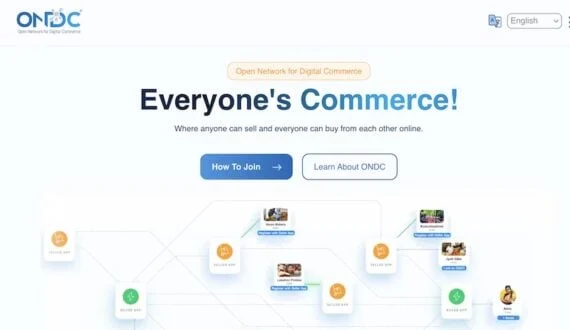
Launched in 2021, the ONDC is conceptualized as an open-source commerce framework, a stark departure from the proprietary, walled-garden approach of dominant e-commerce marketplaces such as Amazon India and Flipkart. Instead, ONDC operates on the principle of interoperability, connecting a diverse ecosystem of applications, payment providers, and logistics companies through standardized open protocols and transparent rules. The core objective is to democratize online selling, allowing kirana owners and independent merchants to participate in digital commerce without being beholden to any single platform.
The inspiration behind ONDC stems from a desire to level the playing field in India’s burgeoning digital economy. Historically, small businesses have faced significant barriers to entry in the online space, including high commission fees charged by major marketplaces, limited control over their brand presence, and a lack of transparency in algorithms that dictate product visibility. ONDC seeks to dismantle these barriers by providing an open, decentralized network where businesses can connect directly with consumers, facilitated by a multitude of third-party applications.
While ONDC’s trajectory has been one of steady growth, it has not yet achieved the ubiquitous penetration of UPI. Nevertheless, its impact is increasingly being felt across the nation. Beyond empowering small and medium-sized businesses (SMBs), ONDC is also being utilized by local brands as an additive distribution channel, enhancing their reach without necessitating a complete overhaul of their existing sales strategies. Crucially, foreign companies that adhere to India’s regulatory framework can also leverage the ONDC seller app ecosystem, opening new avenues for market entry and expansion.
How ONDC Operates: A Network of Interconnected Apps
The ONDC ecosystem is structured around distinct sets of applications for sellers and buyers. Seller applications serve as the primary interface for merchants, enabling them to list their products, manage inventory efficiently, and oversee order fulfillment processes. Several prominent seller apps have emerged to support this function, including Mystore, CostBo, and GoFrugal, each offering a suite of tools tailored to the needs of online retailers.
On the consumer side, buyer applications provide shoppers with a platform to browse an extensive array of products and complete purchases. Leading buyer apps that integrate with ONDC include Paytm, Bajaj Finserve, and Magicpin, offering users a seamless shopping experience. The interoperability of the network means that a consumer using one buyer app can discover and purchase goods listed by sellers registered on another seller app within the ONDC network.
A key differentiator of ONDC lies in its significantly lower selling fees. While traditional marketplaces often charge commissions ranging from 18% to 40%, ONDC’s fees typically fall between 3% and 10%. This economic advantage, coupled with the infrastructure’s transparent algorithms, non-discriminatory product sorting, and portable customer ratings, empowers sellers with greater control over their online presence and customer interactions. The process for brands to join ONDC is straightforward: they register with a chosen seller app, and their product listings are then automatically disseminated across the network, becoming accessible to a wider consumer base.
Diverse Categories and Global Brands Embrace ONDC
The ONDC network encompasses a broad spectrum of industries, including retailers, logistics service providers, restaurants, and hotels. While categories like groceries, food delivery, and home and kitchen items have demonstrated faster scaling due to their inherent higher order frequency, other sectors such as fashion, pharmaceuticals, and hospitality are also gaining traction.
Notably, ONDC has attracted the participation of major global brands. Companies such as Red Bull, Unilever, Nestle, PepsiCo, Procter & Gamble, L’Oréal, and Johnson & Johnson are now part of the ONDC network. Many international food brands that have established a presence on India’s rapid commerce platforms, like Blinkit, Swiggy Instamart, and Zepto, are finding ONDC to be a cost-effective way to expand their reach. This integration allows them to tap into a new customer base without incurring substantial additional costs.
Navigating the Regulatory Landscape: A Prerequisite for Foreign Sellers
For foreign brands considering entry into the Indian e-commerce market, a thorough understanding of the regulatory environment is paramount. The Indian government has implemented a multi-pronged approach to govern e-commerce, with distinct pathways for foreign sellers. These include leveraging existing marketplaces, partnering with local distributors, establishing direct-to-consumer (D2C) websites, or engaging in cross-border e-commerce. Each of these avenues comes with its own set of compliance requirements and strategic considerations.
The regulatory framework in India is dynamic, and foreign entities must remain abreast of evolving policies. These policies are often shaped by the government’s dual objectives of promoting digital inclusion and fostering a competitive marketplace. The implementation of initiatives like ONDC is a testament to this approach, aiming to create an environment where both established players and nascent businesses can thrive.
Supporting Data and Growth Projections
The potential for e-commerce growth in India is immense. While China’s e-commerce penetration stands at approximately 25%, India’s is currently in the low single digits. This disparity highlights a vast untapped market. Projections indicate that India’s internet user base is expected to surpass 900 million by 2025, with a significant portion of this growth driven by rural areas.
The rapid adoption of smartphones, coupled with increasing internet affordability, forms the bedrock of this digital transformation. The government’s Digital India initiative, launched in 2015, has been instrumental in driving digital literacy and infrastructure development across the country. ONDC, as a subsequent policy intervention, builds upon this foundation by providing the necessary digital commerce infrastructure.
The economic implications of ONDC are considerable. By reducing the cost of online selling, it has the potential to increase the profitability of small businesses, enabling them to invest further in their operations and create more employment opportunities. Furthermore, by fostering competition and offering consumers a wider array of choices at potentially lower prices, ONDC can contribute to overall economic growth and improved consumer welfare.
Official Responses and Industry Reactions
Government officials have consistently articulated their vision for a digitally empowered India. Speaking at various forums, representatives from the Ministry of Commerce and Industry have emphasized ONDC’s role in democratizing e-commerce and ensuring that the benefits of digital trade are accessible to all segments of society. They have highlighted the network’s potential to foster a more inclusive and competitive digital marketplace.
Industry stakeholders have largely reacted positively to the ONDC initiative. Small business owners, in particular, have expressed optimism about the opportunities it presents for expanding their customer base and increasing their revenue streams. Technology providers and logistics companies are also seeing ONDC as a catalyst for innovation and the development of new business models.
However, some established players in the e-commerce space have expressed reservations, primarily concerning the potential disruption to existing business models. Concerns have also been raised about the need for robust quality control and consumer protection mechanisms within the open network. The government has acknowledged these concerns and has stated its commitment to continuous refinement of the ONDC framework to address any emerging challenges.
Broader Impact and Future Implications
The success of ONDC has the potential to reshape India’s retail landscape. It could lead to a more decentralized and competitive e-commerce ecosystem, reducing the dominance of a few large players. For consumers, it promises greater choice, potentially lower prices, and improved access to goods and services, especially in Tier 2 and Tier 3 cities.
Moreover, ONDC’s open architecture could foster a vibrant ecosystem of innovation. Developers and entrepreneurs can build new applications and services on top of the ONDC network, creating novel solutions for online commerce. This could lead to a surge in digital entrepreneurship and job creation.
The long-term implications of ONDC extend beyond mere e-commerce. It is a crucial component of India’s broader digital transformation agenda, aiming to integrate millions of small businesses into the formal economy and enhance their participation in global trade. As India continues its journey towards becoming a digitally advanced nation, initiatives like ONDC will play a pivotal role in ensuring that this progress is inclusive and benefits all its citizens. The coming years will be critical in observing how ONDC evolves and its impact on the trajectory of India’s digital economy.