The Smallest Useful Loop: Loop Engineering in Enterprise Document Intelligence


The evolution of artificial intelligence, particularly in the realm of enterprise document intelligence and Retrieval Augmented Generation (RAG), has seen a significant shift in focus from prompt engineering to context engineering, and now, to loop engineering. This article delves into the critical role of loop engineering, specifically focusing on the smallest and most impactful loop: the clarification loop within question parsing. This mechanism, designed to handle ambiguous user queries in complex document environments, is proving to be a cornerstone for achieving production-quality RAG systems.
From Prompt Engineering to Loop Engineering: A Paradigm Shift
The journey in optimizing AI interactions has been marked by distinct phases. Initially, the onus was on the user to craft precise prompts, a practice known as prompt engineering. This approach, prevalent in 2023, treated the Large Language Model (LLM) as a stateless oracle, with quality heavily dependent on the user’s ability to articulate their needs effectively, often employing techniques like "think step by step."
By mid-2025, the focus shifted to context engineering. Visionaries like Tobi Lütke and Andrej Karpathy highlighted the "delicate art of filling the context window with just the right information for the next step." In this phase, the engineer takes a more active role, carefully curating the information fed into the LLM’s context window, recognizing that the prompt is merely one component among many. This approach acknowledges that an LLM’s effectiveness is significantly influenced by the quality and relevance of the data it processes.
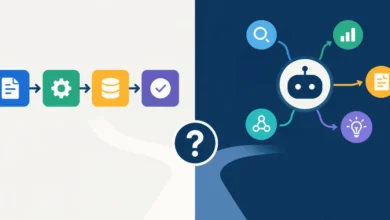
The current frontier, emerging in 2026, is loop engineering. Pioneered by platforms like LangChain and MindStudio, this discipline centers on designing the iterative cycles and feedback mechanisms around the LLM call. LangChain succinctly states that "the potential in agents is in the loops you build around them," while MindStudio frames it as "designing AI systems that operate in iterative cycles, repeating until a goal is met," emphasizing its role in "closing the feedback gap." These advancements are not mutually exclusive; they build upon each other, with prompt engineering shaping individual calls, context engineering optimizing what enters those calls, and loop engineering wrapping these calls in bounded, intelligent iterations.
The Core of the Clarification Loop: Handling Ambiguity in Document Analysis

Enterprise RAG systems, built on foundational bricks such as document parsing, question parsing, retrieval, and generation, often encounter a significant challenge: user queries that are inherently vague or incomplete. A prime example is a user asking "what is the premium?" when interacting with a fifty-page insurance policy. A naive RAG pipeline, employing basic keyword matching or simple embedding searches, might scan the entire document. This approach can lead to the retrieval of irrelevant information, such as exclusion clauses or boilerplate endorsement text, while missing the actual premium schedule, which might be located under a "General Information" section on page 3. The absence of specific keywords in the user’s query, coupled with the document’s complex structure, renders such systems ineffective.
This is where the loop-engineered pipeline demonstrates its superiority. In such a system, the question parser first analyzes the user’s query in conjunction with the document’s metadata, such as its Table of Contents (TOC). If the query’s core topic, like "premium," is not explicitly found in the TOC, the pipeline pauses its direct retrieval process. Instead, it initiates a clarification loop by posing a targeted, plain-language question back to the user: "I don’t see a ‘Premium’ section in this policy. Where should I look?"
This single turn is remarkably effective. The user might respond with "General Info," a typo like "generale information," or a rephrased suggestion like "try under coverages." Crucially, the exact wording or even the presence of a typo does not derail the process. The parser, now equipped with this enriched information, re-runs its analysis. An LLM then interprets the user’s reply, fitting it into predefined fields within the ParsedQuestion schema, such as section_hint. This allows the pipeline to proceed with a more focused and accurate retrieval strategy. This single interaction effectively removes ambiguity and scopes the retrieval process, leading to significantly improved accuracy and efficiency.
The ParsedQuestion Schema: A Foundation for Structured Interaction
The success of the clarification loop hinges on a well-defined ParsedQuestion schema. This schema, established across the entire RAG system, dictates the structured fields that the question parser populates. These fields are not arbitrary; they are designed to be consumed deterministically by downstream components like retrieval detectors, dispatchers, and generation modules. The core fields include:
keywords: The central terms of the user’s query.intent: The user’s underlying goal (e.g., factual retrieval, summarization).retrieval: A nested object containing specific retrieval hints.section_hint: A suggestion for a specific section within the document.pages_hint: A suggestion for a specific page or range of pages.chunk_hint: A suggestion for a specific chunk of text.
structural_hints: Any structural cues identified in the document that might influence retrieval.original_question: The verbatim user query.
The critical design principle here is that the loop’s primary function is to populate one of these existing fields when the initial parsing is insufficient. It does not invent new fields, ensuring a consistent and predictable interface for the rest of the RAG pipeline.
Illustrative Cases: The Power of Targeted Clarification

The practical application of this loop-engineering pattern is best understood through concrete examples. The system, as detailed in accompanying research and available in open-source repositories like doc-intel/notebooks-vol1, demonstrates these scenarios across various document types.
3.1 Missing section_hint: Topic Not in the Table of Contents
Consider an insurance analyst reviewing an unfamiliar policy. The document is extensive, with a sparse Table of Contents (TOC) that lacks a clear entry for "premium." The analyst types: "What is the premium for the first quarter?"
The initial parse identifies "premium" and "first quarter" as keywords and a "factual" intent. However, the document parsing reveals that no TOC entry directly maps to "premium." The section_hint field remains None. Instead of proceeding with a broad search, the system intervenes: "I don’t see a ‘Premium’ section in this policy. Where should I look?"
The analyst might reply with "General Info," "The general one," or "Try general information." The LLM, on the subsequent parse, resolves these varied inputs into a specific section_hint of "General Information." This ensures that subsequent retrieval is confined to page 3, where the premium schedule is actually located, dramatically reducing noise and accelerating the delivery of the correct information.
3.2 Missing pages_hint: Multi-Position Topic in Contracts
In legal contexts, ambiguity can arise from information being present in multiple, predictable locations. A paralegal needing to file a contract asks: "What is the client’s name?" The contract is 47 pages long, and while it contains numbered clauses, there’s no explicit "Parties" header.
The initial parse identifies "client’s name" as the keyword. However, the system knows that in contracts, the client’s name typically appears in three canonical positions: the cover page, the header, and the signatory section. Without a specific pages_hint, retrieval would sweep across the entire document, potentially picking up generic references to "the client" from boilerplate clauses and missing the definitive name on page 1.
The system prompts: "Contracts often carry the client’s name in a few places (cover, header, signatories). Where do you want me to look?" The paralegal’s reply, such as "cover," "page 1," or "the first page," is then translated into a precise pages_hint: [1]. This narrows the search to page 1, ensuring that the LLM generates its response based on the most relevant and accurate information.

3.3 Missing pages_hint: No TOC on a Long Document
A researcher working with an internal risk paper, which is 32 pages long, asks: "Summarize the risk section." The document parsing reveals that the toc_df is empty, meaning no TOC was successfully extracted due to factors like inconsistent formatting or complex nesting. While the document visually contains section headings, the parser cannot reliably map them to TOC entries, thus section_hint remains unavailable.
However, the system can still leverage pages_hint to narrow the search. It prompts: "This paper has no clean table of contents. Do you know roughly which pages cover the risk section?" The researcher might then provide a page range, such as "pages 10-15," or a specific page, "around page 12." This information, when parsed into pages_hint, allows retrieval to focus on a targeted segment of the document, even without a structured TOC.
In all these cases, the core principle holds: the loop identifies a missing piece of information critical for effective retrieval and uses a targeted question to solicit it from the user. The system then seamlessly integrates this clarification into the existing ParsedQuestion schema, allowing the downstream components to function optimally.
Distinguishing the Small Loop from Agentic RAG
It is important to differentiate this small, focused clarification loop from more complex agentic RAG systems. The loop described here resides entirely within the question parsing brick. The retrieval and generation stages are shielded from this internal interaction; they only receive a fully populated ParsedQuestion object, whether that state was achieved on the first pass or after a single user clarification.
This distinction is crucial. Agentic RAG typically involves multi-turn interactions, where an agent might perform a series of actions, observe outcomes, and replan. The small loop, conversely, is a singular, bounded iteration designed specifically to resolve ambiguity in the initial query. Its placement within the question parsing stage ensures that the rest of the RAG pipeline operates with a high degree of confidence and predictability, without being burdened by the conversational nuances of the clarification process.
Broader Implications and Future Directions

The successful implementation of these clarification loops signals a maturation in enterprise AI. By engineering these iterative feedback mechanisms, organizations can significantly enhance the reliability and accuracy of their RAG systems. This translates to:
- Reduced user frustration: Users receive accurate answers faster, without having to rephrase queries multiple times or sift through irrelevant information.
- Increased efficiency: Document analysts, legal professionals, and researchers can extract critical data more rapidly, freeing up valuable time for higher-value tasks.
- Improved AI adoption: As systems become more intuitive and effective, their adoption across enterprises is likely to accelerate.
- Foundation for advanced capabilities: While this article focuses on the smallest loop, the underlying principles of loop engineering are foundational for developing more sophisticated AI agents capable of complex problem-solving.
Further research and development in this area will likely focus on more advanced loop mechanisms, such as candidate enumeration (offering the user a choice of pre-defined options), default value assignment, and intelligent caching of clarification turns for recurring queries. These advancements, building upon the established framework of loop engineering, promise to unlock even greater potential in enterprise document intelligence.
The shift towards loop engineering, particularly the elegantly simple clarification loop, represents a significant stride in making AI systems more robust, user-friendly, and ultimately, more valuable in real-world enterprise applications. It underscores the principle that sometimes, the most impactful advancements are found not in the complexity of the AI model itself, but in the intelligent design of the processes that surround it.
Related posts: