Beyond Rapid Response: Why Web Agencies Must Prioritize Incident Prevention for Sustainable Growth


For web agencies managing an expanding portfolio of client sites, the traditional focus on swift incident response, often measured by Mean Time to Recovery (MTTR), is proving to be an increasingly unsustainable metric. While the ability to quickly resolve isolated issues on a handful of sites can indeed strengthen client relationships and showcase technical prowess, this reactive approach falters dramatically as the volume and complexity of managed environments grow. The fundamental distinction between merely fixing problems faster and actively preventing them from occurring in the first place highlights the significant, often hidden, costs inherent in a reactive agency model.
The Evolving Challenge for Web Agencies: From Reactive Fixes to Proactive Prevention

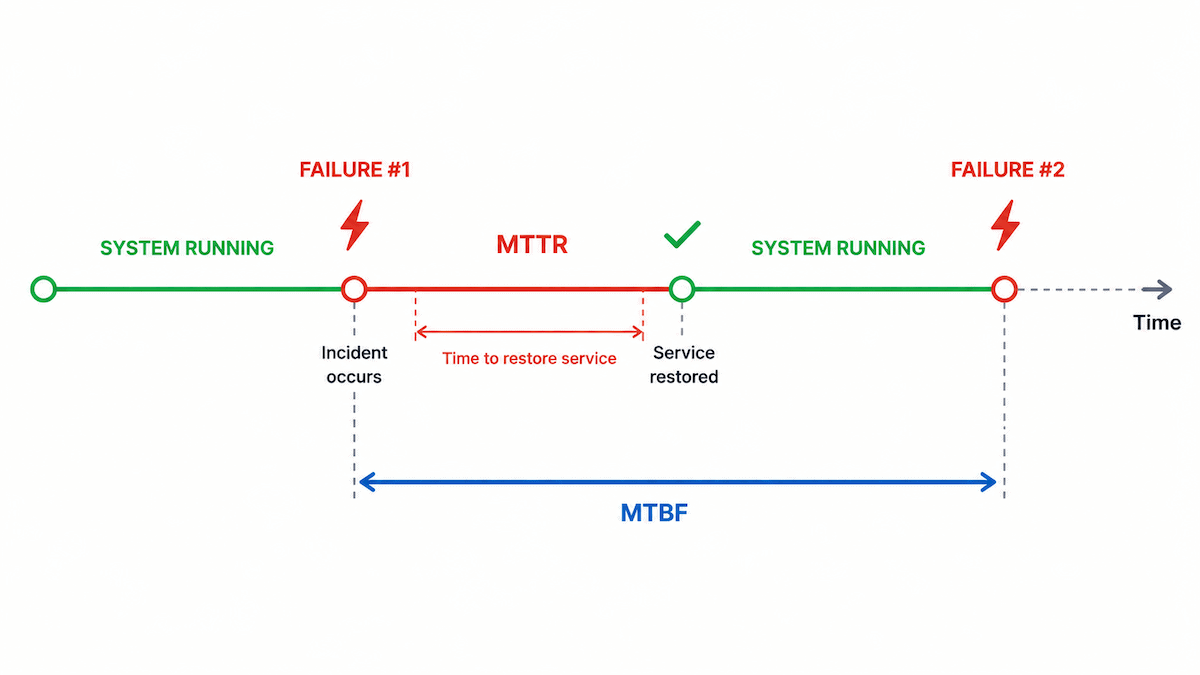
In the nascent stages of a web agency, where one or two client sites are managed, the primary benchmark for success often revolves around Mean Time to Recovery (MTTR). This metric quantifies the average time it takes to resolve a system failure or incident once it has occurred. For a small, intimate portfolio, a deep understanding of each client’s specific environment allows for rapid diagnosis and resolution. A developer familiar with a single site’s intricacies can often pinpoint and rectify issues swiftly, turning potential crises into opportunities to reinforce client trust. This "fast-fix culture" feels effective because incidents are rare and isolated, making quick recovery a highly visible and appreciated performance indicator. According to industry reports, a low MTTR can contribute positively to client perception in bespoke, low-volume engagements.
However, as an agency scales, its portfolio inevitably expands, leading to a proportional increase in the sheer volume of potential incidents. What once seemed like an efficient strategy—honing the speed of recovery—becomes a treadmill of endless problem-solving. The critical flaw in this approach is that getting faster at fixing problems does not inherently reduce their frequency. This is where the complementary, and ultimately more vital, metric of Mean Time Between Failures (MTBF) emerges. While MTTR measures the efficiency of recovery after a failure, MTBF quantifies the average time a system operates without interruption between failures. A high MTBF signifies a robust, stable environment where incidents are infrequent, allowing teams to focus on strategic development rather than constant firefighting. Conversely, a low MTBF indicates a system plagued by recurring issues, trapping agency teams in a perpetual cycle of recovery, regardless of how quickly individual incidents are resolved.
Consider the analogy of a vehicle: optimizing for MTTR is akin to running a highly efficient repair shop. No matter how skilled the mechanics, if the vehicle consistently breaks down, the owner still faces significant disruption and cost. The true measure of operational health lies in how long the vehicle runs reliably between visits to the repair shop. For web agencies, this translates into focusing on the underlying environment and infrastructure to prevent breakdowns, rather than merely becoming adept at fixing them. The average cost of downtime for businesses can range from $5,600 per minute to over $300,000 per hour, underscoring the severe financial implications of a low MTBF.
The Hidden Costs of a Reactive Model
The financial burden of a low MTBF within a growing portfolio extends far beyond the direct hours logged by a developer on an incident ticket. A support queue perpetually filled with recurring, common incident types across multiple sites—such as plugin conflicts, theme errors, database overloads, or unexpected downtime during traffic spikes—creates a compounding drain on resources. Many of these issues may not originate from the agency’s direct actions but rather from vulnerabilities or inefficiencies within the hosting environment, third-party integrations, or even malicious bot activity. Consequently, simply accelerating the fix does not address the root cause, leading to an insidious accumulation of hidden costs:
- Opportunity Cost: Time spent on reactive incident management is time diverted from strategic client work, new business development, or proactive optimizations. This directly impacts an agency’s capacity for growth and innovation. Developers are paid for high-value tasks, not repetitive fixes. For instance, a senior developer’s hourly rate, if spent on resolving a preventable issue, represents a direct loss of potential revenue from billable project work.
- Client Dissatisfaction and Churn: Frequent incidents, even if resolved quickly, erode client trust and confidence. Clients seek reliability and stability, not just swift damage control. Recurring issues can lead to missed revenue opportunities for clients. Hall, a Kinsta customer with decades of agency experience, previously faced recurring site downtime during traffic peaks for a WooCommerce client, which directly impacted revenue and absorbed team capacity that should have been on client work. As Hall noted, "Kinsta works like we work. We need great performance so there are no surprises, and great support in case something does happen. Kinsta allows us to reduce the distractions of support and increase productivity." This highlights the tangible benefit of reduced incidents.
- Team Burnout and Morale: A constant state of crisis management leads to stress, exhaustion, and reduced job satisfaction among technical teams. The "hero" culture of rapid response eventually gives way to burnout when the underlying problems persist. High staff turnover, which costs an average of 6-9 months of an employee’s salary to replace, is a significant, often overlooked, cost.
- Reputational Damage: An agency constantly battling site issues, even behind the scenes, can suffer reputational damage. Prospective clients may perceive a lack of control or expertise, making it harder to win new business. Negative reviews or word-of-mouth can have a lasting impact on an agency’s brand.
- Infrastructure Debt: Relying on constant manual intervention to keep websites stable signals a fundamental infrastructure problem. Award-winning digital marketing agency Paramark experienced this firsthand, stating that on their previous host, it "required excessive system administration to prevent websites from failing. Some of the constant issues included managing server resources and cleaning log files. Failure to do that meant websites would become unstable." This ongoing effort to shore up a fragile platform is a continuous, unbudgeted expenditure that drains resources without providing long-term value.
These unquantified costs underscore why tracking incidents per site per month—a measure directly linked to MTBF—provides a far more accurate gauge of operational health than simply measuring time-to-resolution. It reveals whether the environment is genuinely improving or if the team is merely becoming more efficient at managing an ongoing, systemic problem.
Shifting to a Prevention-First Paradigm: The Kinsta Model
Recognizing these challenges, leading web hosting providers are evolving their platforms to support a prevention-first philosophy. Kinsta, for example, has engineered its infrastructure and overall platform specifically to reduce the likelihood of incidents, thereby increasing MTBF, rather than merely optimizing recovery time. This strategic shift is built upon several core technological pillars:
-
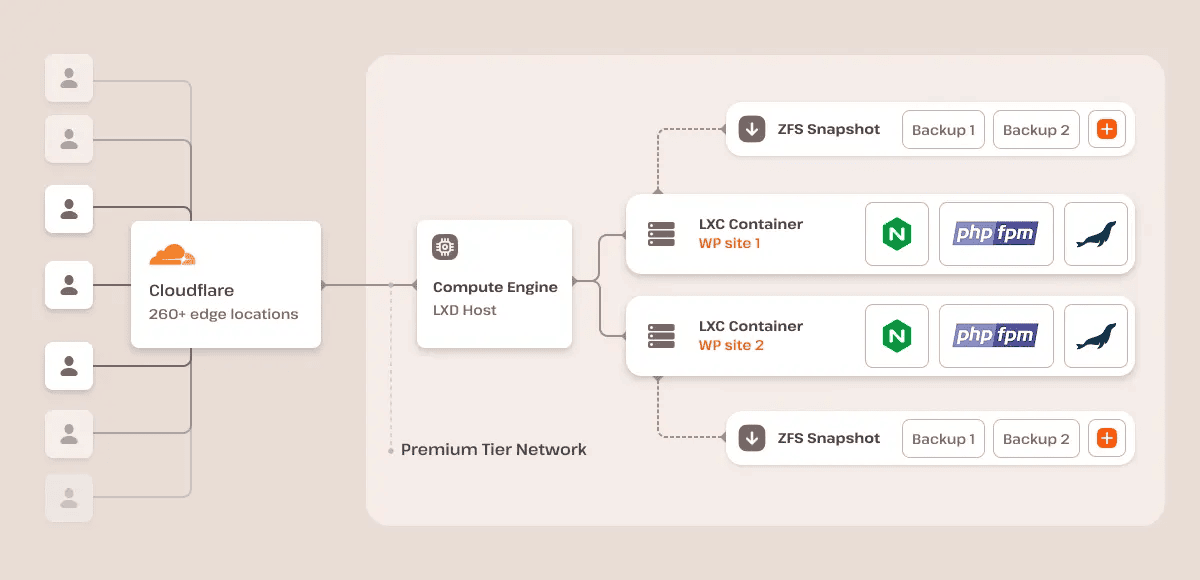
Isolated Linux Container Technology: A cornerstone of Kinsta’s architecture is its use of isolated Linux containers. Each client site operates within its own dedicated container, complete with a unique software stack (Nginx, PHP, MySQL, etc.). This isolation prevents resource contention and security vulnerabilities from spreading across sites, even those belonging to the same agency account. In contrast to traditional shared hosting platforms, where a resource spike or security breach on one site can degrade or compromise others on the same server, Kinsta’s containerization ensures that individual environment incidents have no path to affect the performance or availability of any other site managed by the agency. This dramatically reduces the potential for cascading failures and common incident types that plague shared environments, which are often cited as a major security risk.
-
Robust Automatic Backup and One-Click Restore System: Data integrity and rapid recovery from unforeseen issues are paramount. Kinsta provides comprehensive daily backups of every site, retained for a minimum of 14 days. These full backups are easily accessible and restorable from the MyKinsta dashboard. Crucially, the platform also offers system-generated restore points for significant events, such as before Kinsta Automatic Updates are applied across a portfolio. This transforms the recovery process into a predictable "restore plus investigate" workflow, significantly reducing panic and complex manual interventions. The ability to roll back to a known stable state with minimal clicks is a powerful preventative measure against major downtime caused by updates or configuration errors, allowing agencies to manage updates across a portfolio with confidence.
-
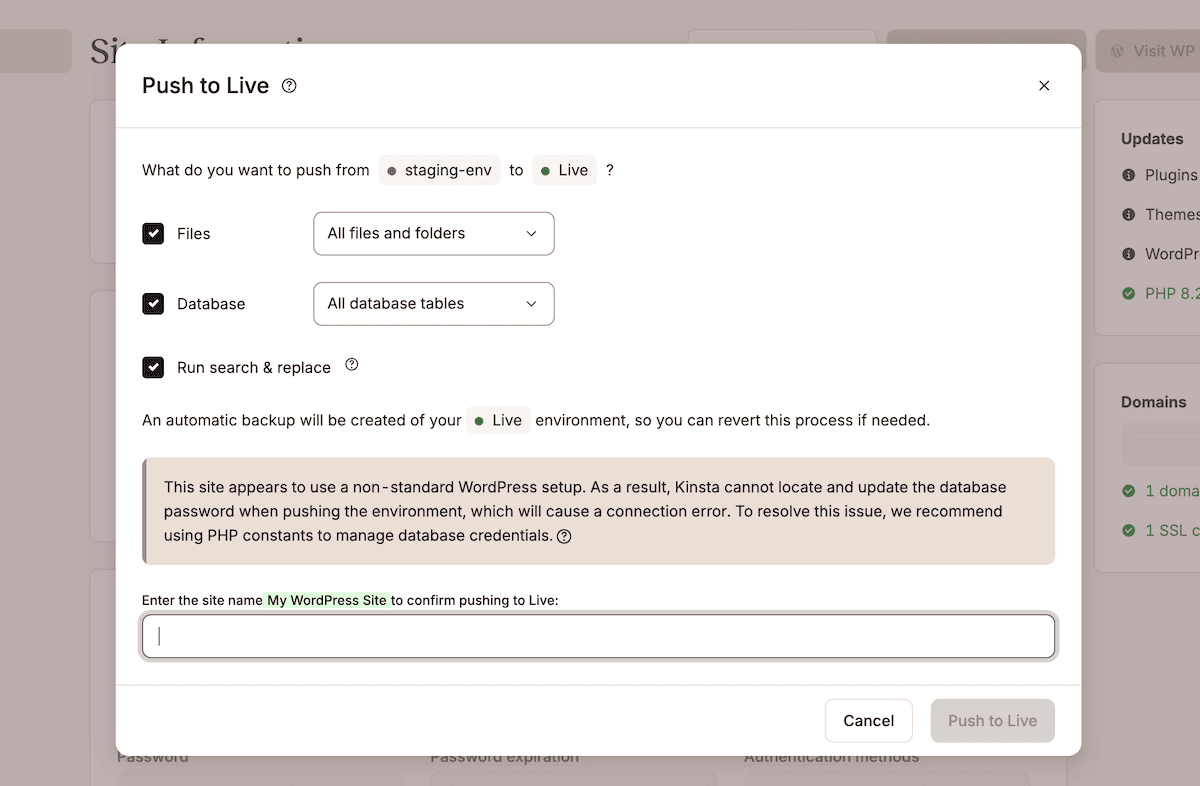
Secure Staging Environments and Selective Push Deployments: A primary source of live site incidents stems from untested changes. Kinsta addresses this with dedicated staging environments, providing a separate, identical copy of the live site where agencies can thoroughly test updates, new features, or code modifications without impacting the production environment. Every Kinsta plan includes a free standard staging environment per site, facilitating a robust development workflow. Once changes are validated, Kinsta’s "selective push" functionality offers granular control over deployment. Agencies can choose to push only specific files, the database, or both to production, with further fine-tuning options available. Critically, Kinsta automatically creates a backup of the target live environment before every push. This multi-environment setup, coupled with selective push and pre-deployment backups, acts as a crucial barrier, halting the vast majority of deployment-related incidents before they can ever reach a client’s live site, thus eliminating the need for urgent, reactive interventions. This approach aligns with Agile delivery principles, minimizing risks associated with continuous deployment.
-
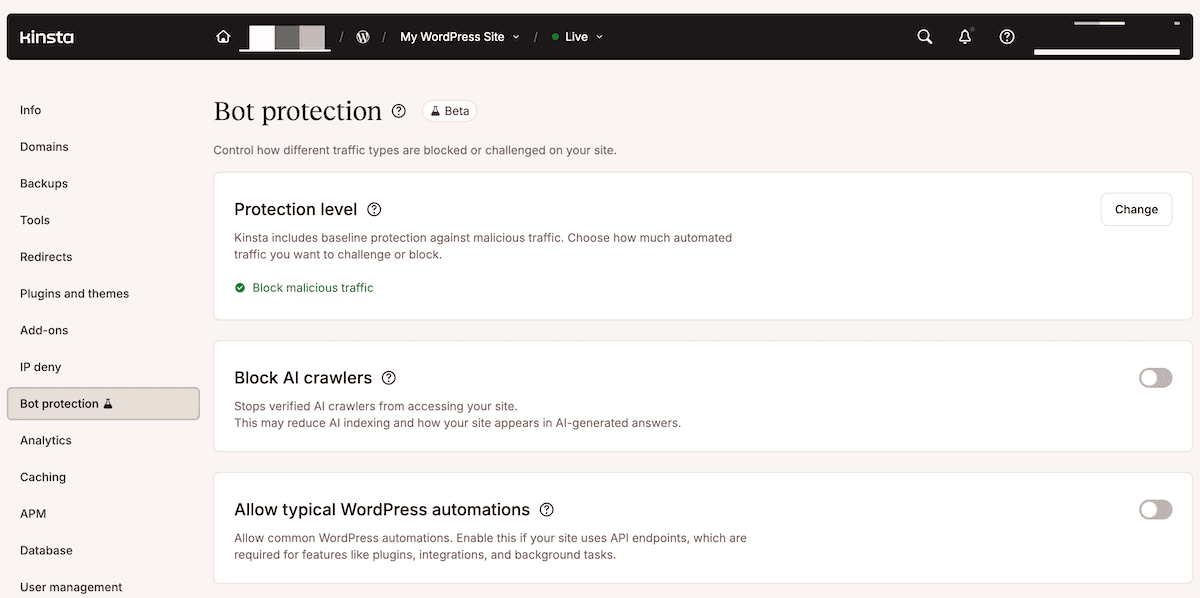
Advanced Bot Protection as a Performance and Security Layer: Unwanted automated traffic, ranging from benign crawlers to malicious DDoS attempts and scrapers, can significantly degrade website performance and stability, often leading to incidents that bypass traditional caching. Kinsta’s Bot Protection system filters traffic at the infrastructure level, before it even reaches WordPress. By default, malicious traffic (e.g., from known attack sources or DDoS attempts) is blocked platform-wide. Agencies can configure protection levels for individual sites or across multiple sites simultaneously within MyKinsta. Options range from blocking confirmed malicious bots to challenging likely-bot and unclassified requests, or even all non-verified traffic. This proactive defense mechanism prevents bot-driven load from consuming PHP threads, overwhelming databases (especially critical for WooCommerce or membership sites), and causing performance incidents, thereby bolstering site stability and improving MTBF. The increasing sophistication of bot attacks, with some estimates suggesting bots account for nearly 50% of all internet traffic, makes such protection indispensable.
-
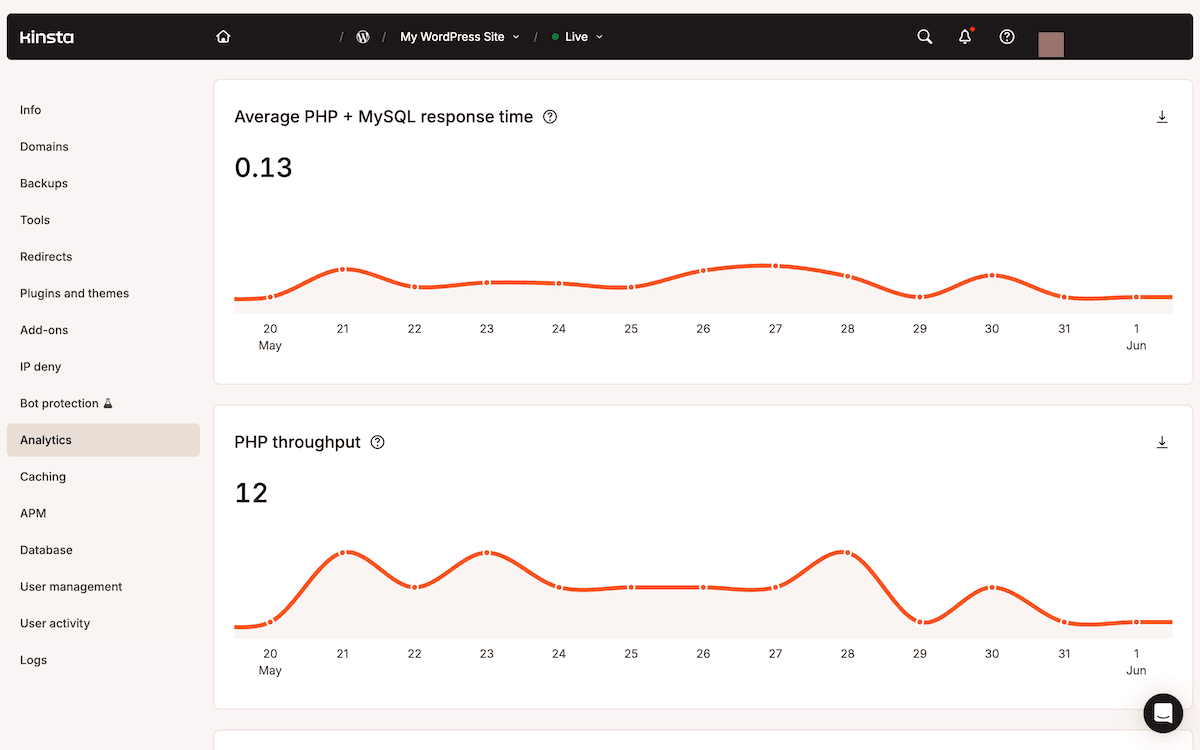
Comprehensive Analytics as an Early-Warning System: Reactive incident management means problems are addressed after they manifest. Kinsta’s analytics suite in MyKinsta provides agencies with crucial visibility into site conditions before they escalate into client-facing issues. The "Performance" tab tracks key metrics like PHP response times and PHP thread usage. A consistent pattern of rising response times without a corresponding increase in legitimate human traffic often signals underlying problems such as bot overload or inefficient database queries. By comparing "Visits" (billable human traffic) with "Top requests by views" (all traffic, including automated), agencies can quickly identify instances where bot-driven load is impacting server performance even when human visit counts appear normal. This early-warning layer empowers agencies to intervene proactively, addressing potential issues before they become full-blown incidents, further contributing to a higher MTBF. These analytics provide actionable intelligence, transforming data into preventative action.
Operationalizing Prevention: Best Practices for Agencies
Beyond robust infrastructure, agencies must also cultivate internal processes that align with a prevention-first mindset. This involves a shift in operational models and documentation practices:
- Detailed Incident Logging: Agencies should move beyond simply recording resolution steps. Each incident should be meticulously logged, detailing not only the fix but also the contributing individual site factors, the root cause, and any recurring patterns. MyKinsta’s integrated logs (e.g.,
kinsta-cache-perf.log) can be invaluable here, providing granular data on errors and system behavior. If logs consistently show, for instance, multiple incidents on the same site caused by plugin update conflicts, it immediately highlights a gap in the staging or testing workflow. Without such a record, these patterns remain invisible, and incidents continue unabated. This approach fosters a culture of continuous improvement, turning every incident into a learning opportunity. - Mandatory Pre-Deployment Checklists: Formalizing a pre-deployment checklist is a highly effective way to embed prevention into daily workflows. This checklist should encompass common classes of avoidable incidents, ensuring consistency across all projects. Typical items might include:
- Thorough testing in a staging environment.
- Database optimization and cleanup.
- Security scans and vulnerability checks.
- Performance audits (e.g., PageSpeed Insights, Lighthouse).
- Verification of backup integrity.
- Review of third-party plugin/theme updates for compatibility.
- Client approval and communication.
- Confirmation of automated pre-push backups.
- Cross-browser and device compatibility checks.
Such checklists, when consistently applied, can significantly reduce deployment-related errors, a leading cause of website incidents.
- Proactive Client Reporting on Reliability: Instead of only communicating after an incident, agencies can proactively report on reliability trends. Quarterly summaries detailing declining incident frequency, consistent uptime, and performance improvements build immense client confidence. A client who sees tangible evidence of a stable, well-managed environment will have a vastly different perception of the service quality than one who only receives urgent calls after each crisis. This transparency reinforces the value of a prevention-first approach and strengthens client loyalty, a critical factor in long-term business success.
Broader Impact and Future Implications
The shift from a reactive "fix it fast" mentality to a proactive "prevent it from happening" strategy is not merely a technical adjustment; it’s a fundamental reorientation that profoundly impacts an agency’s long-term sustainability and growth. By prioritizing MTBF over MTTR, agencies can unlock several critical benefits:
- Enhanced Profitability: Reducing incident frequency frees up valuable developer hours, allowing teams to focus on revenue-generating activities, innovation, and client retention, rather than costly, non-billable firefighting. This strategic reallocation of resources directly contributes to a healthier bottom line.
- Improved Client Relationships: Stable, high-performing websites lead to happier clients, stronger partnerships, and increased opportunities for referrals and upselling. Clients are more likely to stay with an agency that consistently delivers reliability and peace of mind.
- Sustainable Team Operations: A reduction in crisis situations fosters a healthier work environment, mitigating burnout, improving morale, and reducing staff turnover. A stable, less stressed team is more productive and innovative.
- Competitive Advantage: Agencies that can consistently deliver highly reliable and performant web solutions will differentiate themselves in a crowded market, attracting premium clients and projects. This focus on prevention becomes a unique selling proposition.
- Future-Proofing: As web environments become more complex and cyber threats evolve, a prevention-first infrastructure becomes an indispensable foundation for resilience and adaptability. It prepares agencies for future challenges rather than leaving them perpetually catching up.
In conclusion, while fast incident response remains a fundamental capability for any competent agency, the true determinant of sustainable growth and long-term profitability lies in infrastructure and processes that make incidents infrequent. At agency scale, the disparity between these two approaches directly influences financial health, client satisfaction, and team stability. Platforms like Kinsta, with their emphasis on container isolation, automatic backup systems, staging environments, bot protection, and proactive analytics, provide the essential toolset to address the most common and time-consuming incident categories. When combined with rigorous internal processes such as detailed incident logging and pre-deployment checklists, agencies can achieve consistent incident reduction across their entire managed portfolio. For agencies looking to thrive in the modern digital landscape, embracing such a prevention-first strategy, often facilitated by robust platforms and specialized programs like Kinsta’s Agency Partner Program, is not just an option—it’s a necessity for scalable and sustainable success.