Tesla Issues 11th Cybertruck Recall as Mechanical Failures and Production Oversight Raise Safety Concerns for Rear Wheel Drive Models

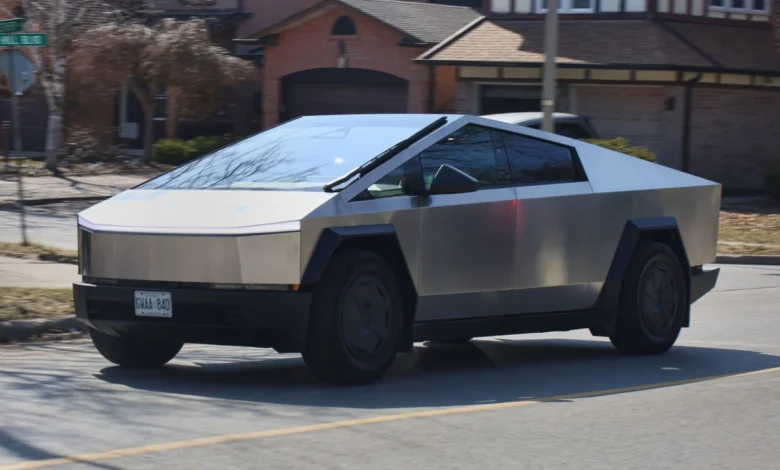
Tesla has initiated its 11th recall for the Cybertruck, this time targeting the Rear Wheel Drive (RWD) Long Range variant due to a critical defect in the wheel assembly that could result in wheel separation while the vehicle is in motion. According to documents released by the National Highway Traffic Safety Administration (NHTSA), the defect originates from the application of incorrect grease during the manufacturing process, leading to structural failures in the brake rotors. While the recall affects a relatively small number of vehicles—173 units in total—it underscores ongoing quality control challenges for the electric vehicle manufacturer as it attempts to scale production of its highly publicized, stainless-steel pickup.
Technical Analysis of the Wheel Assembly Defect
The core of the current recall lies in the interaction between the wheel studs, lug nuts, and the brake rotor. According to the NHTSA safety recall report, Tesla identified that a specific batch of RWD Cybertrucks was assembled using the "wrong grease" on the lug nuts. In automotive engineering, the application of lubricants to threaded fasteners is a precise science; the grease affects the friction coefficient, which in turn dictates how much "clamping force" is generated when a technician applies torque to the nut.
Tesla’s internal investigation revealed that the incorrect grease failed to provide the necessary friction reduction during assembly. This discrepancy meant that even when the lug nuts were tightened to the specified torque, they did not provide the intended security. Over time, particularly when the vehicle is subjected to "higher severity road perturbations"—such as potholes or uneven terrain—and high-lateral-force cornering, the instability causes excessive strain on the wheel rotor’s stud holes.
The resulting mechanical stress leads to the formation of micro-cracks around the stud holes. If the vehicle continues to be operated under these conditions, the cracks can propagate through the metal, eventually causing the wheel stud to shear or separate entirely from the wheel hub. In the most severe scenarios, this would result in the wheel detaching from the truck while it is being driven, posing an extreme safety risk to the driver, passengers, and other motorists.
The Manufacturing Oversight: A Subset of a Subset
The recall specifically impacts RWD Cybertruck Long Range models equipped with 18-inch wheels produced within a narrow timeframe. Sean Tucker, managing editor at Kelley Blue Book, noted that the small number of affected vehicles—173—suggests a localized breakdown in communication on the factory floor.
"This is a very specific materials problem," Tucker explained. "Tesla discovered that the grease being used was not performing to specification and issued a change order to the production floor. However, that message was not implemented in time to prevent 173 trucks from being built with the old, incorrect grease."
While some industry observers initially speculated that the low recall number indicated stagnant sales for the RWD model, analysts suggest the figure is more likely representative of a specific production "lot" or shipment of parts. The RWD variant is the entry-level version of the Cybertruck, which began shipping later than the more expensive All-Wheel Drive and "Cyberbeast" tri-motor configurations. Consequently, the total population of RWD models currently on the road remains significantly lower than their higher-trim counterparts.
A Chronology of Cybertruck Recalls and Quality Issues
The "wrong grease" incident is the latest in a series of setbacks for a vehicle that Tesla CEO Elon Musk once described as "apocalypse-proof." Since its official launch in late 2023, the Cybertruck has been plagued by a series of high-profile recalls and consumer complaints regarding its unconventional design and materials.
- The Accelerator Pedal Malfunction (April 2024): One of the most significant recalls involved the vehicle’s accelerator pedal. Tesla found that a "soap-like" lubricant used during assembly could cause the metal cover of the pedal to slide off and become wedged in the interior trim, effectively locking the vehicle in full acceleration. This necessitated a recall of nearly 4,000 units.
- The Exterior Trim Adhesive Failure (June 2024): Tesla recalled thousands of trucks because a large cosmetic trim piece on the truck’s bed—the sail apex—could fly off while driving. The cause was identified as the "wrong glue" or insufficient adhesive application, mirroring the current "wrong grease" issue.
- Windshield Wiper Motor Failure (June 2024): A recall was issued for over 11,000 trucks due to an electrical overstress issue in the front windshield wiper motor, which could cause the oversized single wiper to fail during rain, significantly reducing visibility.
- Rearview Camera Delay (September 2024): Tesla issued a software-based recall for over 27,000 vehicles because the rearview camera display did not activate within the federally mandated two-second window after the driver shifted into reverse.
- The Stainless Steel "Rust" Controversy: While not an official safety recall, many early owners reported small orange spots appearing on the truck’s stainless steel exoskeleton after exposure to rain. Tesla engineers later clarified that these were "rail dust" or free-floating iron particles from the environment rusting on the surface, rather than the body panels themselves corroding, but the incident added to the narrative of manufacturing volatility.
Tesla’s Remedial Actions and Official Response
In response to the current brake rotor defect, Tesla has committed to a comprehensive hardware replacement program. Unlike many of Tesla’s recalls, which can be resolved via "Over-the-Air" (OTA) software updates, this mechanical failure requires physical intervention.
Tesla service centers will replace the wheel hubs, brake rotors, and lug nuts on all 173 affected vehicles at no cost to the owners. The company began notifying customers in late 2024 and early 2025, advising them to schedule service appointments immediately. Tesla has stated it is not aware of any accidents, injuries, or deaths resulting from this specific wheel stud issue to date.
The company’s filing with the NHTSA indicates that trucks produced after the identified window have been assembled using the corrected grease and updated assembly protocols to ensure the integrity of the wheel-to-hub connection.
Market Context and Sales Performance
The frequency of these recalls has cast a shadow over the Cybertruck’s market performance. During the truck’s reveal and subsequent pre-order period, Elon Musk boasted that the company had received over one million reservations. However, converting those $100 deposits into final sales has proven challenging.
Data suggests that Tesla sold approximately 46,096 Cybertrucks in the first 14 months of availability. While this makes the Cybertruck one of the best-selling electric pickups in the United States—outpacing the Ford F-150 Lightning and the Rivian R1T in several individual months—it falls short of the massive "off the charts" demand initially projected by the company.
Industry analysts point to the vehicle’s high price point and polarizing aesthetics as barriers to mass-market adoption. The RWD model, which was originally touted with a starting price of around $40,000 in 2019, eventually launched with a significantly higher MSRP, pushing it out of reach for many traditional truck buyers.
Broader Implications for the Automotive Industry
The Cybertruck’s "wrong grease" recall serves as a cautionary tale for the broader automotive industry regarding the complexities of modern vehicle manufacturing. As Sean Tucker of Kelley Blue Book noted, even a minor change in chemical composition or a slight delay in factory-floor communication can have cascading effects on vehicle safety and brand reputation.
For Tesla, the Cybertruck represents a departure from its established manufacturing methods used for the Model 3 and Model Y. The use of a cold-rolled stainless steel exoskeleton and high-voltage 48-volt architecture introduced new engineering hurdles. The series of 11 recalls suggest that the "learning curve" for this specific platform has been steeper than anticipated.
Furthermore, the reliance on specialized materials—unique adhesives for trim and specific lubricants for fasteners—creates a "tightly coupled" manufacturing system where there is little room for error. When these specialized materials are swapped or misapplied, the fundamental structural integrity of the vehicle can be compromised.
Conclusion and Future Outlook
As Tesla works to rectify the wheel assembly issues in the RWD Cybertruck, the company faces the dual challenge of maintaining consumer trust while streamlining its production processes. For the 173 owners affected by this recall, the fix is straightforward, but for the brand, the recurring nature of these "material-based" recalls poses a long-term branding risk.
The Cybertruck remains a flagship of innovation for Tesla, showcasing the company’s willingness to ignore traditional automotive conventions. However, the 11th recall serves as a reminder that in the world of heavy-duty pickups, the fundamentals of mechanical engineering—down to the very grease on a lug nut—are just as important as the software driving the vehicle. Moving forward, the industry will be watching closely to see if Tesla can stabilize the Cybertruck’s production quality or if the "apocalypse-proof" pickup will continue to be defined by its vulnerability to the smallest of manufacturing oversights.