Google Launches Ads Decoded Podcast Series to Bridge Gap Between Marketers and Product Engineering in the AI Era


The rapid evolution of artificial intelligence and the shifting landscape of digital privacy have prompted Google to launch a new communication initiative aimed at demystifying the complexities of modern advertising technology. Under the leadership of Ads Product Liaison Ginny Marvin, the tech giant has officially debuted the first full season of "Ads Decoded," a dedicated podcast designed to facilitate a direct dialogue between the global marketing community and the engineering teams responsible for Google’s advertising ecosystem. The inaugural episode features Eleanor Stribling, Group Product Manager at Google Analytics, and focuses on the strategic transition of Google Analytics from a traditional reporting tool into a proactive activation engine designed to fuel AI-driven business growth.
The launch of this series comes at a critical juncture for the digital advertising industry, which is currently grappling with the deprecation of third-party cookies and the integration of large-scale machine learning models. By positioning product managers like Stribling at the forefront of public discourse, Google aims to provide transparency into how its tools process data and how marketers can optimize their infrastructure to maintain competitive advantages in an increasingly automated environment.
The Evolution of Measurement: From Passive Reporting to Strategic Activation
The central theme of the premiere episode revolves around a fundamental shift in how businesses utilize Google Analytics. For decades, digital measurement was characterized by "passive reporting"—the retrospective analysis of traffic, bounce rates, and conversion counts. However, as Stribling explains during the discussion, the current "AI era" requires a transition toward "activation."
In this context, activation refers to the process of using analytics data not just to observe behavior, but to actively inform and direct the automated bidding algorithms within Google Ads. When a measurement platform functions as an activation engine, it identifies high-value customer segments and feeds that signal back into the advertising platform in real-time. This creates a feedback loop where the AI learns to prioritize users who exhibit behaviors most likely to result in long-term profitability, rather than merely focusing on immediate, low-value clicks.
This shift is necessitated by the increasing complexity of the customer journey. According to internal Google data, the average consumer journey can involve hundreds of touchpoints across search, video, social, and display. Traditional manual optimization is no longer feasible at this scale, making the integration between Google Analytics 4 (GA4) and Google Ads the primary mechanism for performance scaling.
Chronology of Google’s Privacy and AI Integration
The release of "Ads Decoded" follows a multi-year roadmap during which Google has overhauled its measurement and advertising architecture. Understanding this timeline is essential for contextualizing the current focus on AI activation:
- October 2020: Google introduces Google Analytics 4 (GA4), signaling a move away from the session-based tracking of Universal Analytics toward an event-based model.
- March 2022: Google announces the sunsetting of Universal Analytics, forcing a global migration to GA4 to accommodate privacy-centric measurement and machine learning capabilities.
- July 2023: Standard Universal Analytics properties officially stop processing data, marking the beginning of the GA4-only era for the majority of global businesses.
- Early 2024: Google begins the phased deprecation of third-party cookies for 1% of Chrome users, heightening the urgency for first-party data solutions discussed in the podcast.
- Late 2024: The launch of "Ads Decoded" Season One serves as the final educational push to ensure businesses are leveraging the advanced AI features built into GA4 during the first full year of its solo operation.
Data Strength as a Strategic Prerequisite
A significant portion of the conversation between Marvin and Stribling focuses on the concept of "data strength." In the realm of machine learning, the effectiveness of an algorithm is directly proportional to the quality and volume of the data it consumes—a principle often summarized as "garbage in, garbage out."
Stribling emphasizes that data strength is no longer just a technical requirement but a strategic prerequisite for AI performance. For brands, this means ensuring that the data being collected is accurate, consented, and comprehensive. The podcast outlines three pillars of data strength that offer brands a unique advantage:
- First-Party Data Integration: With the decline of third-party identifiers, businesses that successfully import their own customer data (such as CRM data) into GA4 can provide the AI with a clearer picture of true business value.
- Consent-Mode Compliance: As privacy regulations like GDPR and CCPA tighten, using tools like Consent Mode allows Google’s AI to fill in data gaps through modeling, ensuring that measurement remains functional even when users opt out of cookies.
- Enhanced Conversions: By sending hashed, first-party user data from a website to Google, marketers can improve the accuracy of their conversion tracking and provide more robust training data for AI-driven bidding strategies.
Supporting data from industry analysts suggests that companies utilizing high-quality first-party data in their marketing stacks see an average of 1.5x to 2x improvement in the efficiency of their ad spend. This highlights why the "Ads Decoded" series places such a heavy emphasis on the structural integrity of measurement setups.
Technical Insights and Optimization Strategies
Beyond high-level strategy, the podcast provides practical guidance for marketers seeking to audit their current configurations. Stribling and Marvin discuss the common pitfalls that lead to inaccurate insights, which can inadvertently "mis-train" AI models.
Key recommendations include the implementation of "predictive metrics," a feature in GA4 that uses machine learning to predict future behavior, such as churn probability or the likelihood of a purchase within the next seven days. By optimizing for these predictive metrics rather than historical data, advertisers can stay ahead of market shifts.
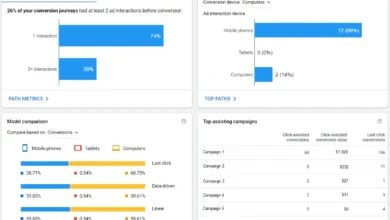
Furthermore, the discussion touches on the importance of cross-channel attribution. In a fragmented media environment, GA4’s data-driven attribution models use Google’s AI to assign credit to each touchpoint in a user’s journey. This prevents the overvaluation of the "last click" and provides a more holistic view of how different marketing efforts contribute to the final conversion.
Official Responses and Industry Implications
The launch of the podcast has been viewed by industry observers as an attempt to humanize the "black box" of Google’s algorithms. By having a Product Liaison interview a Group Product Manager, Google is signaling a commitment to transparency that has often been a point of contention among digital agencies and brand marketers.
In a statement regarding the initiative, Google emphasized that the goal is to "lay the groundwork for a strong year" by ensuring that measurement is not an afterthought but the foundation of every campaign. "Measurement is the language that AI speaks," noted the production team. "If you aren’t speaking that language clearly, you aren’t getting the full value out of your investment."
The broader implications for the advertising industry are significant. As Google continues to automate more aspects of campaign management through features like Performance Max, the role of the human marketer is shifting from manual execution to "data orchestration." The insights provided in "Ads Decoded" suggest that the most successful marketers of the future will be those who act as curators of high-quality data, feeding the AI the necessary information to make intelligent decisions.
Future Outlook: The Role of AI in 2025 and Beyond
As the first season of "Ads Decoded" progresses, the industry expects further deep dives into the integration of Generative AI within creative assets and the evolution of Search Generative Experience (SGE). However, the foundational message remains clear: the transition to AI-driven advertising is inseparable from the transition to advanced measurement.
For businesses, the takeaway from the Marvin-Stribling dialogue is that the "wait and see" approach to GA4 and AI integration is no longer viable. The strategic advantage now lies with those who have moved beyond passive reporting and have successfully transformed their analytics into a dynamic activation engine.
By providing a direct line of communication from the product builders to the product users, Google is attempting to ensure that its ecosystem remains the dominant force in digital advertising, even as the rules of data privacy and machine learning continue to be rewritten. The "Ads Decoded" podcast serves as both a roadmap and a toolkit for this transition, offering practical talk for a high-stakes era of digital commerce.