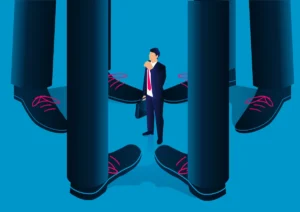
The Paradox of Modern Business Why the Core Realities of Operations Remain Unchanged Despite Two Decades of Innovation


The rapid proliferation of mobile applications, high-speed internet, e-commerce, and artificial intelligence has created a pervasive narrative that the corporate world has undergone a total metamorphosis over the last twenty years. From the implementation of drone delivery systems to the global reach afforded by social media, the external-facing components of commerce appear unrecognizable compared to the landscape of 2004. However, a closer examination of the internal mechanisms of both small and large enterprises reveals a striking counter-narrative: the fundamental day-to-day realities of running a company remain stubbornly tethered to the past. While digital tools have been layered onto existing structures, the underlying systems, human habits, and operational frictions continue to mirror practices from previous decades. This phenomenon suggests that while business has modernized its "front end," the "back end" of many organizations remains operationally stagnant, caught between the promise of innovation and the comfort of legacy processes.
The Digital Façade and the Persistence of Legacy Systems
The illusion of full modernization is often shattered by the internal workflows of the average company. Most "transformation" initiatives over the past two decades have focused primarily on the acquisition of new tools rather than the redesign of fundamental systems. This has resulted in a "layering" effect, where digital platforms are placed on top of inefficient, decades-old processes. Consequently, the core friction points—bloated meetings, manual hiring hurdles, and archaic performance evaluations—persist, merely dressed in a digital interface.
At the heart of many businesses, the physical environment serves as a testament to this lack of structural change. The traditional workplace breakroom remains a fixture of the production floor and the corporate office alike. Despite the rise of high-end espresso machines and "wellness-focused" designs, many breakrooms remain cluttered, under-maintained spaces characterized by wobbly tables and the ubiquitous, aging coffee pot. This space, vital for employee social interaction and rest, remains one of the most overlooked aspects of the workplace, functioning almost exactly as it did in the late 20th century.
The Financial Stalemate: Why Paper Checks Still Dominate
Perhaps the most significant evidence of operational inertia is the continued reliance on paper checks for business-to-business transactions. Despite the availability of ACH transfers, wire services, and blockchain-based payment solutions, the "death of paper" has been greatly exaggerated. A 2024 study conducted by the Federal Reserve Bank of Atlanta found that approximately 83% of small firms—defined as those with up to $10 million in annual revenue—still utilize paper checks for their business operations.
This finding is echoed by data from the global payments firm MineralTree, which reported that in the past year, 57% of businesses paid more than a quarter of their vendors via physical check. Another industry report from Orbograph placed the number of organizations still using paper checks at 75%. The reasons for this persistence are multifaceted, ranging from the perceived security of a physical paper trail to the "float" time that a physical check provides for cash flow management. For many small and medium-sized enterprises (SMEs), the transition to a fully digital accounts payable system involves a level of technical integration and cost that remains a barrier to entry, leaving the 19th-century technology of the paper check firmly embedded in 21st-century commerce.
The Communication Paradox: Telephones and the Human Touch
In the era of Slack, Microsoft Teams, and AI-driven chatbots, the desk phone might seem like a relic. However, walk through any modern office, and the telephone remains a primary tool of the trade. While residential landlines have largely vanished, replaced by personal mobile devices, the business world remains dependent on dedicated phone systems.
The rise of AI-enabled "virtual receptionists" has attempted to automate the entry point of business communication, yet a significant segment of the market continues to reject this trend. Many business owners maintain human receptionists specifically because they recognize that customers, particularly those dealing with complex or high-value issues, prefer human empathy over algorithmic responses. This preference for "talking to a real person" remains a constant that technology has failed to disrupt. The telephone, despite its age, remains the most direct line for building trust and resolving conflict in a way that text-based communication cannot replicate.
Logistics and the "Last Yard" of the Loading Dock
The shipping and receiving departments of many companies represent a time capsule of industrial history. While global logistics might be tracked by GPS and managed by sophisticated ERP systems, the physical loading dock often looks much as it did in 2006. On many docks, one can still find aging computer terminals running legacy DOS-based or early Windows programs, surrounded by clipboards, stray pens, and manual pallet jacks.
Warehouse workers and drivers continue to navigate the same physical challenges of moving freight that have existed for generations. While Amazon may be experimenting with fully automated fulfillment centers, the vast majority of businesses still rely on manual labor, physical signatures, and the tactile reality of packing tape and cardboard. This "last yard" of the supply chain has proven remarkably resistant to the wholesale automation seen in other sectors, maintaining a gritty, manual nature that defies the "high-tech" label of the modern economy.
The Social and Professional Fabric: Conferences and Networking
The professional conference remains a cornerstone of industry networking, and its format has remained virtually unchanged for over thirty years. Despite the availability of high-quality webinars and virtual summits, the physical conference persists as a series of keynotes, breakout sessions, and panels held in windowless hotel ballrooms. The sensory experience—mediocre catering, watered-down beverages, and the ubiquitous tray of chocolate chip cookies during the afternoon break—is a shared cultural touchstone for professionals across generations.
Integrated into this tradition is the business card. Despite numerous attempts by tech startups to create "seamless" digital contact sharing via QR codes or NFC technology, the physical business card remains the standard. The friction of incompatible devices and the psychological weight of a physical object mean that at any given software or industry event, the request for a paper card remains common.
The Stagnation of Human Capital Management
Human Resources is another area where the core methodology has failed to evolve alongside the tools. While platforms like LinkedIn and Indeed have digitized the recruitment process, the fundamental act of hiring remains a "leap of faith." Organizations still collect resumes, conduct interviews, and rely on the subjective judgment of managers. The digitized version of this process has, in many cases, only increased the volume of noise without necessarily improving the quality of the "match" or removing the inherent biases that have plagued hiring for decades.
Furthermore, the annual performance review continues to be the dominant form of employee evaluation. Despite a decade of discourse from HR experts and younger workers advocating for real-time feedback and continuous development models, data from SelectSoftware Reviews indicates that over 71% of companies still rely on the once-a-year evaluation. This legacy system often fails to reflect the pace of modern work, yet it remains the structural backbone for compensation and promotion decisions in the majority of firms.
Enduring Structural Inequalities and Ethical Challenges
The darker side of business operations also shows a lack of fundamental change. The power dynamics between large corporations and their smaller suppliers remain heavily skewed. Small business owners today report the same grievances as their predecessors: large clients routinely stretching payment terms beyond agreed limits, demanding price concessions that erode margins, and ignoring the logistical constraints of smaller partners.
On the ethical and legal front, the persistence of workplace discrimination and harassment remains a significant issue. Despite increased corporate social responsibility (CSR) initiatives and diversity training, enforcement actions from the Equal Employment Opportunity Commission (EEOC) and the Department of Labor (DOL) continue at a steady pace. According to recent EEOC releases, thousands of charges are filed annually involving allegations of harassment and discriminatory hiring practices, suggesting that human behavior in the workplace has not evolved as quickly as the technology used to monitor it.
Even the "games" played with financial reporting and taxation remain consistent. The practice of running personal expenses through business books or manipulating invoice timing to manage tax liabilities is a tradition that dates back decades. While the Internal Revenue Service (IRS) has modernized some of its auditing tools, the fundamental desire of some business owners to "beat the system" remains a constant in the entrepreneurial psyche.
Analysis of Implications: The Cost of Stagnation
The persistence of these legacy realities has significant implications for future economic productivity. By layering digital tools on top of old systems, companies often incur a "complexity tax"—the cost of maintaining both the new technology and the old process it was meant to replace. This results in the inefficiency of "digital silos" where information is trapped in modern software but still requires manual intervention to move through the actual workflow.
Furthermore, the reliance on face-to-face interactions to close major deals underscores a fundamental truth: in high-stakes B2B environments, trust is a human-to-human commodity. While low-value transactions have been successfully automated, the "big close" still requires the physical presence and relationship-building skills that have defined sales for a century.
In conclusion, the last twenty years of business history can be characterized as a period of immense technological change masking a core of operational stability. The "stubborn constants" of business—from the paper check to the loading dock clipboard—are not merely nostalgic relics; they are the functional realities that continue to dictate the speed and efficiency of the global economy. For true transformation to occur in the next twenty years, organizations must move beyond the superficial adoption of tools and begin the difficult work of dismantling and redesigning the legacy systems and habits that have remained unchanged since the turn of the millennium.
Related posts: