The Evolution and Strategic Importance of Design Principles in the Era of Artificial Intelligence

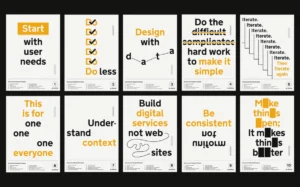
In the contemporary landscape of digital product development, the role of design principles has transitioned from optional aesthetic guidelines to foundational strategic assets. As organizations navigate the complexities of rapid technological advancement and the proliferation of artificial intelligence, design principles serve as a critical mechanism for rallying multidisciplinary teams around a shared purpose. Far from being rigid constraints, these principles document the core values and beliefs of an organization, ensuring that every product decision—from user interface nuances to high-level architecture—aligns with a cohesive vision. In an era where AI can generate passable design and code in seconds, the fundamental question for companies has shifted from how to build to what is worth building, making the establishment of rigorous design values more imperative than ever.
The Foundational Role of Design Principles in Modern Product Strategy
Design principles function as the "voice and tone" of a product’s physical or digital presence. While many organizations may not consciously design these principles, a product’s character is eventually defined by the user’s experience. Without a clear set of guiding values, company initiatives often become sporadic, ad-hoc, and inconsistent, leading to a fragmented brand identity that feels dull or vague to the outside world.

Industry experts define design principles as specific considerations that designers and developers apply with discretion. By establishing these guidelines upfront, teams can avoid redundant debates over previously agreed-upon standards, allowing them to focus on solving complex problems rather than revisiting basic design choices. This alignment is particularly vital in the context of "AI workslop"—the influx of low-quality, automated content and interfaces that lack human-centric intentionality. Principles act as a buffer against the hype of new technologies, ensuring that speed of delivery does not come at the expense of user value or ethical standards.
Historical Context: The Legacy of Dieter Rams
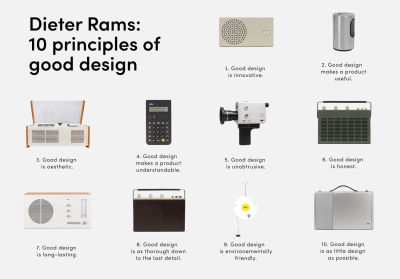
The modern understanding of design principles is heavily influenced by the work of Dieter Rams, the legendary industrial designer whose work at Braun shaped the 20th-century aesthetic. Rams’ "10 Principles of Good Design" remain the gold standard for clarity and humility in the field. His framework posits that good design is innovative, makes a product useful, is aesthetic, makes a product understandable, is unobtrusive, is honest, is long-lasting, is thorough down to the last detail, is environmentally friendly, and involves as little design as possible.
Rams’ approach was never about making visionary or bold claims for the sake of marketing; rather, it was a practical overview of where a company’s ambition and care should lie. In the digital age, these principles have been adapted to suit software and web interfaces. For instance, the principle of "honesty" in design now translates to avoiding "dark patterns"—manipulative UI elements that trick users into taking actions they did not intend. By revisiting these historical foundations, modern product teams can find a sense of humanity and sincerity that is often lost in purely data-driven environments.
The Growing Repository of Global Design Standards
The democratization of design knowledge has led to the creation of extensive resources for teams looking to establish their own standards. One of the most comprehensive archives is Ben Brignell’s "Principles.design," a repository containing over 230 pointers for design principles and methods. This resource categorizes principles across various sectors, including language, infrastructure, hardware, and organizational structure.
Data from these repositories suggest a shift in how companies perceive their responsibility. Modern principles are increasingly focusing on "point of view"—explicitly stating what a company will not do. This clarity is essential for navigating the ethical dilemmas posed by modern technology. For example, a principle might state that "User privacy precedes data monetization," providing a clear directive for engineers and product managers when faced with conflicting priorities.
A Chronology for Establishing Design Principles: The 8-Step Workshop
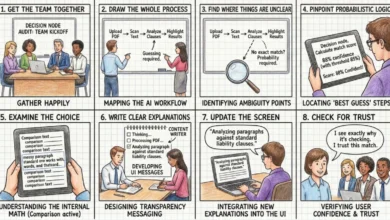
The creation of design principles is rarely a top-down mandate; instead, it is a collaborative process that involves the entire product team, including engineering, customer support, and marketing. To move from abstract concepts to tangible guidelines, organizations often employ structured workshops. Based on methodologies championed by experts like Marcin Treder and Maria Meireles, a standard chronology for establishing these principles typically follows an eight-step progression:

- Preparation and Research: The team gathers existing feedback, brand values, and user pain points to serve as raw material for the workshop.
- Individual Brainstorming: Participants independently generate keywords and concepts that they believe represent the product’s ideal state.
- Keyword Grouping: Similar ideas are clustered together to identify recurring themes, such as "efficiency," "transparency," or "playfulness."
- Naming the Themes: Each cluster is given a definitive title that encapsulates the shared sentiment of the group.
- Dot Voting: Team members vote on the themes that are most critical to the product’s success, ensuring a democratic selection process.
- Drafting the Principles: Small groups take the winning themes and expand them into actionable sentences. A good principle often includes a "this over that" statement to clarify priority.
- Review and Refinement: The drafted sentences are critiqued for clarity, ensuring they are not "fluffy" or overly ambitious but rather practical and guiding.
- Official Integration: The final principles are documented and integrated into the design system, becoming the default criteria for future audits and reviews.
Integrating Principles into Design Systems and AI Interfaces
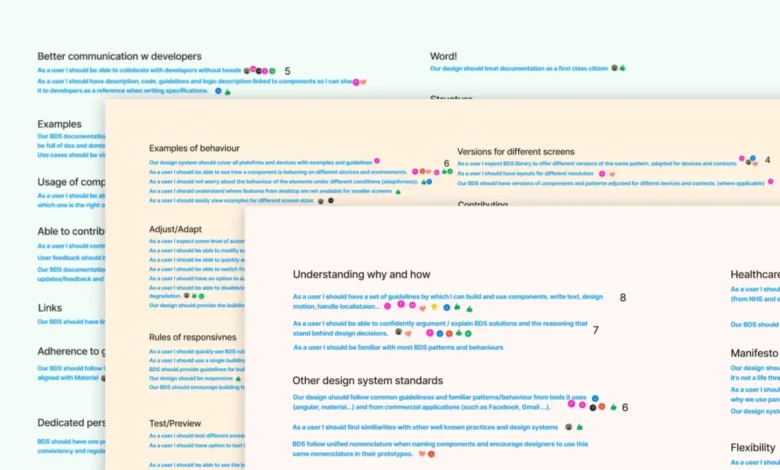
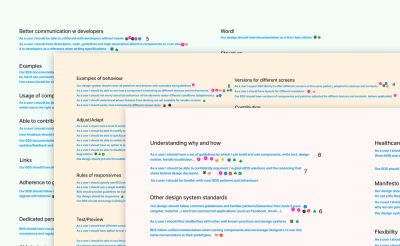
For design principles to be effective, they must be embedded into the tools that teams use daily. This is most commonly achieved through a Design System—a centralized library of components and standards. When principles are baked into a design system, they influence every template, naming convention, and code snippet.
This integration is becoming particularly complex with the rise of Artificial Intelligence. Vitaly Friedman’s "Design Patterns for AI Interfaces" highlights the unique challenges of applying design principles to non-deterministic systems. Unlike traditional software, where a specific input leads to a predictable output, AI interfaces often produce varied results. In this context, principles such as "Predictability" and "User Control" become even more significant. Designers must create patterns that allow users to verify AI-generated content and understand the "why" behind an AI’s suggestion.
The industry is currently seeing a surge in specialized training and video courses focused on these UX guidelines. These programs emphasize that while AI can handle the "heavy lifting" of layout and generation, the human designer’s role is to ensure that the output adheres to the established ethical and functional principles of the brand.
Broader Impact and Industry Implications
The adoption of rigorous design principles has far-reaching implications for the tech industry and society at large. Economically, clear principles reduce the "cost of indecision." When a team has a shared set of values, they can resolve disputes faster, reducing the time-to-market for new features. According to industry analysis, teams with well-defined design systems and principles report higher levels of developer satisfaction and lower rates of design debt.
Socially, design principles act as a safeguard for user well-being. As digital products become more integrated into daily life—from healthcare apps to financial tools—the values embodied in those products have real-world consequences. Principles that prioritize accessibility ensure that technology remains inclusive for people with disabilities, while principles focused on transparency help combat the spread of misinformation in AI-driven feeds.
Ultimately, the move toward principle-driven design represents a maturation of the technology sector. It marks a shift from a "move fast and break things" mentality to one of "deliberate and responsible creation." By establishing what they stand for, organizations can navigate the noise of the current tech landscape and build products that are not only functional and profitable but also meaningful and humane.

Future Outlook: The End of Endless Debates
As we look toward the future, the role of the designer is evolving into that of a "curator of principles." In a world of infinite generative possibilities, the ability to say "no" based on a set of core values will be the most valuable skill in a product team’s arsenal. Design should not be a matter of individual taste or the personal preference of the highest-paid person in the room; it must be guided by objective goals and documented beliefs.
The implementation of these frameworks ensures that design remains a disciplined practice rather than a sporadic creative exercise. As organizations continue to adopt sophisticated workshop kits and design system architectures, the "endless debates" that once plagued product development are being replaced by streamlined, principle-based decision-making. This shift not only improves the quality of the products we use every day but also fosters a more collaborative and purposeful environment for the teams who build them.