Susurrus: Crafting a Meditative Watercolor World Through Advanced WebGL and Non-Photorealistic Rendering Techniques

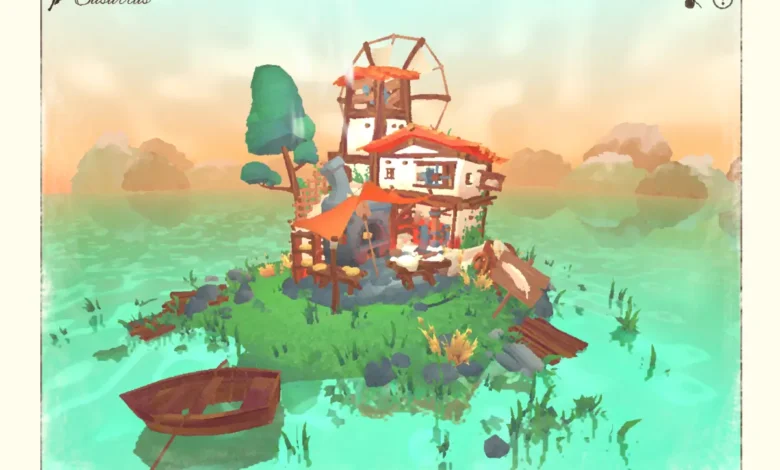
The intersection of digital engineering and traditional artistry has reached a new milestone with the release of Susurrus, a browser-based 3D experience that leverages Non-Photorealistic Rendering (NPR) to simulate the fluid, organic aesthetic of watercolor painting. Developed by creative technologist and designer Xianyao Wei, the project serves as a technical case study in blending high-performance WebGL frameworks with evocative sound design and interactive physics. By utilizing the Three.js library and custom fragment shaders, Susurrus challenges the prevailing industry trend toward photorealism, opting instead for a "cozy," meditative atmosphere that prioritizes emotional resonance and artistic stylization.
The Conceptual Foundation: Aesthetic Comfort and the Uncanny
At its core, Susurrus is an exploration of "comfort that doesn’t exist." The scene depicts a forgotten windmill floating atop a reflective body of water, rendered with the delicate textures of a hand-painted illustration. However, beneath this tranquil exterior lies a subtle narrative of the absurd. The central structure—a submerged millhouse—continuously produces loaves of bread despite the apparent absence of grain or logic. This juxtaposition of a "lo-fi" aesthetic with surrealist elements creates what Wei describes as an "uncanny" sense of peace.
The project’s name, derived from the Latin susurrus, meaning a humming or whispering sound, dictates the sensory direction of the work. The experience is designed to be felt rather than strictly navigated, using visual and auditory "whispers" to guide the user through a digital space that feels both ancient and ephemeral.
The Evolution of Non-Photorealistic Rendering in Web Architecture
To understand the technical significance of Susurrus, one must look at the broader context of WebGL development. Historically, web-based 3D graphics have moved toward mimicking physical reality, driven by the advancement of Physically Based Rendering (PBR) workflows. However, NPR has emerged as a powerful alternative for developers seeking to create unique brand identities and artistic statements without the massive computational overhead of hyper-realistic lighting and shadow maps.
Susurrus represents a sophisticated application of NPR. Unlike standard toon shading or cel-shading often seen in gaming, the watercolor effect in Susurrus requires complex post-processing to simulate the bleeding of pigments and the preservation of edges. This is achieved through a specialized mathematical approach to image filtering that transforms sharp 3D geometry into soft, painterly strokes.

Technical Architecture and the Development Stack
The development of Susurrus relied on a modern tech stack optimized for performance and rapid iteration. The project was built using:
- Three.js: The primary 3D engine for rendering the scene.
- React Three Fiber (R3F): A React-based abstraction of Three.js that allows for a declarative approach to 3D scene management.
- React Three Drei: A helper library that provides pre-built components for common WebGL tasks.
- Rapier.js: A fast, 2D and 3D physics engine written in Rust, used for the project’s interactive elements.
- React-howler: A library for managing spatial and background audio.
- GLSL (OpenGL Shading Language): The language used to write the custom shaders that define the visual style.
Wei’s development chronology was unconventional. Rather than finalizing 3D models in software like Blender and then applying textures, the developer began with the shader implementation. This "shader-first" approach ensured that the visual identity—the painterly filter—was established before the geometry was even created. This allowed for real-the adjustment of the 3D assets to ensure they interacted correctly with the Kuwahara filter, preventing visual artifacts that often occur when applying heavy post-processing to complex meshes.
The Kuwahara Shader: The Engine of Stylization
The defining feature of Susurrus is the Kuwahara shader. Originally developed in the 1970s for medical imaging to reduce noise while preserving edges, the Kuwahara filter has become a staple in the NPR community for creating "oil painting" or "watercolor" effects.
Technically, the filter works by dividing a square window around each pixel into four overlapping quadrants. It calculates the mean and variance of the colors in each quadrant and then assigns the mean color of the quadrant with the lowest variance to the central pixel. This effectively smooths out regions of similar color while maintaining sharp boundaries between different objects, mimicking the way a painter might use a brush to fill in shapes.
In Susurrus, Wei implemented a simplified, high-performance version of this shader. By avoiding the full Model-View-Projection (MVP) matrix calculations in certain passes, the developer reduced the computational load on the GPU. This optimization was crucial for maintaining a high frame rate on mobile devices, although it necessitated a trade-off where the painterly effect becomes less pronounced when the camera is in extreme proximity to the 3D models.
Fluid Dynamics: The Reflective Water System
The water in Susurrus provides a reflective base that grounds the floating windmill. Achieving realistic reflections in WebGL often requires significant resources, such as real-time raytracing or complex environmental mapping. Wei utilized a more efficient, "dirty" method to achieve the desired look:

- Scene Inversion: A secondary camera is positioned beneath the water plane, looking upward to capture a mirrored version of the scene.
- Render Target: This inverted view is rendered to a separate texture.
- Texture Distortion: A custom shader is applied to this texture, using noise functions to simulate ripples and the watercolor aesthetic before projecting it back onto the water’s surface.
This method provides a convincing sense of depth and reflection while remaining performant across various hardware configurations.
Interactive Physics and the Intro Reveal
Interactivity in Susurrus is centered around the "spawning bread" mechanic. Using Rapier.js, the developer integrated physics that allow users to click the scene and generate 3D loaves of bread that collide with the environment and float in the water. This adds a layer of playfulness to the meditative experience, transforming a static "painting" into a dynamic, reactive world.
The introduction to the experience utilizes a "Reveal Shader" applied to a ScreenQuad. Controlled by ScrollControls, this shader manages the transition from a blank screen to the fully rendered scene. By using a ScreenQuad—a single rectangle that covers the entire viewport—the developer could implement a complex visual transition without the need for high-poly geometry transitions, further optimizing the initial load and performance.
Sound Design as a Narrative Tool
The auditory component of Susurrus is managed via react-howler, integrating lo-fi background music with responsive sound effects. Different interactions, such as hovering over specific elements or clicking to spawn bread, trigger unique audio cues. This integration of sound and visuals is intended to make the project feel like "a painting that can sing," reinforcing the emotional goals of the design.
Performance Analysis and Mobile Compatibility
A significant portion of the development cycle was dedicated to responsive design. In the modern web ecosystem, a WebGL project’s success is often measured by its accessibility on mobile hardware. Susurrus employs several strategies to ensure stability:
- Asset Optimization: 3D models sourced and modified for the project were kept to low polygon counts.
- Shader Efficiency: The Kuwahara filter was tuned to balance aesthetic quality with GPU cycles.
- Memory Management: Proper disposal of Three.js geometries and textures ensures that the browser does not leak memory during extended sessions.
The result is a project that maintains a consistent "vibe" and performance level whether accessed via a high-end desktop or a standard smartphone.

Broader Implications: Creativity in the Age of AI
The release of Susurrus comes at a pivotal moment for digital creators. As generative AI becomes increasingly capable of producing high-fidelity imagery and 3D assets, the role of the human designer is shifting. Wei’s project highlights the importance of "uniqueness" and "deliberate imperfection"—qualities that are difficult for AI to replicate in a cohesive, interactive environment.
"In this AI era, uniqueness feels more important nowadays," Wei noted regarding the project’s philosophy. The goal of Susurrus is not to achieve technical perfection but to leave a "faint impression" on the user—to provoke a moment of pause and curiosity. This focus on "emotion and atmosphere" over literal meaning or photorealistic accuracy suggests a path forward for creative technologists who wish to distinguish their work from the mass of AI-generated content.
Conclusion
Susurrus stands as a testament to the power of the modern web as a canvas for artistic expression. By combining the rigorous logic of GLSL shaders with the whimsical concept of a bread-producing windmill, Xianyao Wei has demonstrated that WebGL is capable of much more than data visualization or product marketing. It is a medium for digital storytelling, capable of evoking deep emotional responses through the careful orchestration of light, sound, and interaction. As NPR techniques continue to evolve, projects like Susurrus will likely serve as blueprints for the next generation of "cozy" and meditative web experiences, proving that in the digital realm, the brushstroke is just as powerful as the pixel.