Stargazers Prepare for November Full Moon as Lunar Cycle Reaches Waxing Gibbous Phase

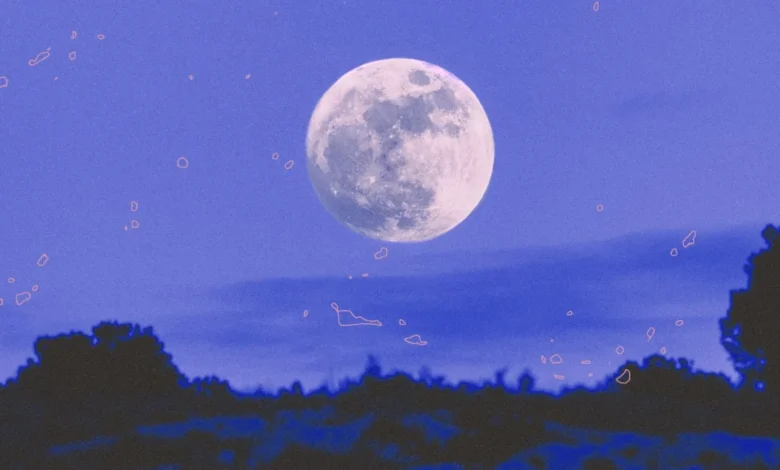
As skywatchers look up at the night sky, Earth’s natural satellite continues its steady progression toward full illumination. According to astronomical tracking data, including NASA’s Daily Moon Guide, the lunar cycle as of Saturday, Nov. 21, finds the Moon firmly positioned in the waxing gibbous phase. With approximately 85 percent of its sunlit surface currently visible from Earth, the celestial body appears noticeably fuller than it did earlier in the week, captivating both amateur astronomers and casual observers alike.
This current phase serves as a direct prelude to the upcoming full moon, scheduled for November 24. For those equipped with various levels of observational equipment, the weekend provides an optimal window for lunar cartography and sightseeing. Even without visual aids, sharp-eyed observers can readily identify prominent lunar features such as Mare Imbrium, Mare Vaporum, and the distinct Kepler Crater.
The introduction of basic binoculars significantly expands the visible landscape, bringing features like Mare Frigoris, the massive Clavius Crater, and Mare Nectaris into sharper focus. Meanwhile, amateur astronomers utilizing telescopes gain access to even finer details, including historical landmarks such as the Apollo 15 and Apollo 17 landing sites, as well as the intricate volcanic fissure system known as Rima Hyginus.
The Science Behind the Lunar Cycle
To understand why the Moon’s appearance changes nightly, astronomers look to the mechanics of the Earth-Moon system. According to the National Aeronautics and Space Administration (NASA), the Moon completes one full cycle of phases approximately every 29.5 days—a period known as a synodic month.
This cyclical variation is driven by the Moon’s orbit around Earth. As the Moon travels along its elliptical path, the relative positions of the Earth, Moon, and Sun shift continuously. Consequently, the angle at which sunlight strikes the lunar surface changes from our perspective on Earth, altering the portion of the sunlit hemisphere that remains visible to us.
The lunar cycle operates as a continuous continuum, beginning with the obscurity of the new moon, expanding through various crescents and quarters to peak at the full moon, and subsequently waning back to darkness before the cycle resets.
A Detailed Chronology of the Eight Lunar Phases
Astronomers divide the 29.5-day synodic month into eight distinct phases, each characterized by specific illumination percentages and geometric alignments relative to the Earth and Sun.
-
New Moon: During this initial phase, the Moon positions itself directly between the Earth and the Sun. Because the solar illumination strikes the far side of the lunar body, the side facing Earth remains in complete shadow, rendering the Moon practically invisible to the unaided eye.
-
Waxing Crescent: As the Moon moves eastward along its orbit, a sliver of sunlight begins to illuminate the right side of the lunar disk (when viewed from the Northern Hemisphere). This delicate crescent grows thicker night by night.
-
First Quarter: Exactly one-quarter of the way through its monthly cycle, the Moon reaches the first quarter phase. Half of the lunar disk is illuminated on the right side, creating a classic half-moon appearance.
-
Waxing Gibbous: This is the current phase of the lunar cycle. More than half of the Moon’s visible surface is now lit, but it has not yet reached full illumination. The illuminated area expands each night as the Moon approaches opposition with the Sun.
-
Full Moon: Occurring this month on November 24, the full moon happens when the Earth is positioned directly between the Sun and the Moon. The entire face of the lunar disk is fully illuminated and visible throughout the night, dominating the nocturnal sky.
-
Waning Gibbous: Following the peak of the full moon, the illuminated portion begins to shrink. In the Northern Hemisphere, the light starts receding from the right side, though more than half of the disk remains visible during the early stages of this phase.
-
Third Quarter (or Last Quarter): Three-quarters of the way through the cycle, another half-moon appears. However, unlike the first quarter, the illumination is now visible on the left side of the lunar disk from the perspective of the Northern Hemisphere.
-
Waning Crescent: In the final days before the cycle resets, a thin sliver of light lingers on the left side of the Moon. This crescent gradually thins until the lunar disk fades into the shadows of the new moon.
Historical and Cultural Context of Lunar Observation
Humanity’s fascination with the phases of the Moon dates back to prehistoric times. Long before the advent of mechanical clocks and digital calendars, ancient civilizations relied upon the predictable, observable cycle of the Moon to track the passage of time, measure seasons, and schedule agricultural activities such as planting and harvesting.
Many ancient calendars, including the lunar and lunisolar calendars used by Babylonian, Chinese, and Islamic cultures, were structured entirely around the synodic month. The regularity of the 29.5-day cycle provided a reliable baseline for societal organization, religious observances, and trade.
In modern times, the study of the Moon has transitioned from celestial timekeeping to space exploration and scientific research. The features visible during the waxing gibbous phase—such as the vast dark plains known as maria (ancient basaltic volcanic plains) and heavily cratered highlands—tell the geological history of the inner solar system. Sites like the Apollo 15 and 17 landing locations, which can be viewed through amateur telescopes during this phase, mark humanity’s greatest exploratory achievements beyond Earth.
Implications for Science and Stargazing
The predictability of lunar phases plays a crucial role in both amateur astronomy and professional scientific research. For casual observers, the waxing gibbous phase offers an ideal balance of illumination and shadow. While the full moon can sometimes wash out subtle surface details due to a lack of shadows, the oblique sunlight striking the lunar terminator during the gibbous phases highlights craters, ridges, and valleys with striking contrast.
Professional astronomers and space agencies also factor lunar cycles into their operations. Ground-based observatories must account for the brightness of the Moon, particularly during gibbous and full phases, as moonlight can scatter through the atmosphere and interfere with deep-sky observations of faint distant stars, nebulae, and galaxies. Conversely, lunar reconnaissance orbiters and future crewed missions under international space programs carefully plan their orbital insertion and landing schedules around the illumination and thermal conditions dictated by the lunar phases.
As the Moon continues to accumulate light over the coming nights, observers across the globe have a clear opportunity to engage with one of nature’s most reliable and awe-inspiring spectacles. Whether viewed with the naked eye, binoculars, or advanced telescopes, the transition from the waxing gibbous phase to the impending full moon on November 24 underscores the dynamic, clockwork nature of our solar system.