Evolve your marketing with new AI tools and agentic experiences to accelerate business growth and simplify complex data workflows.

In a move to redefine the landscape of digital advertising and analytics, Google has unveiled a comprehensive suite of generative AI and agentic capabilities integrated directly into its core marketing platforms. This evolution, centered around the company’s "Ask Advisor" framework, represents a significant shift from passive data reporting to proactive, AI-driven decision support. By embedding advanced large language models directly into the workflow of marketers, Google aims to reduce the time spent on manual data aggregation, allowing professionals to pivot toward high-level strategy and execution.
The Evolution of Marketing Intelligence
The digital marketing industry has reached a point of saturation regarding data accessibility. While tools like Google Analytics and Google Ads have long provided granular data, the "analysis gap"—the time required to synthesize raw metrics into actionable business intelligence—remains a persistent bottleneck for teams.
Historically, marketers spent roughly 60% of their time on data preparation and reporting, leaving only a fraction of their capacity for creative strategy and optimization. The introduction of agentic AI—tools capable of performing tasks on behalf of the user—is designed to flip this ratio. This initiative follows a broader industry trend where platforms like Salesforce, Adobe, and HubSpot have also moved toward conversational interfaces. However, Google’s integration is distinct in its scale, as it bridges the gap between ad spend data and on-site user behavior in a single, unified conversational layer.
Chronology of AI Integration
The path to this current announcement began in early 2023, when Google first piloted its Generative AI search experiences. By mid-2024, the integration of Gemini models into Google Ads began to take a more formal shape, focusing initially on automated asset generation and bidding strategies.
In the fall of 2024, the rollout of "Ask Advisor" marked the transition from passive AI assistance—such as automated suggestions—to active agency. The current phase, announced in the third quarter of 2026, expands these capabilities into the reporting and diagnostic segments of the marketing lifecycle. This trajectory suggests a multi-year roadmap where the platform effectively acts as an autonomous extension of the marketing team, capable of monitoring performance shifts in real-time.
Key Functional Upgrades
The update introduces four primary pillars of functionality designed to streamline the marketing lifecycle:
1. Proactive AI Overviews in Analytics
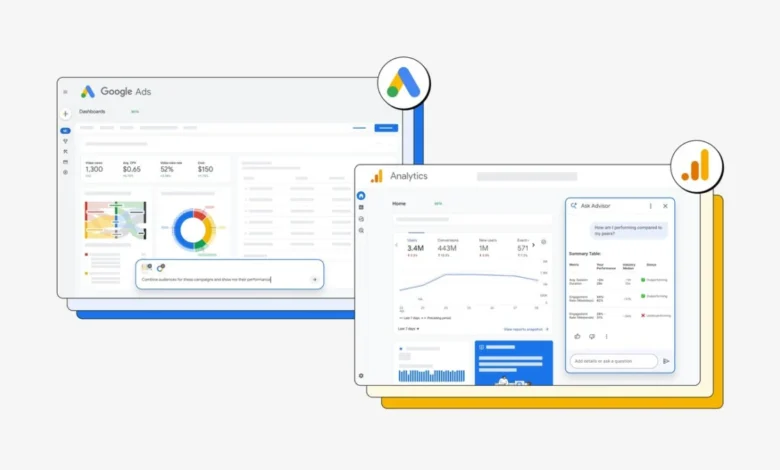
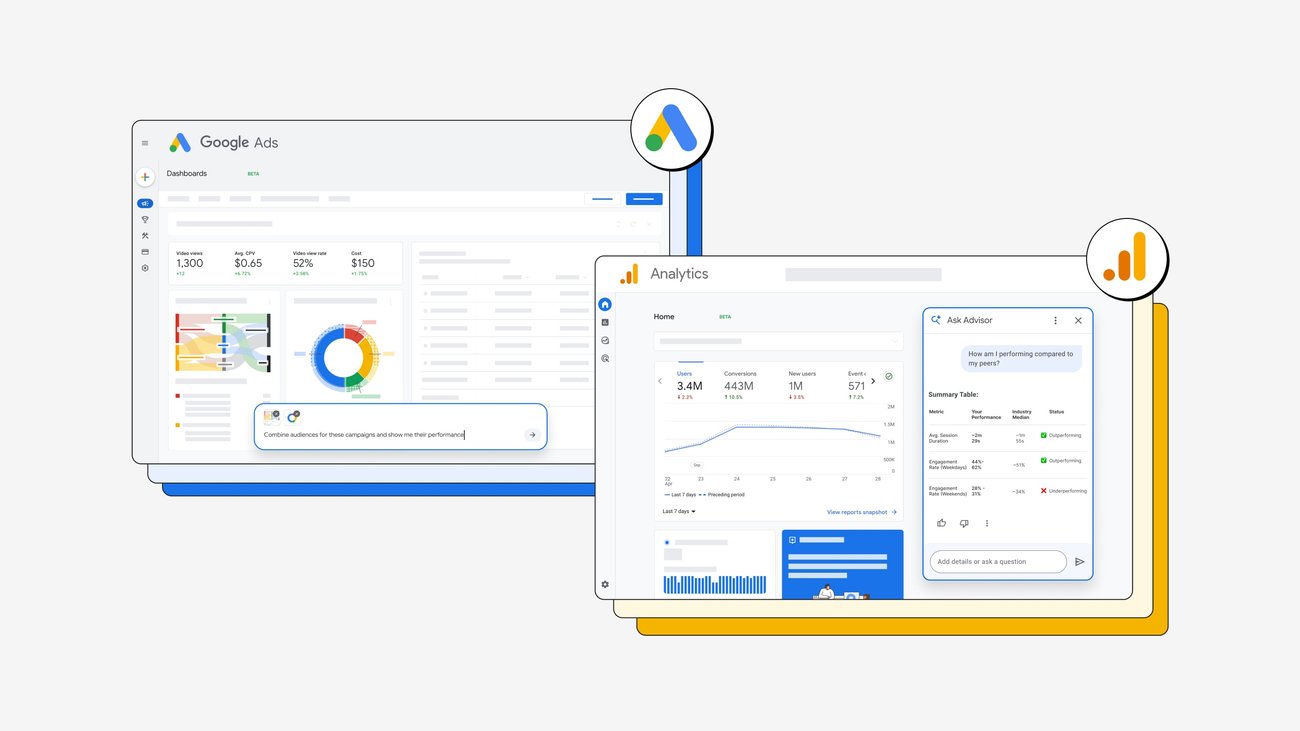
The revamped Google Analytics homepage now features AI-generated summaries that parse site traffic, conversion rate fluctuations, and seasonal trends the moment an analyst logs in. These summaries are not merely static charts; they are context-aware narratives. If a user notices a spike in bounce rates, a single click transitions the user into the Ask Advisor interface to investigate specific traffic sources or device-specific performance issues.
2. Personalized Insight Cards in Google Ads
The Google Ads interface has been overhauled to prioritize business-specific context. Through the use of personalized insight cards, the system identifies anomalies in impression share or competitive landscape shifts. By utilizing a natural language prompt box, users can query the platform about specific campaign impacts, such as "Why did my cost-per-acquisition rise in the Midwest last week?" The system then synthesizes historical ad data, market trends, and account settings to provide an immediate diagnostic response.
3. Automated Visual Reporting
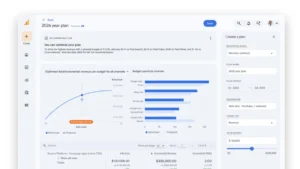
One of the most labor-intensive aspects of marketing management is the creation of stakeholder reports. The new Dashboards feature, powered by generative AI, allows users to describe the report they need in plain English—for example, "Create a weekly summary of conversion performance by channel for Q3." The platform then generates the visualizations and adds an explanatory commentary, effectively automating the "so what" factor that human analysts previously had to write manually.
4. Benchmarking as a Strategic Lever
Data is only as valuable as its context. By introducing anonymized benchmarking, Google allows brands to understand if their performance is an outlier within their industry. This feature provides a reality check for campaign managers, helping them set realistic KPIs based on peer-group averages, which can be critical during quarterly budget planning sessions.
Industry Implications and Data Context
According to recent industry benchmarks, companies that leverage AI-driven insights for marketing optimization see a 15% to 20% improvement in campaign efficiency within the first six months of adoption. For small to mid-sized businesses (SMBs) that lack dedicated data science teams, these tools provide a competitive advantage previously reserved for large enterprises with the resources to hire external consultants.
The shift toward "agentic" systems—where the software can suggest, draft, and eventually implement changes—also highlights the changing role of the digital marketer. The focus is shifting from "how to use the tool" to "what is the business objective." By abstracting the complexity of SQL queries and data visualization, Google is democratizing access to enterprise-grade analytics.
Expert Perspectives and User Reception
Early adopters of the Ask Advisor framework have reported significant time savings. Kevin Marshall, Paid Media Director at Gardyn, noted that the tool has become a "go-to for a directional check," emphasizing that the speed of the AI allows his team to "dig deeper and make shifts that improve performance sooner."
However, industry analysts maintain a cautious but optimistic outlook. The primary challenge for such systems is "hallucination"—the tendency for AI to present plausible but incorrect data interpretations. Google has addressed this by ensuring that the AI provides citations and links back to the raw data sources, maintaining a level of transparency that is essential for financial and performance auditing.
Future Outlook
The deployment of these features marks a transition period for digital marketing departments. As these tools become more sophisticated, the distinction between a data analyst and a media buyer is likely to blur. Professionals will increasingly function as "AI orchestrators," overseeing a fleet of autonomous systems that handle the heavy lifting of data analysis and campaign adjustment.
As Google continues to iterate on these agentic experiences, the integration is expected to extend into cross-channel attribution, where the AI will eventually provide suggestions that span not just Google’s ecosystem, but also third-party platforms via API integrations. For now, the focus remains on the current rollout, which is being deployed to all Google Ads and Google Analytics accounts globally.
The ultimate goal of this technological push is clear: to ensure that the complexity of modern digital advertising does not overwhelm the marketers who use these tools. By reducing the friction associated with data analysis, Google is positioning its platform not just as a place to buy ads, but as an essential business intelligence partner. As businesses navigate an increasingly fragmented digital landscape, the ability to derive "the why" behind the "what" will likely define the next generation of marketing success.