MIT Researchers Unveil CheMeleon, a Deep-Learning Foundation Model That Accelerates Molecular Discovery in Pharmaceutical and Materials Sciences

The pursuit of novel molecules has long served as the fundamental bedrock of industrial advancement, dictating the pace of innovation across the pharmaceutical, electronic, and energy sectors. Whether chemical corporations are searching for groundbreaking
therapeutic agents to combat unmet medical needs or engineering firms are attempting to synthesize durable polymers with precise conductivity profiles, the identification of viable compounds remains a high-stakes, capital-intensive endeavor. Traditionally, this discovery pipeline has relied heavily on trial-and-error experimentation. Chemists and materials scientists must physically synthesize thousands of candidate molecules in laboratories, subjecting them to battery after battery of tests to evaluate their solubility, toxicity, binding affinity, and structural stability.
Despite centuries of accumulated chemical knowledge, predicting how a given molecular structure will behave in complex environments continues to challenge researchers. The sheer number of potential molecular configurations vastly outstrips human capacity for exhaustive laboratory screening. While computational chemistry and physics-based simulations have offered incremental relief by providing preliminary calculations, these methods are frequently computationally prohibitive, slow, and limited in their predictive accuracy when applied to entirely novel structural classes.
In recent years, artificial intelligence and machine learning have emerged as powerful tools designed to augment or bypass these laborious calculations. Yet, many contemporary AI approaches face a critical bottleneck: they require massive volumes of training data to deliver reliable predictions. For newly discovered cellular targets or cutting-edge material properties where experimental data is sparse or entirely nonexistent, traditional deep-learning models frequently falter.
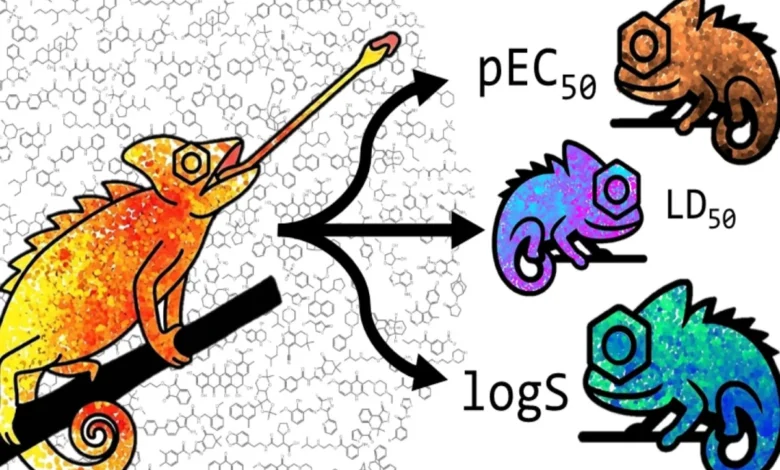
Addressing this fundamental limitation, a team of researchers at the Massachusetts Institute of Technology (MIT), in collaboration with industrial partners at chemical giant BASF, has developed a pioneering open-source deep-learning foundation model named CheMeleon. Designed specifically to excel in low-data environments, CheMeleon has demonstrated an unprecedented ability to predict molecular properties accurately, outperforming existing computational methodologies and fundamentally shifting how laboratories approach early-stage molecular screening.
The breakthrough findings detailing the architecture and performance of CheMeleon were formally published in the September 14 issue of the Journal of Chemical Information and Modeling. The research paper was authored by MIT graduate student Akshat Shirish Zalte, recent PhD graduate Jackson Burns, Research Scientist Charlles Abreu, Hoyt Hottel Professor of Chemical Engineering William Green, alongside three research scientists from BASF: Jochen Sieg, Christian Feldmann, and Miriam Mathea.
The Genesis and Open-Source Evolution of CheMeleon
Although the peer-reviewed publication of CheMeleon occurred in mid-September, the underlying technology has been circulating within academic and industrial communities for a significant duration. An earlier iteration of the research paper was made available via preprint servers online beginning last year. During this incubation period, the MIT research group made the strategic decision to release CheMeleon as an open-source model built on top of ChemProp, a widely utilized machine-learning package previously developed and maintained by Professor Green’s laboratory at MIT.
By integrating CheMeleon within the accessible ChemProp framework, the creators ensured that researchers across academia and private enterprise could freely download, inspect, and fine-tune the model to suit their specific proprietary applications. This commitment to open science triggered rapid adoption across the pharmaceutical sector.
The practical utility of CheMeleon gained widespread industry validation earlier this year during a high-profile prediction contest organized by OpenADMET. The competition challenged computational biology and chemistry teams from around the world to accurately forecast the biological and chemical properties of a diverse array of newly synthesized molecules that had never before been subjected to empirical testing. The competition drew a massive field of participants, pitting academic labs and commercial software developers against one another in a rigorous test of predictive capability.
When OpenADMET announced the final results, the impact of the MIT team’s work became undeniable: nine of the top twenty winning entries had incorporated CheMeleon into their predictive workflows. The fallout from the competition was immediate. Professor Green noted that the laboratory was instantly inundated with inquiries from major pharmaceutical corporations eager to gain access to the model, even though the formal academic paper had not yet cleared peer review.
The influence of the tool quickly permeated internal corporate policies. Green recounted that at least one major multinational pharmaceutical firm issued an immediate, company-wide directive instructing its research personnel to utilize CheMeleon as the mandatory baseline tool whenever modeling molecular properties for initial drug discovery decisions.
How CheMeleon Works: Pre-Training on Molecular Descriptors
To understand why CheMeleon performs so effectively in data-scarce environments, it is necessary to examine its underlying architecture and training methodology. Traditional expert-driven computational models rely heavily on hand-crafted rules established by human chemists. Over decades of empirical research, scientists have cataloged relationships between molecular structural features—such as molecular weight, the presence of specific functional groups like oxygen atoms, or the spatial bulkiness of a branch—and macroscopic behaviors like solubility and boiling points. While these classical models are valuable, they are rigid and struggle when confronted with chemical space outside human experimental experience.
Conversely, contemporary large-scale deep-learning models often attempt to ingest millions of research papers or vast troves of unstructured chemical literature from academic journals. Zalte and his colleagues charted a distinct path. Instead of training the model on unstructured text or raw experimental assays, the MIT team designed CheMeleon as a pre-trained foundation model inspired by the mechanics of modern language models like ChatGPT or Claude.
Rather than feeding the neural network petabytes of internet text, the researchers populated the pre-training pipeline with structural data concerning one million distinct molecules sourced from PubChem, a comprehensive, publicly accessible database of chemical information maintained by the U.S. National Institutes of Health.
Through this pre-training regimen, CheMeleon was tasked not with predicting a single specific industrial property, but rather with learning complex correlations between the physical structures of these million molecules and a catalog of approximately 1,600 standardized molecular descriptors historically developed by chemists. These descriptors capture a vast array of physicochemical characteristics.
Although one million molecules represent only a minute fraction of the nearly infinite combinatorial possibilities of atomic bonding, it provides a sufficient foundation. Once the neural network processes these examples, it autonomously extracts underlying chemical principles, structural relationships, and relational patterns. When a completely novel, unknown molecule is subsequently presented to the fine-tuned model, it does not need to learn chemical behavior from scratch. Instead, it applies its generalized foundational understanding of chemistry to generate highly accurate predictions.
Rigorous Benchmarking Against Established Methods
To substantiate the efficacy of their approach, the MIT research team subjected CheMeleon to rigorous comparative benchmarking. Zalte and his colleagues evaluated the foundation model against a diverse array of competitor systems, including other state-of-the-art machine learning foundation models as well as traditional, expert-designed heuristic models rooted in classical chemical principles.
The performance evaluation spanned 58 distinct test cases covering a wide spectrum of predictive challenges, ranging from classical physical properties like viscosity and solubility to highly esoteric biological metrics such as binding affinity, cellular target interaction, and enzymatic reactivity. Across this comprehensive suite of evaluations, CheMeleon consistently outperformed rival methodologies.
The implications of these performance gains are profound for industrial research and development. In the pharmaceutical sector, identifying a promising candidate molecule often requires synthesizing and testing thousands of closely related chemical analogs to optimize efficacy while minimizing toxicity. This empirical trial-and-error cycle can take months or years per drug candidate and consume millions of dollars in laboratory resources.
By drastically shrinking the margin of error in early-stage screening, foundation models like CheMeleon allow computational scientists to rapidly winnow down massive libraries of potential compounds, isolating the few dozen molecules with the highest probability of success. Experimental chemists can then focus their physical resources exclusively on synthesizing this highly refined subset of candidates.
Broader Implications for Industry and Future Research
The successful deployment of CheMeleon highlights a broader paradigm shift occurring across the chemical, materials, and pharmaceutical industries. As artificial intelligence transitions from an experimental novelty to a core operational infrastructure, models that can function effectively in low-data regimes are proving to be immensely valuable.
In many cutting-edge areas of drug discovery—such as targeting newly identified proteins associated with rare genetic disorders or emerging viral pathogens—experimental data points may number in the dozens rather than the millions. Traditional machine learning models fail in these data deserts due to severe overfitting. CheMeleon’s capacity to leverage generalized structural pre-training to make accurate predictions from minimal fine-tuning data directly addresses this industry-wide vulnerability.
Furthermore, the open-source nature of the project ensures that smaller biotechnology firms and academic laboratories, which lack the massive proprietary datasets possessed by mega-corporations, can leverage state-of-the-art computational tools to advance their research.
The collaborative nature of the research—bridging academic rigor at MIT with industrial application insight from BASF SE—underscores the vital synergy between theoretical computer science and commercial chemical engineering. Financial and logistical backing for the research was provided by the Machine Learning for Pharmaceutical Discovery and Synthesis consortium, alongside fellowship grants from the U.S. Department of Energy and MathWorks.
As the scientific community continues to explore the boundaries of AI-driven molecular design, frameworks like CheMeleon are expected to evolve further, potentially integrating quantum chemical calculations and multi-modal data streams. For an industry built on the physical synthesis of matter, the ability to accurately foresee the properties of a molecule before a single chemical bond is forged in a laboratory beaker represents a transformative leap forward.
Related posts: