Modernizing Your WooCommerce Storefront: A Deep Dive into Maxima Plugins and the Block-Based Checkout Revolution

The transition to block-based architecture within the WooCommerce ecosystem has fundamentally altered how store owners manage their digital storefronts. As WordPress continues its evolution toward a fully block-based experience, the classic shortcode-based cart and checkout pages—which served as the foundation for nearly two decades of e-commerce—are being phased out in favor of more dynamic, flexible block components. This shift, while essential for modern performance and customization, has created a significant technical divide. Store owners who have migrated to the newer Cart and Checkout blocks often report that long-standing third-party extensions—ranging from custom shipping calculators to specialized discount engines—frequently fail to render, causing critical disruptions in the customer journey.
The core of this challenge lies in the incompatibility between the legacy code hooks that many plugins rely on and the new React-based architecture of the WooCommerce Blocks plugin. When a store owner updates their checkout page, a plugin that expects a traditional PHP-driven hook might simply fail to inject its functionality, leading to invisible shipping options, broken custom fields, or missing promotional messaging. This "silent failure" phenomenon has become a primary pain point for store administrators, often resulting in cart abandonment and diminished conversion rates that are only identified after customer feedback.

The Evolution of the WooCommerce Infrastructure
To understand the necessity of this transition, one must look at the technical trajectory of WooCommerce over the past three years. In 2023 and 2024, the introduction of High-Performance Order Storage (HPOS) and the push toward block-based checkout were designed to address long-standing database bloat and performance bottlenecks. By moving away from the "wp_posts" and "wp_postmeta" tables, WooCommerce significantly reduced server load. However, this architectural overhaul effectively invalidated thousands of older extensions that were not built to handle these modern data structures or the front-end requirements of the Gutenberg block editor.
As of late 2026, the marketplace is in a state of consolidation. Developers are under mounting pressure to ensure that their plugins are "block-compatible" and "HPOS-ready." This is where Maxima Plugins has positioned itself as a critical player. By re-engineering a suite of over 30 extensions specifically for this new environment, the developer has attempted to solve the fragmentation that often plagues WordPress sites—where a typical store might run a dozen plugins from a dozen different authors, leading to conflicting code, inconsistent UI/UX, and complex support hurdles.
Technical Analysis of the Maxima Ecosystem
The Maxima Plugins suite operates on a philosophy of architectural uniformity. Unlike the fragmented landscape of the broader WooCommerce ecosystem, where plugin settings pages often vary wildly in design and functionality, Maxima’s catalog features a standardized user interface. The technical design of these plugins focuses on high-efficiency, loading scripts and styles strictly on pages where they are required. This approach directly supports Core Web Vitals, a set of metrics that Google uses to determine search engine rankings, which are increasingly influenced by the performance of the checkout page.

The technical implications of this approach are significant for store owners. By eliminating "bloat" and ensuring that every extension is native to the block editor, the checkout experience remains fluid. The inclusion of features like "one-line summaries" for complex shipping and discount rules allows administrators to audit their business logic—such as weight-based shipping thresholds—at a glance. For a merchant managing a store with thousands of SKUs, the ability to read a rule like "Weight 0 to 5kg — $4.95" without navigating through deep sub-menus is a tangible improvement in operational efficiency.
Addressing the Trust Gap: The Live Demo Model
One of the most significant barriers to entry for WooCommerce store owners is the risk associated with testing new software on a live environment. Traditionally, developers have relied on static screenshots or heavily curated video walkthroughs. Maxima Plugins has diverged from this trend by implementing a real-time, sandbox-style demonstration platform.
Upon visiting their product pages, users can trigger the creation of a private, temporary WooCommerce instance. This instance is pre-configured with the specific plugin, sample data, and an active checkout environment. This allows for an empirical assessment of the software before a purchase is made. In an industry where "plugin conflict" is a common fear, this "try-before-you-buy" approach serves as an objective validation of compatibility. It allows the user to verify how a plugin interacts with the block checkout or custom theme settings without affecting their live production database.

Critical Plugin Categories and Use Cases
The utility of these extensions can be categorized into four primary areas of operational necessity:
1. Dynamic Shipping and Fulfillment
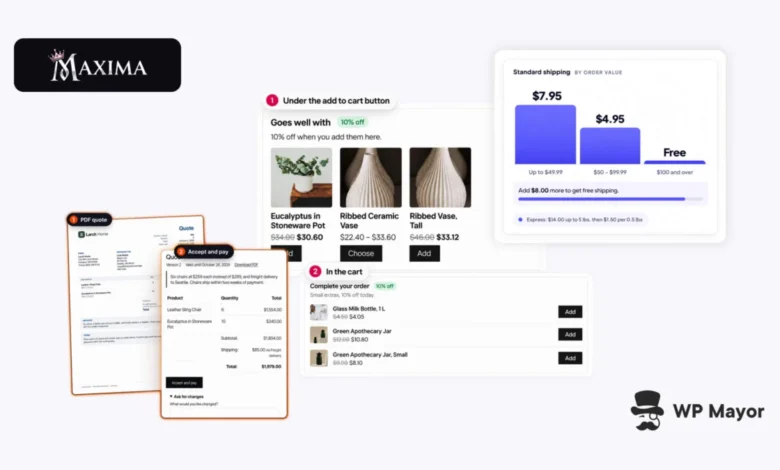
Flat-rate shipping models are increasingly insufficient for modern, diverse inventory. The Maxima Table Rate Shipping extension allows for multi-conditional logic—incorporating weight, volume, order value, and shipping class. The integration of progress bars within the cart—notifying the customer, for example, that "adding $16 more will drop shipping costs to $4.95"—is a proven psychological trigger for increasing Average Order Value (AOV).
2. Product Customization and Add-ons
The standard WooCommerce product page is intentionally minimalist. For stores requiring engraving, custom printing, or complex bundles, the Product Options & Add-ons plugin provides a layer of interactivity. By utilizing conditional logic, these fields only appear when necessary, keeping the UI clean and reducing cognitive load on the shopper. The integration with the cart total—updating the price in real-time as choices are made—provides the transparency required for high-conversion e-commerce.

3. Pre-Orders and Inventory Management
The Pre-Orders & Release Dates module addresses the "on-sale" gap in standard WooCommerce. By automating the transition from a pre-order state to a live order on a specified date, the plugin reduces the manual administrative burden of tracking launches. The ability to cap pre-orders ensures that inventory management remains precise, preventing over-selling in limited-release scenarios.
4. Financial Compliance and Invoicing
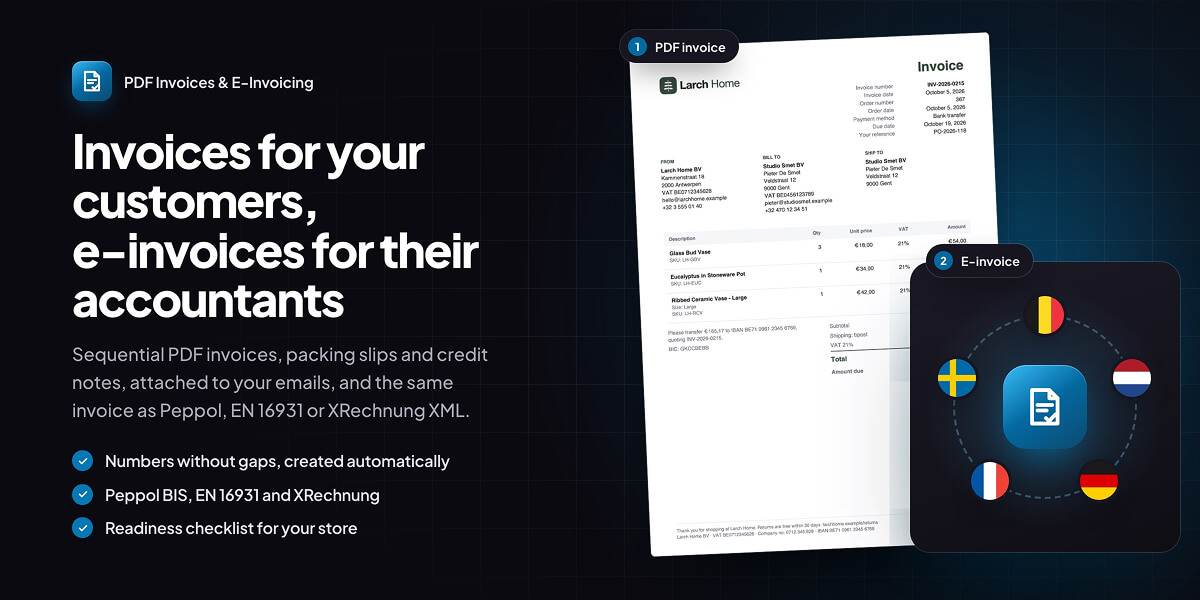
The PDF Invoices & E-Invoicing tool is perhaps the most significant for international merchants. Beyond simply generating PDFs, the module supports sophisticated compliance standards such as Peppol BIS Billing 3.0 and XRechnung 3.0. This is a critical development for European merchants who must adhere to stringent B2B digital invoicing regulations. By automating these documents, the plugin mitigates the risk of human error in tax and accounting processes.
Operational Benefits for Agencies
For web development agencies managing portfolios of dozens of client sites, the current plugin marketplace often necessitates managing a chaotic array of license keys, update schedules, and support portals. Maxima Plugins simplifies this through a centralized connectivity tool, "Maxima Connect." By installing a single bridge, agencies can manage all installed plugins directly from the WordPress dashboard.

The licensing model, which scales from single-site licenses to 25-store tiers, provides a clear cost-benefit analysis for professional developers. By excluding staging and local development sites from the license count, Maxima aligns its billing structure with the realities of professional web development workflows.
The Future of WooCommerce Compatibility
The broader implications of these developments are clear: the era of "plug-and-pray" extensions is ending. As WooCommerce pushes toward a more robust, block-centric future, the burden of maintenance falls on both the platform developers and the third-party plugin ecosystem. Maxima Plugins represents a shift toward a more cohesive, developer-friendly, and transparent model.
For the store owner, the decision to invest in these tools is not merely about adding functionality; it is about ensuring long-term site stability. As the underlying code of WordPress changes, the reliance on plugins that are actively maintained and built with modern standards becomes a hedge against downtime. By prioritizing HPOS support and block-based architecture, these extensions provide a stable foundation for growth.
In conclusion, the transition to the block-based checkout is an unavoidable evolution for the WooCommerce ecosystem. While it has caused friction in the short term, it has also paved the way for more sophisticated, performant, and reliable e-commerce tools. For merchants and agencies alike, the focus must now remain on selecting software that is built for the future, rather than attempting to patch the cracks in the legacy architecture of the past. Through the combination of live-demo validation, standardized UI/UX, and a commitment to modern technical standards, the ecosystem is slowly reaching a point of maturity that promises a more seamless future for online retail.