The Evolution of Digital Marketing: Merging Search and Answer Engines Under a Single Strategy

The digital marketing landscape is undergoing a structural paradigm shift, prompting industry leaders to propose a unified operational framework known as Organic Answers Optimization (OAO). For over two decades, Search Engine Optimization (SEO) has served as the foundational pillar for digital visibility, traffic acquisition, and revenue generation. However, the rapid proliferation of Answer Engines—powered by Large Language Models (LLMs) and generative artificial intelligence—has necessitated an integrated approach that merges traditional search mechanics with modern answer engine visibility.
Industry analysts point out that while SEO remains the dominant driver of raw traffic volume and immediate revenue, Answer Engine Optimization (AEO) has rapidly captured significant market share in the consumer-influencing sphere. Rather than viewing these methodologies as competing disciplines managed by isolated corporate silos, modern business executives are moving toward a unified strategic vision: influencing algorithmic recommendations and converting that influence into scalable enterprise traffic and profit.
The Shift from Keyword Search to Algorithmic Answers
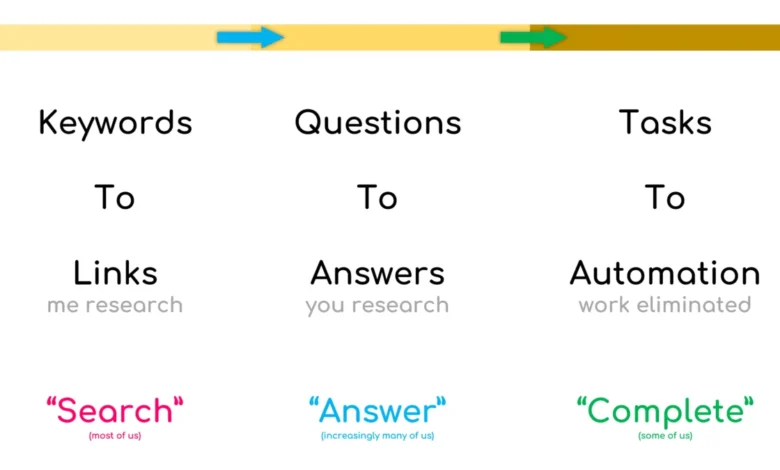
To understand the necessity of OAO, industry experts trace the behavioral evolution of digital consumers across three distinct phases: Search, Answer, and Complete.
For more than twenty years, the traditional Search phase has relied on keyword queries directed at major search engines, yielding a results page consisting of sponsored links and organic web destinations. Billions of global users have been conditioned to conduct intensive manual research across multiple web pages to compile information.
In recent years, however, a substantial demographic shift—particularly among younger consumers—has accelerated the transition to the Answer phase. Users increasingly bypass traditional search engine results pages entirely, submitting complex, context-rich prompts directly to conversational AI platforms. Instead of sorting through disparate web links, consumers receive synthesized, direct answers generated in seconds. Market research indicates that this behavioral shift has led to the discovery of niche brands and products that might never have surfaced through traditional keyword-based SEO strategies.
The final frontier of this evolution is the Complete phase, where autonomous AI agents not only provide recommendations but execute transactions on behalf of the user. While still in its infancy, accounting for a low single-digit percentage of overall consumer interactions, the delegation of purchasing tasks to AI agents represents a fundamental challenge to traditional website traffic models. As consumers rely on machines to handle research and fulfillment, direct visits to corporate websites become less representative of a brand’s true market influence.
Unifying the Metrics: Why a Single Scorecard Matters
Historically, digital marketing departments have operated under strict departmental divisions. SEO teams typically focus on first-party text and image optimization, while content teams tasked with AEO emphasize third-party mentions, audio, and video integration. This siloed approach creates significant friction when reporting performance metrics to executive leadership and Chief Financial Officers.
Corporate financial officers evaluate digital marketing channels based on bottom-line revenue and profitability rather than technical channel attribution. Recent industry data from major retail analytics providers highlights the commercial value of LLM-driven traffic, noting that visits originating from answer engines often demonstrate higher conversion rates and superior average order values compared to conventional organic search traffic.
To bridge this gap, marketing strategists advocate for a consolidated OAO scorecard that evaluates performance across three primary Key Performance Indicators (KPIs):
- Non-Brand Organic Search Profit: Measuring profitability generated from unpaid search visits initiated by users who did not explicitly search for brand-specific terminology. This metric isolates the true acquisition power of organic visibility.
- Answer Engine Profit: Quantifying the commercial return driven specifically by AI-powered recommendations and referral traffic.
- AI Brand Score: A probabilistic metric assessing how frequently and prominently conversational models recommend a specific brand when presented with category-level queries that omit brand names.
By unifying these metrics under a single analytical umbrella, organizations can dismantle internal silos, accurately assess their true market penetration, and justify content investments to executive stakeholders.
Analytical Methodologies and Data Integrity
As enterprises adopt OAO frameworks, analytics professionals emphasize the critical importance of rigorous methodology over superficial metric tracking. Industry veterans caution against the proliferation of unverified data providers and proprietary vendor metrics that attempt to reverse-engineer proprietary search algorithms and private LLM prompt logs.
Because major AI platforms do not publicly disclose granular prompt volumes or user query logs, third-party estimation tools often rely on limited consumer panels or probabilistic modeling. Analysts warn that applying rigid SEO metrics—such as estimated authority scores or visibility indexes—to answer engine optimization can lead to misinformed strategic decisions.
Effective OAO measurement requires utilizing owned platform data, such as web analytics and customer relationship management systems, while treating third-party competitive intelligence as directional signals rather than absolute truths. Understanding the limitations of these data sources prevents organizations from attributing natural market fluctuations or broader seasonal trends entirely to algorithmic changes.
Broader Implications and Strategic Outlook
The transition toward Organic Answers Optimization carries profound implications for digital agencies, corporate marketing budgets, and technical infrastructure. As organic search traffic experiences gradual year-over-year declines—offset only marginally by nascent answer engine referrals—organizations must adapt their content strategies to satisfy both human users and automated recommendation engines.
Industry experts emphasize that a comprehensive OAO strategy relies on producing authoritative, multi-format content distributed across diverse digital ecosystems. This approach ensures maximum visibility regardless of whether a consumer utilizes a traditional search engine or a conversational AI assistant.
Ultimately, the integration of SEO and AEO into a cohesive OAO framework provides businesses with a resilient defense against rapid technological change. By combining rigorous analytical methodologies with a forward-looking content strategy, enterprises can navigate the ongoing transformation of digital discovery without falling victim to unexpected revenue shocks.