Navigating the 2026 Midterm Elections: Essential Deadlines, Voting Rules, and Security Protocols

As the November 3 midterm elections rapidly approach, voters across the United States face a defining political moment that will shape the balance of power in Congress and heavily influence the remainder of President Donald Trump’s time in office. With control of both the House and the Senate hanging in the balance, millions of citizens are finalizing their voting plans. Already, more than 51 million Americans have cast their ballots through early voting and mail-in options, highlighting a sustained nationwide trend toward decentralized and flexible voting methods. For those who have yet to participate, time is running short. Understanding state-specific deadlines, polling locations, identification requirements, and security safeguards is critical to ensuring every vote is properly cast and counted. Comprehensive resources, including registration status checkers and local drop box locators, remain available through nonpartisan portals such as Vote.org and USA.gov.
The Evolution of Mail-In and Absentee Voting
The landscape of American elections has shifted dramatically over the past decade, accelerated by structural changes implemented during the 2020 election cycle. Today, mail-in and absentee voting represent a cornerstone of the democratic process. Eight states currently conduct all-mail elections or provide universal mail-in ballots to all registered voters, while others have significantly expanded absentee access.
For voters utilizing mail-in ballots, strict adherence to deadlines is paramount. Most states mandate that mail-in ballots be requested with at least a week’s lead time ahead of November 3. Crucially, completed ballots must carry a postmark on or before Election Day to be deemed valid; arriving late with a postmark past the deadline risks disqualification. Voters who requested a mail-in ballot but never received it are urged to contact their local election office immediately to arrange an alternative voting method.
The physical return of mail-in ballots also varies significantly by jurisdiction. Approximately 15 states legally mandate the provision of secure drop boxes—frequently situated at accessible public locations such as libraries, municipal parks, and government offices—allowing voters to bypass postal delays. Conversely, roughly 11 states prohibit drop boxes entirely, requiring voters in those jurisdictions to rely strictly on the postal service or hand-deliver their ballots directly to an official election office or polling place. To prevent inadvertent disenfranchisement, voters must consult their state’s registrar of voters or utilize state-by-state databases to verify local collection rules.
In-Person Voting Protocols and Polling Place Logistics
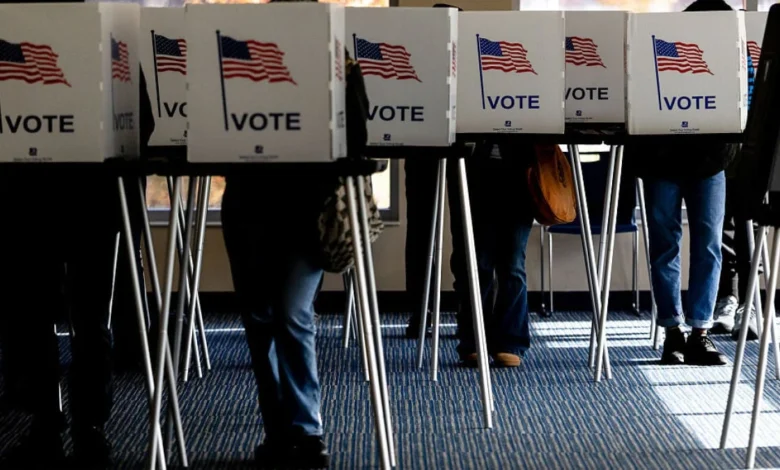
Despite the massive expansion of mail-in and early voting, tens of millions of Americans continue to cast their ballots in person on Election Day or during early in-person voting windows. In-person voters are assigned specific polling locations determined by their residential registration address. Depending on the state, early in-person voting can begin up to a month prior to November 3, offering flexibility for individuals with complex scheduling needs.
Voters heading to the polls are permitted to bring personal notes, nonpartisan voter guides, and official sample ballots into the voting booth to assist with down-ballot races and ballot measures. While specialized equipment is not required, state laws dictate whether specific forms of identification must be presented. Voters with disabilities are encouraged to verify that their assigned polling place complies with the Americans with Disabilities Act (ADA), though alternate accessible locations are frequently designated within counties to accommodate specific accommodation needs. Locating a nearby polling station is accessible via online tools provided by the National Association of Secretaries of State (NASS) and Vote.org.
Voter Identification Requirements and Ballot Tracking
Voter identification laws remain intensely decentralized, varying widely from state to state. While some jurisdictions enforce strict photo ID mandates, others accept non-photo identification or permit voters without standard documentation to cast a ballot by signing a formal identity affidavit. Voters are advised to consult state election officials ahead of time to prevent confusion at the check-in table.
For those who cast ballots by mail, transparency has improved significantly through technological integration. Most states now offer online ballot-tracking tools, allowing citizens to monitor their ballot’s journey from issuance to final tabulation. Voters seeking real-time tracking information can access their state’s registrar website or contact national nonpartisan voter assistance hotlines, such as 866-OUR-VOTE.
Addressing Ballot Challenges and Election Security
As polarization intensifies, questions regarding ballot integrity, legal challenges, and administrative oversight have taken center stage. Under the National Voter Registration Act, ballots cannot be arbitrarily challenged without a legitimate legal basis. Furthermore, federal law strictly prohibits systemic voter purges—the practice of cleaning up voter databases by removing registered names—within 90 days of a federal election. Consequently, voters who were active on the rolls as of August and who complete their ballots accurately and on time are legally protected.
Federal agencies and law enforcement personnel possess no legal authority to seize voting machines, nullify legitimate ballots, or halt the counting process. While political action committees and partisan organizations may legally challenge specific blocks of votes up until Election Day, individual voters whose registrations are questioned at the polls retain the right to cast a provisional ballot, which is later reviewed and counted once eligibility is verified.
Security of Electronic Voting Machines and the Threat of Misinformation
Electronic voting systems operate under the strict regulatory oversight of the U.S. Election Assistance Commission (EAC) alongside bipartisan local election officials. While periodic cybersecurity research identifies theoretical vulnerabilities in hardware and software, independent election security experts emphasize that these flaws have not resulted in actual election interference or altered outcomes.
Instead of technical breaches of voting machines, intelligence agencies and election security researchers have repeatedly warned that the primary threat to modern democratic integrity is the widespread dissemination of misinformation and disinformation, increasingly amplified by artificial intelligence tools designed to sow public distrust in election results.
Executive Overreach and Institutional Safeguards
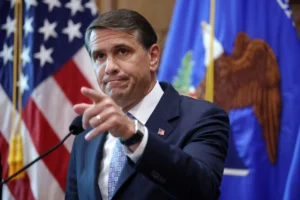
In the lead-up to the 2026 midterms, the political discourse has been marked by claims from the administration regarding the legitimacy of the results, including assertions concerning noncitizen voting. However, comprehensive reviews by the Department of Justice and academic researchers indicate that instances of noncitizen voting are exceedingly rare, and the vast majority of noncitizens flagged or charged by federal authorities were found to be lawful permanent residents or individuals authorized to be in the United States.
Despite political pressure and threats of executive intervention from the Trump administration, constitutional and statutory safeguards prevent the president from issuing executive orders or declaring emergency powers to nationalize, take over, or unilaterally alter the administration of state-run elections. Federal courts have consistently struck down past executive attempts to infringe upon state-managed electoral processes, and existing congressional procedures ensure that newly elected members will be seated based on certified state results. As November 3 approaches, election officials nationwide continue to emphasize that robust administrative safeguards and active civic participation remain the ultimate bulwark of American democracy.
Related posts: