Google Integrates Meridian Marketing Mix Modeling into Analytics 360 to Drive Data-Driven Decision Making

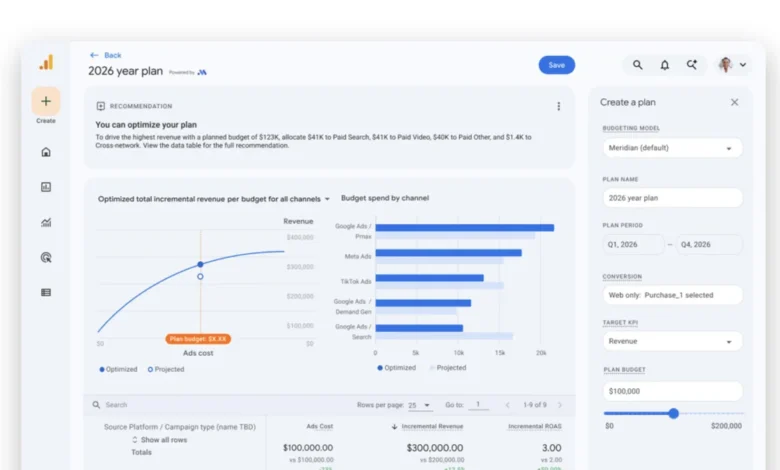
In an era defined by the rapid proliferation of artificial intelligence and the increasing complexity of consumer digital journeys, the ability to synthesize disparate data points into actionable intelligence has become the primary differentiator for competitive enterprises. To address this challenge, Google has announced a significant expansion of its measurement ecosystem by integrating Meridian—its open-source Marketing Mix Model (MMM)—directly into the Google Analytics 360 platform. This move represents a strategic pivot toward unified measurement, aiming to bridge the gap between historical performance data and forward-looking predictive analytics.
The integration is designed to provide marketers with a more holistic view of their performance, moving beyond siloed channel metrics to understand the true incrementality of their marketing investments. By combining the rigor of open-source modeling with the enterprise-grade reporting capabilities of Analytics 360, Google seeks to empower organizations to move from reactive reporting to proactive, data-informed strategy.
The Evolution of Marketing Measurement
Marketing measurement has undergone a radical transformation over the past decade. The industry has shifted from traditional last-click attribution—which often overvalued bottom-funnel activities—toward more sophisticated methodologies that account for the nuanced nature of modern consumer behavior. The deprecation of third-party cookies and the tightening of global privacy regulations have further accelerated the need for privacy-centric, model-based measurement approaches.
Marketing Mix Modeling (MMM) has emerged as a cornerstone of this transition. Unlike user-level tracking, which relies on persistent identifiers, MMM uses statistical analysis to estimate the contribution of various marketing channels to sales outcomes. However, the barrier to entry for high-quality MMM has historically been high, requiring significant data science expertise and computational resources. Google’s open-source Meridian project was launched to democratize access to these sophisticated models, and its integration into Analytics 360 marks the next phase of this democratization effort.
A Chronology of Measurement Advancements
The path to this integration reflects a broader trend of consolidation in the ad-tech stack.
- Pre-2020: The industry relied heavily on deterministic tracking and cross-device user mapping, which began to face headwinds due to browser privacy updates.
- 2021–2022: As privacy-first requirements became the industry standard, Google introduced various privacy-preserving measurement solutions, including enhancements to conversion modeling and the introduction of Consent Mode.
- 2023: Google introduced the Meridian project as an open-source initiative, designed to provide marketers with a transparent, customizable framework for MMM that could be tuned to specific business needs without relying on proprietary "black box" algorithms.
- 2024: The announcement of the integration of Meridian into the Google Analytics 360 suite provides a seamless pipeline for data ingestion, model training, and performance reporting.
Leveraging Predictive Intelligence: Qualified Future Conversions
Beyond the integration of Meridian, Google is introducing new predictive signals into the Google Ads ecosystem, specifically Qualified Future Conversions (QFCs). Powered by Gemini, Google’s advanced AI model, QFCs are designed to bridge the gap between immediate engagement and long-term business value.
Traditionally, upper-funnel marketing efforts—such as brand awareness campaigns—have been difficult to measure because their impact on revenue often occurs weeks or months after the initial touchpoint. QFCs address this by linking current ad spend to future sales outcomes using early indicators, such as shifts in branded search volume. By identifying these correlations, marketers can gain a more accurate understanding of their brand’s long-term performance, effectively "uncovering" revenue that was previously invisible under short-term attribution models.
The strategic intent is to feed these QFC signals into the Meridian model. By doing so, Google is creating a closed-loop system where predictive, real-time ad data informs long-term statistical models, leading to higher accuracy in media spend allocation.
Implications for Enterprise Data Strategy
The integration of Meridian into Analytics 360 has several significant implications for the enterprise marketing landscape.
1. Reducing Modeling Complexity
By centralizing the data pipeline, companies can significantly reduce the engineering burden associated with maintaining custom MMM solutions. Standardizing the ingestion of data from Google Ads and other sources into a unified modeling environment allows data teams to focus on strategy rather than data plumbing.
2. Bridging the Gap Between Short-Term and Long-Term
One of the most persistent challenges in marketing is the "tension of horizons"—the conflict between optimizing for daily conversion targets and building long-term brand equity. The combination of QFCs and Meridian provides a dual-lens approach, allowing stakeholders to see how immediate tactical shifts influence their longer-term growth trajectories.
3. Enhancing Budget Allocation Confidence
Data-driven decision-making is only as good as the trust stakeholders place in the underlying models. By using an open-source framework, companies can audit the math behind their insights, fostering greater organizational buy-in for budget shifts. When executives can see the causal relationship between brand-building efforts and revenue growth—validated by both real-time signals and long-term models—they are more likely to approve sustained investment in top-of-funnel strategies.
Analytical Perspective: The Shift Toward Privacy-Preserving Attribution
From an industry analysis standpoint, this move underscores a broader shift in the digital advertising paradigm. The industry is moving away from the era of "perfect tracking" toward an era of "model-based inference."
Data provided by industry analysts indicates that companies utilizing robust, model-based measurement strategies experience an average of 10% to 20% improvement in media efficiency over time. This efficiency gain is largely attributed to the reduction of waste in non-performing channels and the identification of synergy between disparate media touchpoints.
However, the effectiveness of these tools relies heavily on data hygiene. As companies integrate Meridian into their Analytics 360 workflows, the quality of the input data—including historical sales data, promotional calendars, and external market factors—becomes paramount. The model is a tool for interpretation, not a substitute for accurate data collection practices.
Official Stance and Future Outlook
While specific statements from third-party partners are currently being synthesized in the market, the general sentiment from the measurement community has been one of cautious optimism. Experts suggest that the success of this integration will depend on the ease of use of the interface and the ability of Google to provide sufficient technical support for the open-source component of the model.
Google’s positioning of these tools is clear: the company is moving to ensure that its platform remains the "single source of truth" for marketers. By providing a comprehensive suite of measurement tools—ranging from real-time bidding optimizations to long-term mix modeling—Google aims to make its ecosystem indispensable for high-volume advertisers.
Looking ahead, the next phase of this development will likely involve deeper integration with first-party data warehouses. As organizations continue to build their own customer data platforms (CDPs), the ability to ingest that data into Meridian will be the next frontier for marketers seeking to personalize the measurement of their omnichannel efforts.
Conclusion: Turning Data into Decisive Action
The integration of Meridian into Google Analytics 360, coupled with the introduction of Qualified Future Conversions, represents a fundamental shift in how marketers will approach the challenge of performance measurement. By aligning predictive AI with established statistical modeling techniques, Google is providing a pathway for companies to navigate the complexities of the modern digital landscape.
As businesses look to refine their growth strategies, the ability to accurately assess the impact of their marketing investments will remain the most critical factor in their success. The tools announced by Google provide a robust framework for this, offering a balance between granular tactical insight and the broader, strategic understanding of what drives revenue. Ultimately, the transition to these unified measurement systems will allow organizations to invest more confidently, move with greater agility, and ensure that their marketing dollars are consistently aligned with their long-term growth objectives. In the AI era, the winners will be those who can transform their raw data into a reliable map for future performance, and this development is a significant step toward that goal.