LinkedIn Crosses 1.4 Billion Members as Microsoft Earnings Reveal Surge in User Engagement and Creator-Led Advertising

Microsoft Corporation’s release of its financial results for the first quarter of fiscal year 2027 on October 28 has provided a detailed look into the continued financial and operational momentum of LinkedIn. Acquired by tech giant Microsoft in 2016 for $26.2 billion, the professional networking platform has evolved from a traditional digital resume repository into a dynamic, content-driven ecosystem. According to platform-specific data shared by LinkedIn Chief Executive Officer Daniel Shapero alongside the corporate earnings report, user time spent on the platform experienced a notable 15 percent year-over-year increase during the quarter. This growth underscores the success of a broader strategic pivot aimed at improving feed relevance, curbing inauthentic activity, and capitalizing on the booming creator economy within a professional context.
The impressive financial and user metrics reported by Microsoft and LinkedIn arrive at a transformative period for the digital workplace. Over the past several years, shifting employment trends, the mainstream adoption of generative artificial intelligence, and a growing reliance on remote or hybrid work models have fundamentally altered how professionals network, hire, and consume information. LinkedIn has sought to position itself as the central infrastructure navigating these workforce shifts. By focusing on platform relevance and meaningful engagement, leadership has attempted to solve the modern digital dilemma of information overload while keeping retention high across its increasingly massive global member base.
Chronology of Recent Platform Updates and Product Rollouts
The upward trajectory in user time spent and overall platform growth is not a coincidence; it is the culmination of a deliberate, multi-pronged product strategy deployed over the preceding months. LinkedIn’s product and trust-and-safety teams have executed a series of aggressive updates designed to clean up the user experience and encourage deeper network interactions.
Beginning in August, LinkedIn introduced a dedicated reporting mechanism allowing users to flag "AI slop"—low-quality, repetitive, or irrelevant AI-generated content that has increasingly cluttered digital feeds across social media platforms. This move was paired with a sweeping crackdown on inauthentic activity, targeting coordinated engagement pods and paid third-party automated tools designed to artificially inflate post reach and visibility.
Simultaneously, the platform has rolled out features intended to foster genuine interpersonal connections. LinkedIn tested and deployed a new Network tab designed to streamline how members interact with their established connections. Furthermore, the company introduced subtle yet impactful user interface (UI) tweaks earlier in the week to reduce friction and drive continuous in-app engagement. These sequential updates demonstrate a rigorous approach to platform hygiene: removing noise to make space for signals that genuinely matter to professionals.
Scaling to New Heights: 1.4 Billion Members and Active User Realities
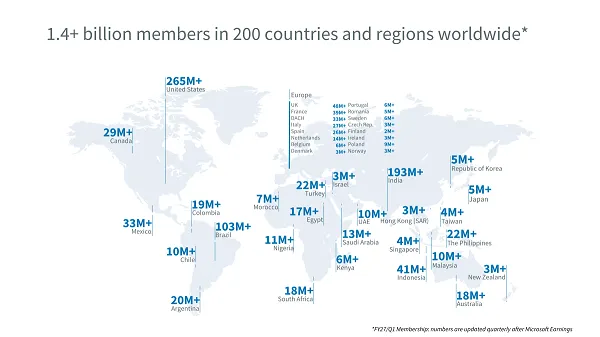
The most striking headline figure from the Q1 FY27 data dump is LinkedIn’s official crossing of the 1.4 billion member milestone, a substantial leap from the 1.3 billion members recorded in the fourth quarter of the previous fiscal year. This continuous expansion proves that the platform’s global acquisition engine remains remarkably potent.
However, industry analysts consistently draw a critical distinction between total registered members and monthly active users (MAUs). Based on historical tracking and regulatory disclosures, LinkedIn’s active usage rate generally hovers around 30 percent of its total member registry. Applying this metric to the newly announced milestone suggests that LinkedIn currently maintains approximately 420 million monthly active users worldwide.
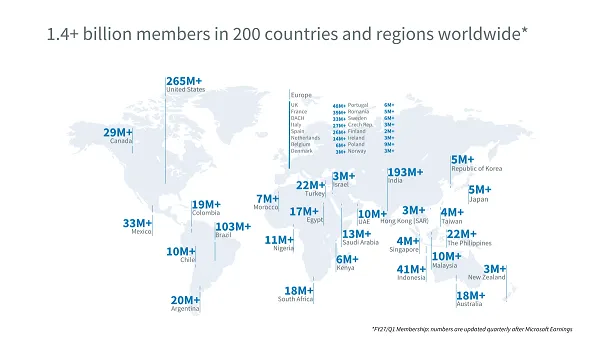
Gaining absolute clarity on active user numbers has historically been difficult due to the proprietary nature of tech platform reporting. However, insights can be gleaned from the European Union market, where LinkedIn—like other large tech platforms—is legally mandated to publish localized active user figures under the Digital Services Act (DSA). Within the EU, LinkedIn’s active user percentage has remained remarkably stable, fluctuating narrowly between 28 percent and 30 percent of its regional member count. While a 30 million active user variance exists between 30 percent of 1.3 billion versus 1.4 billion members globally, the structural stability of the active-to-registered ratio indicates a resilient and predictable core audience base.
The Rise of Video, Creator-Led Campaigns, and Monetization
Beyond organic networking and feed curation, LinkedIn’s financial health is increasingly anchored by sophisticated monetization strategies, particularly within advertising and enterprise solutions. Daniel Shapero highlighted a massive surge in commercial performance, noting that paid video advertisements on the platform increased by 25 percent year-over-year.
Even more dramatic is the acceleration of creator-centric marketing. Ads featuring independent creators surged by 63 percent year-over-year during the same period. LinkedIn has systematically courted creators by rolling out advanced discovery tools that allow enterprise brands to identify and partner with relevant thought leaders. Additionally, the platform has introduced creator monetization options, enabling content creators to directly share in ad revenue programs. This structural alignment mirrors the creator economy models of consumer-focused platforms like YouTube or TikTok, but tailors them specifically to B2B (business-to-business) marketing and professional authority.
Enterprise Adoption: Agentic Hiring and Premium Subscriptions
On the enterprise and B2B software front, LinkedIn continues to extract massive value from its suite of recruitment and corporate intelligence tools. Shapero reported that 25,000 corporate customers are now actively utilizing LinkedIn’s agentic hiring products—advanced automation and AI-driven tools designed to streamline talent acquisition and candidate screening.
Concurrently, demand for corporate intelligence and talent branding tools has skyrocketed, with Premium Company subscriptions surging by 121 percent year-over-year. These metrics indicate that businesses are willing to allocate substantial budgets toward specialized professional tools that promise efficiency in hiring and brand visibility.
Implications and Broader Market Impact
The Q1 FY27 figures present a comprehensive picture of a platform successfully transitioning from a passive utility into an active, high-engagement digital economy. By aggressively addressing user grievances regarding low-quality AI content and automated engagement scams, LinkedIn has preserved the structural integrity of its network.
The implications of these developments extend far beyond Microsoft’s balance sheets. For corporate marketers, the 63 percent growth in creator-led ads signals a definitive shift in B2B marketing budgets away from sterile corporate broadcasting toward human-centric, thought-leadership campaigns. For job seekers and professionals, the focus on authentic networking and refined UI promises a more rewarding digital experience. As LinkedIn marches past 1.4 billion members toward its next major milestone, its ability to balance rapid scale with rigorous content quality will determine its standing as the undisputed digital town square of the global workforce.