Meta Expands AI-Driven Application Ecosystem with Regional Launches of Waddle World and Style Sketch Amid Broadened Internal Automation

Meta has officially introduced two distinct artificial intelligence-powered mobile applications to select international markets, marking a significant escalation in the technology conglomerate’s strategy to leverage internal AI-generated coding frameworks. The new applications, designated as Waddle World and Style Sketch, highlight the corporation’s growing capability to rapidly prototype, build, and deploy consumer-facing software products with minimal human engineering friction. This development forms part of a broader corporate pivot toward accelerated product lifecycles driven by proprietary large language models and internal generative code-generation pipelines.
The rollout of these applications underscores a strategic evolution within Meta’s product development divisions. By utilizing artificial intelligence to streamline the software engineering process, the firm can conceptualize, test, and release experimental applications into targeted regional testbeds at a fraction of the traditional time and capital cost. However, these deployments have simultaneously drawn scrutiny from digital rights advocates, privacy analysts, and consumer protection organizations regarding the extensive data collection practices embedded within these seemingly innocuous consumer products, as well as the broader societal implications of deploying autonomous generative tools to global audiences.
Product Overview: Virtual Pets and Automated Wardrobes
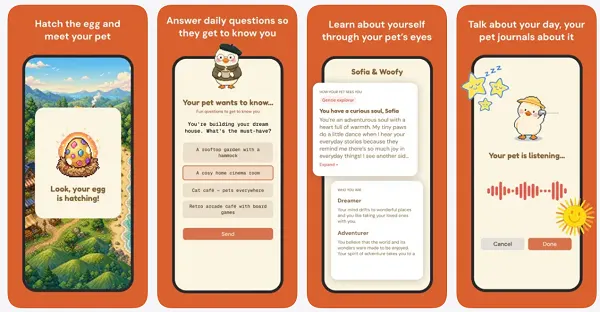
The first of the newly launched applications, Waddle World, is positioned as a casual, pocket-sized virtual pet care simulation explicitly tailored for younger demographics. Available exclusively to users in the Philippines during this initial regional deployment phase, the application invites participants to hatch, nurture, and interact with a 16-bit pixelated creature. According to official product descriptions provided by Meta, the application is designed to emulate vintage Tamagotchi-style mechanics while avoiding modern digital engagement traps such as continuous daily streaks, competitive scoring systems, or high-pressure retention metrics.
Despite its cozy, low-stress aesthetic, Waddle World operates as an active data collection vector. Regulatory disclosures on the application’s Apple App Store listing indicate that the software harvests a comprehensive suite of user information, including precise location data, specific contact details, and persistent unique identifiers. Social media analysts and technology commentators have noted that framing advanced data-harvesting infrastructure within a charming, child-friendly virtual pet environment reflects a calculated strategy to normalize deep user profiling and continuous engagement with corporate artificial intelligence systems.
Concurrently, Meta has released a second localized application titled Style Sketch, which targets users across Indonesia, Singapore, and Thailand. Style Sketch functions as an AI-driven personal outfit planner and digital wardrobe manager. To populate a user’s virtual closet, the application integrates directly with Meta’s established social media platform, Instagram. Through this integration, the system utilizes computer vision and image recognition to automatically extract and catalog clothing items from photographs previously shared by the user on their Instagram feed. Alternatively, users possess the capability to manually photograph and upload items from their physical closets. Once the digital wardrobe inventory is established, Style Sketch’s underlying algorithms generate coordinated outfit combinations based on the user’s existing garments.
Strategic Context and the Acceleration of Internal AI Development
The deployment of Waddle World and Style Sketch is not an isolated initiative but rather the latest manifestation of a systematic transformation in Meta’s operational methodology. For several quarters, executive leadership has emphasized the integration of artificial intelligence across all operational tiers, ranging from backend server infrastructure and digital advertising optimization to front-end software engineering.
The origins of this rapid prototyping strategy trace back to statements made by Meta Chief Executive Officer Mark Zuckerberg during the company’s second-quarter earnings call in July. Addressing investors and financial analysts, Zuckerberg explicitly highlighted how generative artificial intelligence and internal code-generation models have drastically reduced the time required to bring new consumer software to market.
"I’m also excited about how AI is helping our teams speed up product development," Zuckerberg stated during the earnings briefing. He pointed to several recent deployments, including the introduction of Instagram Instants, the standalone Groups application Forum, and the dedicated Marketplace application Seller. Furthermore, the CEO articulated an expectation that software deployment will become increasingly frictionless, enabling the corporation to continuously test innovative concepts and utilize proprietary recommendation algorithms to scale successful products rapidly, mirroring the trajectory of text-based social network Threads.
This internal engineering paradigm shift has empowered Meta’s development teams to bypass traditional, lengthy multi-month development cycles. By employing internal AI models to write, test, and debug application code, the company has established a prolific testing ground where applications can be rapidly deployed to foreign markets to gauge consumer interest, user retention, and data acquisition potential with minimal upfront financial exposure.
A Growing Portfolio of Experimental Applications
Waddle World and Style Sketch join an expanding portfolio of experimental software applications launched by Meta over the past year. This sustained wave of exploratory releases demonstrates the firm’s current operational philosophy: utilizing advanced AI to throw diverse concepts at the digital wall to observe which formats capture public interest.
Among the notable exploratory apps released under this initiative is Pocket, a platform that empowers users to autonomously generate functional digital minigames using conversational prompts. Another prominent release is Vibes, a standalone mobile feed dedicated entirely to infinite streams of user-customized, AI-generated video content. Additionally, the company introduced Storykit, an application engineered to automatically generate personalized bedtime stories and narrative content for families. Beyond these released products, industry reports have indicated that Meta has explored the development of more complex and controversial software concepts, including a potential prediction markets application tentatively named Arena, though the commercial viability and regulatory compliance of such tools remain subjects of ongoing internal evaluation.
Most of these experimental offerings share a common characteristic: short anticipated lifespans. Industry observers note that the vast majority of these testbed applications are designed to be transient. If an application fails to achieve critical mass or organic user retention within its initial regional testing window, Meta can easily decommission the software without significant corporate repercussion. Conversely, if an application resonates with regional demographics, the core architectural framework can be integrated into Meta’s flagship platforms—such as Facebook, Instagram, or WhatsApp—to deepen user engagement and expand advertising inventory.
Regulatory Concerns and Data Privacy Implications
The rapid deployment of consumer-facing artificial intelligence applications, particularly those directed toward younger demographics or integrated deeply with personal media archives, has intensified scrutiny from privacy advocates, child safety organizations, and regulatory bodies worldwide.
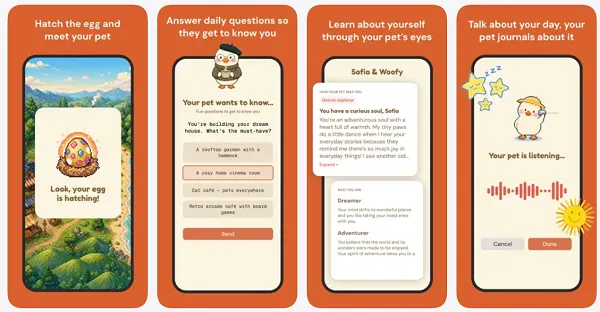
The integration of advanced machine learning models into child-centric software like Waddle World raises complex questions regarding emotional attachment to synthetic entities and the long-term implications of habitual data harvesting among minors. Critics have pointed out a persistent dichotomy in the technology sector, where complex algorithmic data-collection mechanisms are frequently enveloped in friendly, non-threatening interfaces designed to lower consumer vigilance. This concern is magnified by ongoing industry-wide challenges concerning AI tools occasionally producing inaccurate, inappropriate, or potentially hazardous recommendations, a vulnerability that has prompted regulatory restrictions on teen access to generative character bots across various mainstream platforms.
Furthermore, applications like Style Sketch, which harvest visual data directly from user social media feeds to construct detailed personal profiles, blur the lines between convenient lifestyle utilities and aggressive corporate data farming. By transforming personal photographic memories on Instagram into structured wardrobe inventories, Meta deepens its granular understanding of consumer purchasing habits, aesthetic preferences, and socioeconomic indicators—data that ultimately feeds into the corporation’s core digital advertising engine.
Chronology of Recent Meta AI Application Launches
- Early 2024: Meta initiates broader internal integration of AI-assisted code-generation models to accelerate software engineering timelines and reduce product prototyping friction.
- Spring 2024: The company releases Instagram Instants, followed by standalone community tools including Forum (Groups) and Seller (Marketplace).
- Mid-2024 (July): During the Q2 earnings call, CEO Mark Zuckerberg formally outlines the corporate strategy to leverage AI for rapid product scaling and novel application development.
- Late 2024: Meta rolls out a series of experimental generative tools, including the minigame creator Pocket, the AI video feed Vibes, and the bedtime story generator Storykit.
- Recent Weeks: Meta expands its regional testing ground by launching Waddle World (an AI pet care app for kids) exclusively in the Philippines, alongside Style Sketch (an AI outfit planner integrated with Instagram) in Indonesia, Singapore, and Thailand.
Broader Economic and Market Analysis
From an economic perspective, Meta’s strategy represents a fundamental shift in software development economics. Traditional software engineering requires substantial human capital, extensive QA testing, and significant time commitments before a product ever reaches a public app store. By shifting a substantial portion of the coding workload to generative artificial intelligence, Meta has drastically lowered the marginal cost of software creation.
This reduction in development cost alters the risk-reward calculus for major technology conglomerates. Instead of conducting exhaustive, multi-year market research before releasing a product, companies can now develop dozens of minimum viable products simultaneously, utilizing developing nations and smaller regional markets as live-fire testing laboratories. If regulatory resistance mounts or user adoption stalls, the financial loss of abandoning an app is negligible. If an application succeeds, the proprietary architecture can be immediately scaled globally using existing social media distribution networks.
However, this "move fast and break things" approach to generative artificial intelligence deployment carries inherent reputational and regulatory risks. As global lawmakers increasingly scrutinize the data collection practices of big tech firms—particularly concerning the surveillance of minors and the harvesting of personal media archives for algorithmic training—Meta’s strategy of quiet regional deployments may face heightened legislative pushback.
Ultimately, Waddle World and Style Sketch serve as both engaging consumer utilities for their respective regional user bases and as functional stress-tests for Meta’s evolving automated development pipeline. As the boundaries between software engineering, artificial intelligence, and corporate data acquisition continue to dissolve, the success or failure of these experimental applications will likely dictate the architectural roadmap for consumer technology products in the years to come.