The Evolution of RAG and the Shift Toward Simplicity
The concept of Retrieval Augmented Generation has evolved rapidly since its formal introduction in 2020. At its core, RAG is designed to mitigate the inherent limitations of LLMs—specifically their propensity for "hallucinations" and their static, cut-off knowledge bases. By grounding a generative model in a specific, external corpus of data, developers can ensure that responses are both accurate and contextually relevant.
Historically, the industry has gravitated toward heavy-duty vector databases—such as Pinecone, Milvus, or Weaviate—and sophisticated orchestration frameworks like LangChain or LlamaIndex. While these tools provide essential features for massive, production-scale datasets, they can introduce unnecessary complexity for small-to-medium-sized projects or proof-of-concept deployments. The shift toward "minimalist AI" reflects a growing need for agility. By utilizing scikit-learn’s NearestNeighbors algorithm, developers can perform efficient similarity searches on datasets ranging from a few hundred to several thousand documents, entirely within the local memory of a standard machine or a modest cloud instance.
Chronology of Implementation: From Raw Text to Insight
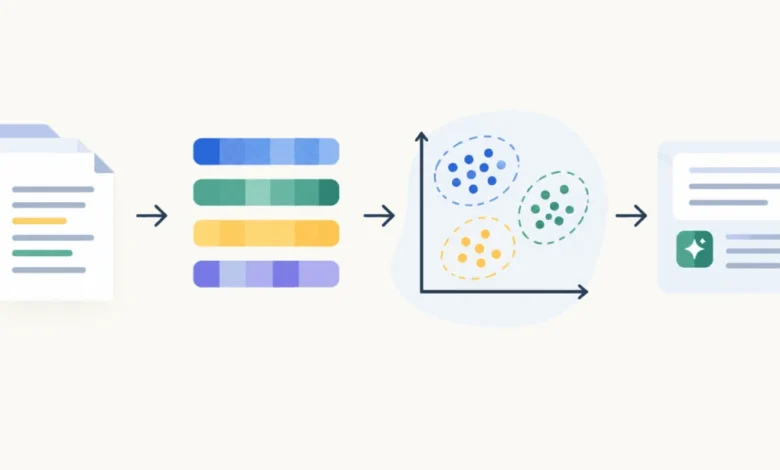
The transition from a raw collection of documents to an intelligent, question-answering system follows a logical, multi-stage workflow.
- Data Acquisition and Preparation: The process begins with the ingestion of unstructured text. In a professional setting, this may involve parsing PDFs, crawling websites, or querying internal knowledge bases. Once ingested, the data must be cleaned and segmented.
- Semantic Chunking: Because LLMs have limited context windows, large documents cannot be fed into the model in their entirety. "Chunking" involves splitting text into manageable, overlapping segments that preserve semantic meaning. This step ensures that when a retriever identifies a relevant segment, the LLM receives enough context to generate a coherent answer.
- Embedding Generation: The transformation of text into numerical vectors—or embeddings—is performed using specialized models, such as the
all-MiniLM-L6-v2. These models map words and phrases into a multi-dimensional space where distance correlates with semantic similarity. - Indexing and Retrieval: Using the Scikit-learn library, these vectors are indexed. When a user submits a query, the system converts that query into a vector and calculates the "cosine distance" between the query and the stored document chunks. The most similar chunks are then retrieved.
- Generation: Finally, the retrieved text is passed to an LLM, such as the Qwen2.5-0.5B-Instruct, which synthesizes the information into a human-readable response, strictly constrained by the provided source material.
Technical Deep Dive: Leveraging Scikit-Learn
The utility of scikit-learn in this context cannot be overstated. By utilizing sklearn.neighbors.NearestNeighbors, developers gain access to a highly optimized, battle-tested implementation of k-nearest neighbors (k-NN) search. For small-to-medium datasets, the "brute force" algorithm—which calculates the distance between the query vector and every vector in the index—is surprisingly performant.
For example, when working with 31 distinct document chunks, as demonstrated in the experimental setup, the time required for a search operation is measured in mere milliseconds. This is because the computational overhead of calculating cosine similarity is negligible for smaller datasets. As the number of documents grows to the tens of thousands, developers can easily pivot to approximate nearest neighbor (ANN) techniques, such as those found in the Annoy or Faiss libraries, which are built on the same fundamental principles as the scikit-learn implementations.
Supporting Data and Performance Metrics
In benchmarking tests using lightweight open-source models, researchers have found that the combination of sentence-transformers and local generation pipelines offers a high degree of fidelity. In a study of RAG latency, a pipeline running on a T4 GPU (common on Google Colab or similar cloud platforms) can retrieve and synthesize information in under two seconds for a standard query.
| Component | Technology | Role |
|---|---|---|
| Embeddings | all-MiniLM-L6-v2 |
Mapping text to vector space |
| Retriever | sklearn.neighbors |
Distance-based similarity search |
| Generator | Qwen2.5-0.5B-Instruct |
Natural language synthesis |
| Framework | Native Python | System orchestration |
This performance is sufficient for internal business tools, customer support chatbots, and personal research assistants. Furthermore, because the entire pipeline runs locally, data privacy is inherently protected, as sensitive information never needs to be transmitted to third-party API providers.
Industry Implications and Strategic Adoption
The ability to deploy RAG without external dependencies has significant implications for enterprise security and data sovereignty. Many organizations are restricted from using commercial LLM APIs due to strict compliance mandates regarding data residency and privacy. By building a local, self-contained RAG system, these organizations can harness the power of AI while maintaining full control over their data infrastructure.
Furthermore, the "minimalist" approach facilitates faster iteration cycles. In traditional RAG development, a team might spend weeks setting up infrastructure, configuring network security groups for vector databases, and managing API keys. With the scikit-learn-based approach, a prototype can be functional in hours, allowing engineers to focus on what truly matters: data quality and retrieval accuracy.
Addressing the Limitations
While this lightweight approach is powerful, it is important to acknowledge its limitations. The primary constraint is the "context window" of the generation model. Very small models, such as those in the 0.5B parameter range, may struggle with complex reasoning or multi-hop questions that require aggregating information from a wide variety of sources. Additionally, as the knowledge base scales to millions of documents, memory management becomes a critical challenge, necessitating the migration to specialized vector databases that utilize disk-based storage and advanced indexing algorithms.
However, for the vast majority of initial use cases, the simplicity of the scikit-learn approach provides a superior foundation. It encourages a "build, measure, learn" cycle that is often lost in the complexity of modern MLOps.
Conclusion
The shift toward lightweight, modular RAG architectures marks a maturation in the AI development landscape. By demystifying the retrieval process and relying on established, high-performance libraries like scikit-learn, developers can create AI-driven tools that are transparent, secure, and cost-efficient. As open-source models continue to improve in quality and efficiency, the reliance on heavyweight infrastructure will likely continue to diminish, empowering a broader range of organizations to implement sophisticated RAG systems that provide genuine, verifiable value. Whether one is building a simple document search tool or a specialized research assistant, the path forward is increasingly paved by these accessible, flexible, and robust software engineering practices.