Chipotle Mexican Grill Brings Back Its Iconic Boorito Halloween Promotion for 2026 Offering $6 Entrees to Costumed Rewards Members

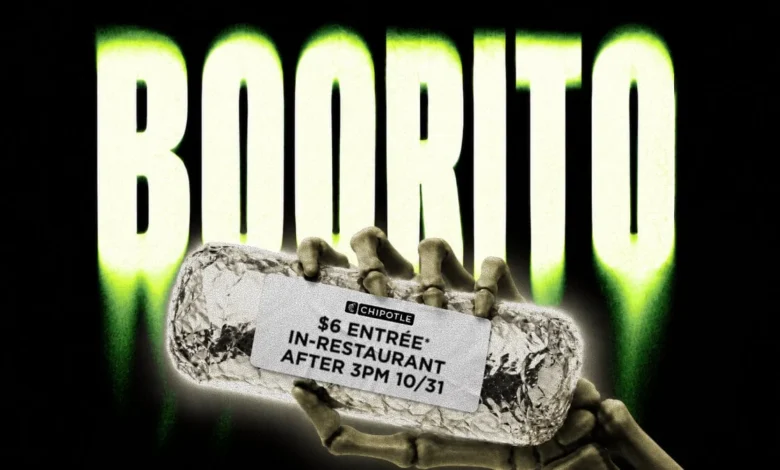
Chipotle Mexican Grill has officially announced the return of its most anticipated and enduring annual marketing tradition, the Boorito promotion. Scheduled for October 31, the nationwide campaign invites customers to celebrate Halloween by visiting participating restaurants in costume to secure a significant discount on any regular menu entree. As consumer demand for high-value promotions continues to rise in a competitive fast-casual dining market, the revival of the Boorito event underscores the strategic importance of experiential marketing, customer loyalty programs, and holiday-driven foot traffic for major restaurant chains.
Main Facts of the 2026 Boorito Campaign
The promotion will take place exclusively on Halloween, October 31, commencing at 3:00 p.m. local time and running through regular restaurant closing hours. To participate, individuals must fulfill two primary criteria: they must be enrolled members of the Chipotle Rewards loyalty program, and they must arrive at a participating restaurant wearing a Halloween costume.
Qualifying customers will be eligible to purchase any regular-priced entree for a flat rate of $6. The offer encompasses a wide variety of menu items, including traditional burritos, burrito bowls, lifestyle bowls, salads, and orders of tacos. However, corporate guidelines emphasize that the promotion is strictly limited to in-restaurant orders. Customers cannot utilize the Chipotle mobile application for advance ordering, digital pickup, or delivery to secure the discounted rate. Furthermore, third-party delivery services, such as DoorDash, Uber Eats, and Grubhub, are excluded from the promotion, ensuring that the event drives direct, physical foot traffic into brick-and-mortar storefronts. To prevent abuse and manage inventory effectively, Chipotle has capped the offer at one discounted entree per costumed guest.
Historical Context and Evolution of the Boorito Tradition
The Boorito promotion is far from a recent marketing gimmick; it represents one of the longest-running and most successful experiential campaigns in the modern fast-casual restaurant industry. Launched originally in the year 2000, the initiative began as a localized effort to drive evening sales on a holiday historically known for diverting consumers away from restaurants and toward domestic activities, such as trick-or-treating and private parties.
In its nascent years, the promotion operated on a radically different model, offering free burritos exclusively to customers who dressed up in specific, often burrito-themed or complex costumes during a narrow afternoon window. Over the ensuing two decades, the campaign evolved in tandem with shifts in digital technology, consumer behavior, and corporate strategy.
During the 2010s, as mobile technology reshaped the restaurant landscape, the Boorito promotion transitioned from a purely physical, in-store interaction to a hybrid model that increasingly leveraged social media platforms like Twitter (now X), Instagram, and TikTok. Brands realized that the visual nature of Halloween costumes provided exceptional user-generated content, transforming everyday consumers into organic brand ambassadors.
The COVID-19 pandemic in 2020 marked a critical inflection point for the promotion. Facing widespread lockdowns and social distancing protocols, Chipotle adapted the campaign into a digital-first experience, offering thousands of free burrito codes via text message and digital gaming platforms rather than physical in-restaurant gatherings. While successful in maintaining brand engagement during a period of intense public health uncertainty, the digital pivot demonstrated the irreplaceable value of physical store traffic. In subsequent years, Chipotle reinstated the in-person requirement while integrating its burgeoning digital loyalty ecosystem—requiring participants to scan their Chipotle Rewards app at the register—thereby bridging the gap between experiential marketing and valuable first-party customer data collection.
Corporate Statements and Leadership Perspective
The enduring popularity of the campaign has made it a cornerstone of the brand’s annual marketing calendar. Executive leadership frequently highlights the promotion as a vital bridge connecting the company’s operational goals with consumer nostalgia and community engagement.
"We love that Chipotle has become part of so many fans’ Halloween traditions," stated Stephanie Perdue, Senior Vice President of Brand Marketing at Chipotle, addressing the cultural footprint of the event. "The passion around Boorito inspires us to find new ways to celebrate and surprise our fans year after year."
Industry analysts note that statements of this nature reflect a broader corporate strategy focused on emotional branding. By framing a commercial transaction as a shared cultural tradition, Chipotle successfully insulates itself against price-sensitive consumer behavior, positioning the brand not merely as a utility for sustenance, but as an active participant in cultural celebrations.
Supporting Data and Consumer Trends in Fast-Casual Dining
The timing of the Boorito promotion aligns with broader economic and behavioral trends within the United States restaurant industry. In recent years, persistent food-away-from-home inflation has altered consumer spending habits, prompting diners to seek out value deals, promotional pricing, and loyalty rewards to manage their household food budgets.
According to data from the National Restaurant Association and various retail analytics firms, limited-time promotions (LTPs) and holiday-themed events serve as critical drivers of same-store sales growth. For fast-casual chains, Halloween represents a uniquely lucrative evening, provided operators can successfully incentivize consumers to leave their homes. While traditional sit-down restaurants often experience a lull on Halloween evening due to families prioritizing trick-or-treating activities, quick-service and fast-casual concepts that target the late-afternoon and early-evening demographic—specifically teenagers, college students, and young adults—can capture substantial volume during hours that might otherwise underperform.
Furthermore, the requirement that participants join the Chipotle Rewards program serves a highly strategic financial purpose. Acquiring first-party data is paramount for restaurant chains seeking to optimize their marketing expenditures through targeted digital advertising and personalized push notifications. By leveraging a high-demand holiday promotion as an acquisition funnel, Chipotle can convert casual diners into registered loyalty members who exhibit higher lifetime customer value and frequency compared to anonymous walk-in guests.
Operational Challenges and Execution Logistics
Executing a nationwide promotion of this scale presents significant logistical and operational hurdles for individual restaurant locations. Pushing a high volume of discounted orders through the physical serving line within a compressed timeframe—specifically between 3:00 p.m. and closing—requires meticulous preparation by restaurant general managers and crew members.
To manage the influx of costumed patrons, Chipotle store operators typically schedule additional labor hours, ensuring that front-line staff, prep teams, and cashiers are adequately supported during peak afternoon and evening rushes. The exclusion of digital and delivery orders is a deliberate operational safeguard designed to prevent kitchen bottlenecks. When digital queues merge with physical lines during high-traffic promotional events, restaurants frequently experience severe order backlogs, food quality degradation, and elevated customer dissatisfaction. By restricting the $6 Boorito offer exclusively to the in-restaurant line, Chipotle streamlines kitchen operations, dedicating physical resources entirely to the front-of-house guest experience.
Moreover, frontline staff must be trained to verify both elements of the promotion quickly: confirming that the customer is wearing a qualifying Halloween costume and scanning the Chipotle Rewards barcode at the point of sale. While management emphasizes inclusivity regarding what constitutes a valid costume—ranging from elaborate, full-body constructions to simple, low-effort accessories—frontline workers retain the ultimate discretion to ensure the spirit of the promotion is maintained.
Broader Economic and Industry Implications
The return of the Boorito promotion in 2026 offers broader insights into the current state of consumer discretionary spending and competitive positioning within the fast-casual sector. As fast-food and fast-casual brands grapple with fluctuating commodity costs—ranging from dairy and avocados to proteins—maintaining pricing accessibility without eroding profit margins is a constant balancing act.
Promotions structured like the Boorito event act as calculated marketing investments. While the discounted $6 price point reduces the gross margin on individual entrees sold during the promotional window, the strategy yields several offsetting financial benefits:
- Volume Generation: The psychological pull of a steep discount drives high-volume traffic, transforming slow hours into peak periods of operational throughput.
- Cross-Selling Opportunities: Customers entering the restaurant for a discounted entree frequently purchase high-margin add-ons, such as beverages, chips and queso, or extra proteins, which help balance the average ticket size.
- Brand Equity and Earned Media: The cultural resonance of the Boorito name generates substantial earned media coverage across digital news outlets, blogs, and social media platforms, reducing the necessity for paid advertising expenditures to achieve comparable reach.
Competitor analysis reveals that similar holiday-themed activations have become standard practice across the quick-service restaurant industry, with brands frequently capitalizing on major cultural moments—such as National Burrito Day, Halloween, and various sports championships—to capture market share. However, few promotional franchises have achieved the longevity and cultural recognition of Chipotle’s Halloween tradition.
Conclusion and Outlook for Participants
As October 31 approaches, millions of consumers are expected to prepare their costumes in anticipation of the nationwide event. For Chipotle, the 2026 Boorito campaign represents a continuation of a proven playbook: combining digital loyalty acquisition, operational discipline, and cultural nostalgia to drive traffic and reinforce brand loyalty.
For participants wishing to take advantage of the promotion, preparation is key. Diners must ensure their Chipotle Rewards account is active prior to arriving at the restaurant, verify that their chosen location is participating in the nationwide event, and plan their visit between the hours of 3:00 p.m. and closing. By adhering strictly to the in-restaurant requirement and embracing the festive spirit of the holiday, consumers can secure one of the industry’s most reliable and cost-effective culinary traditions of the autumn season.
Related posts: