The Ultimate Guide to Link-In-Bio Tools: Maximizing Social Media Traffic and Conversions

In the rapidly evolving landscape of digital marketing, social media managers and independent creators continually face the inherent technical limitations of major networking platforms. Platforms like Instagram and TikTok have long restricted clickable URLs within individual post captions, forcing brands to funnel all outbound traffic through a single, static destination: the biographical link section. This structural bottleneck has historically resulted in lost web traffic, fractured user journeys, and diminished social media return on investment (ROI). However, the emergence of sophisticated link-in-bio tools has fundamentally transformed how businesses and creators bridge the gap between social engagement and website conversion.
The evolution of the link-in-bio ecosystem represents a significant shift in digital strategy. What began as basic, third-party directory pages hosting rudimentary lists of hyperlinks has matured into a multi-million-dollar industry encompassing mini-website builders, creator-commerce suites, and fully integrated enterprise marketing workflows. According to recent digital marketing benchmarks, optimizing the single bio link can yield double-digit percentage lifts in daily profile engagement, proving that strategic traffic routing remains critical for modern digital campaigns.
The Operational Mechanics and Evolution of Bio Links
To understand the current utility of link-in-bio solutions, one must examine the chronological development of social media platform architectures. When Instagram launched in 2010, its hyper-visual interface prioritized native consumption, intentionally keeping users within the app ecosystem by disabling links in post captions and comments. For nearly a decade, brands relied on the repetitive, frustrating practice of updating their single profile URL daily—often reading "Link in bio for today’s story"—or utilizing primitive redirect scripts.
By the mid-2010s, early pioneers recognized the commercial vacuum left by these platform restrictions. The introduction of dedicated link aggregation pages allowed users to deploy a dynamic, centralized landing page hosting multiple destination URLs behind a single master link. This architectural workaround meant that while a brand’s biographical URL remained static, audiences could instantly access the specific landing pages, product catalogs, or blog posts associated with historical and real-time social media publications.
As competition intensified within the creator economy, basic text lists evolved into visual grids mirroring social feeds, interactive e-commerce storefronts, and fully responsive landing pages. Today, selecting the appropriate link-in-bio tool requires a nuanced evaluation of organizational needs, technical workflows, and monetization objectives.
Comprehensive Analysis of Leading Link-In-Bio Solutions
Modern software options cater to vastly different user segments, ranging from enterprise-level marketing departments to solo entrepreneurs and digital influencers.
1. Sprout Social (SproutLink)
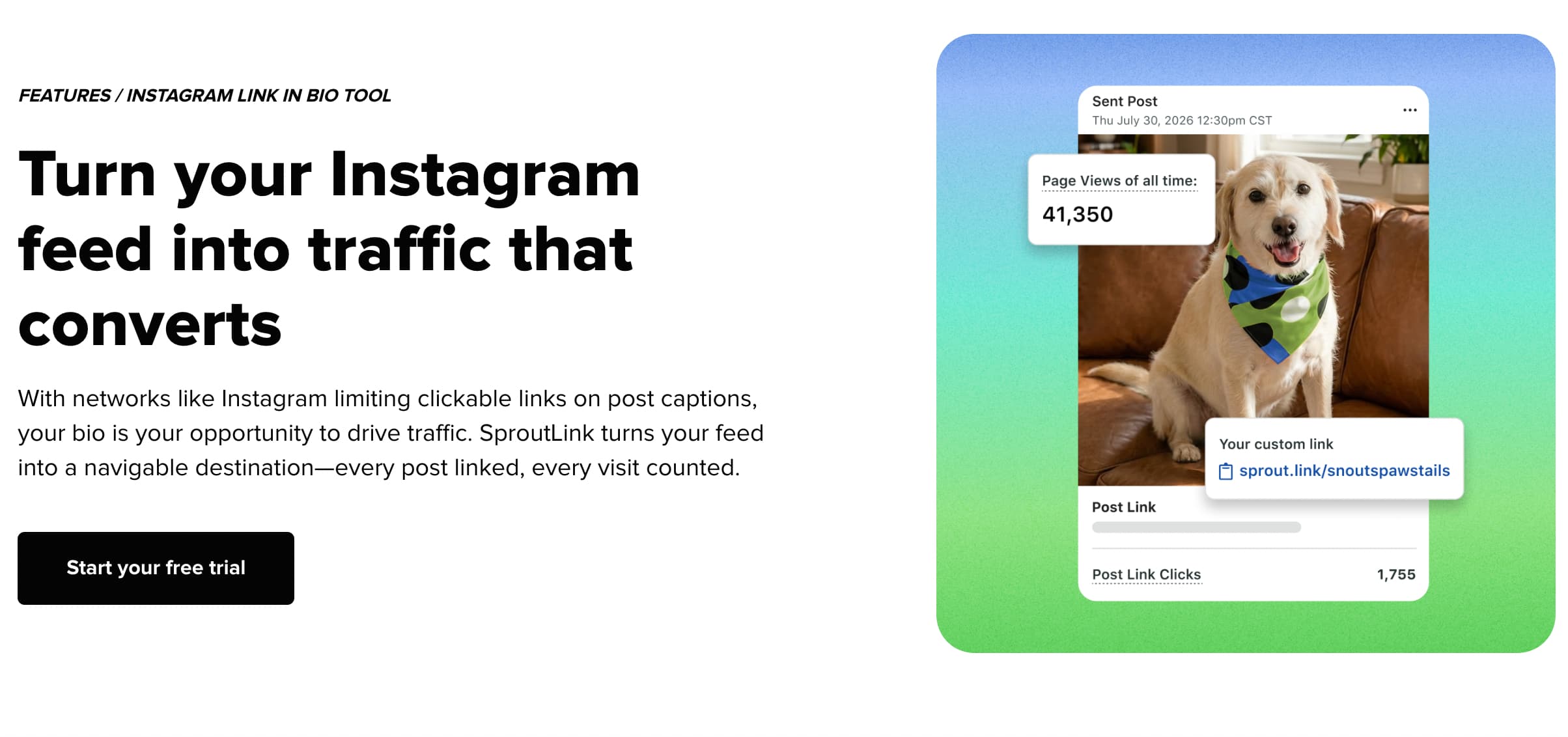
Designed specifically for mid-market to enterprise social media teams, Sprout Social integrates its link-in-bio functionality directly into a broader publishing ecosystem via its proprietary SproutLink feature. Rather than forcing marketers to manage URLs in an isolated, third-party application, SproutLink enables teams to append destination URLs concurrently with the creation and scheduling of new social posts.
- Core Architecture: Automatically generates a custom, shoppable grid mirroring the brand’s Instagram feed.
- Performance Metrics: Internal company data indicates that businesses utilizing SproutLink experience an average daily profile engagement lift of approximately 17%.
- Strategic Advantage: Eliminates workflow fragmentation, allowing marketing departments to maintain cohesive branding, custom URLs, and seamless cross-channel attribution without duplicating operational overhead.
2. Linktree
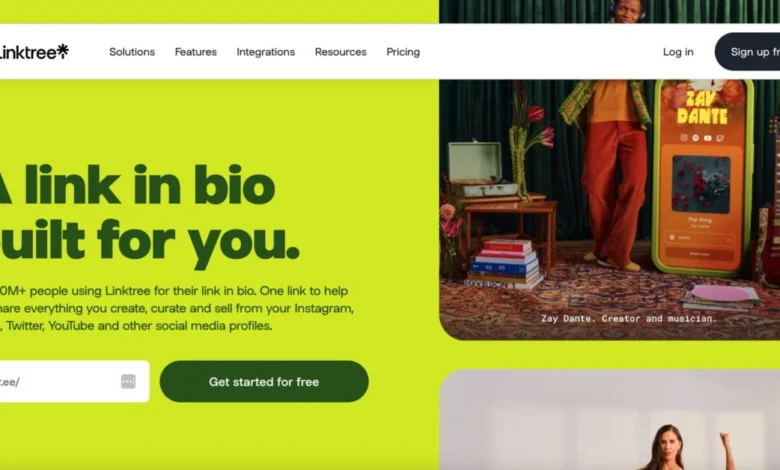
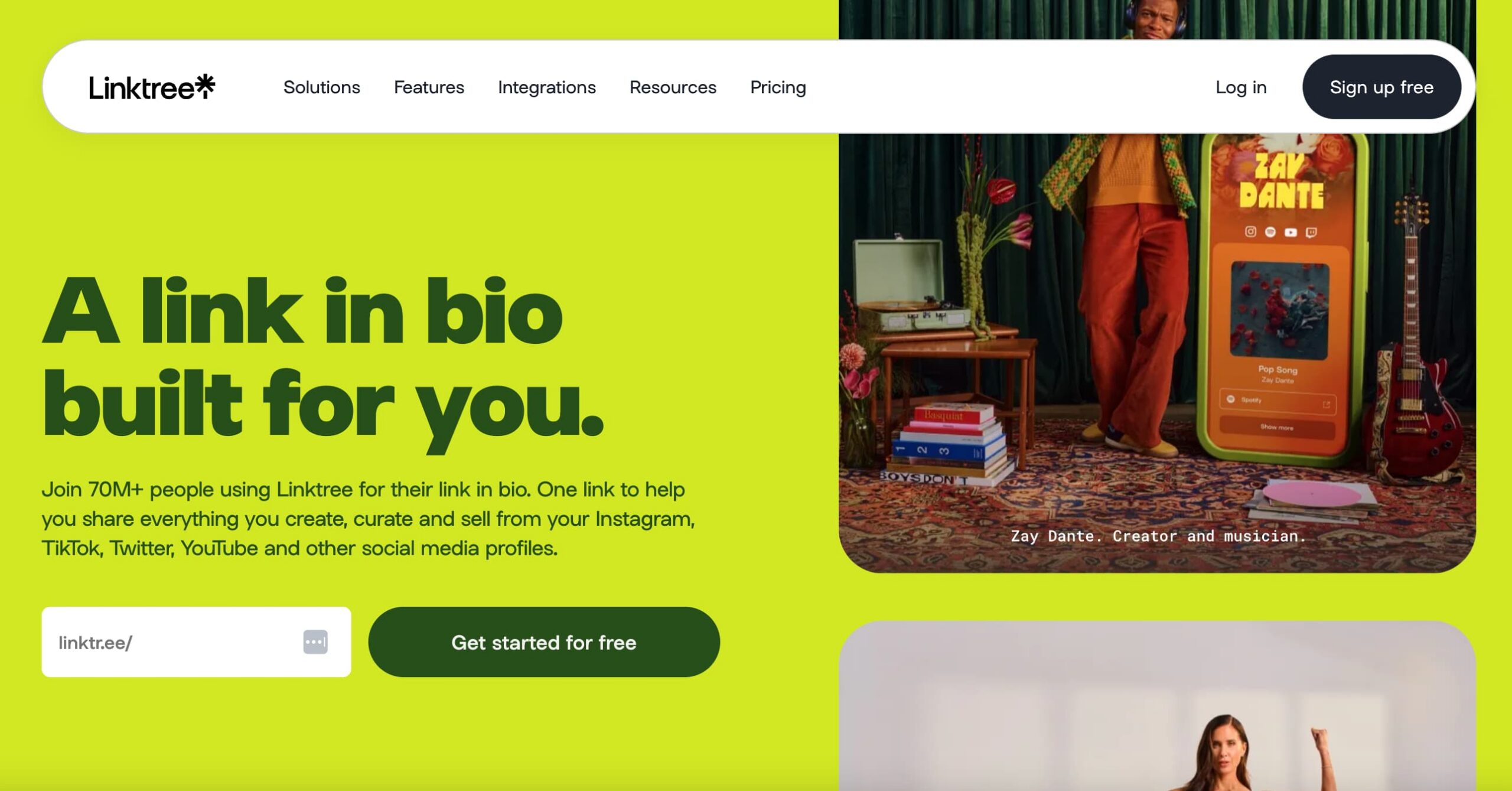
As the widely acknowledged pioneer of the category, Linktree provides a fast, no-frills setup tailored for individual creators and solopreneurs seeking immediate deployment.
- Core Architecture: Offers pre-built, template-driven landing pages that centralize multi-platform social links alongside offline integration features such as QR codes.
- Pricing Model: Operates on a freemium structure, providing unlimited basic links and minimal analytics at no cost, with advanced tracking and visual customization gated behind tier upgrades.
- Strategic Advantage: Unmatched deployment speed and brand recognition make it an accessible entry point for users requiring rapid setup without technical expertise.
3. Beacons
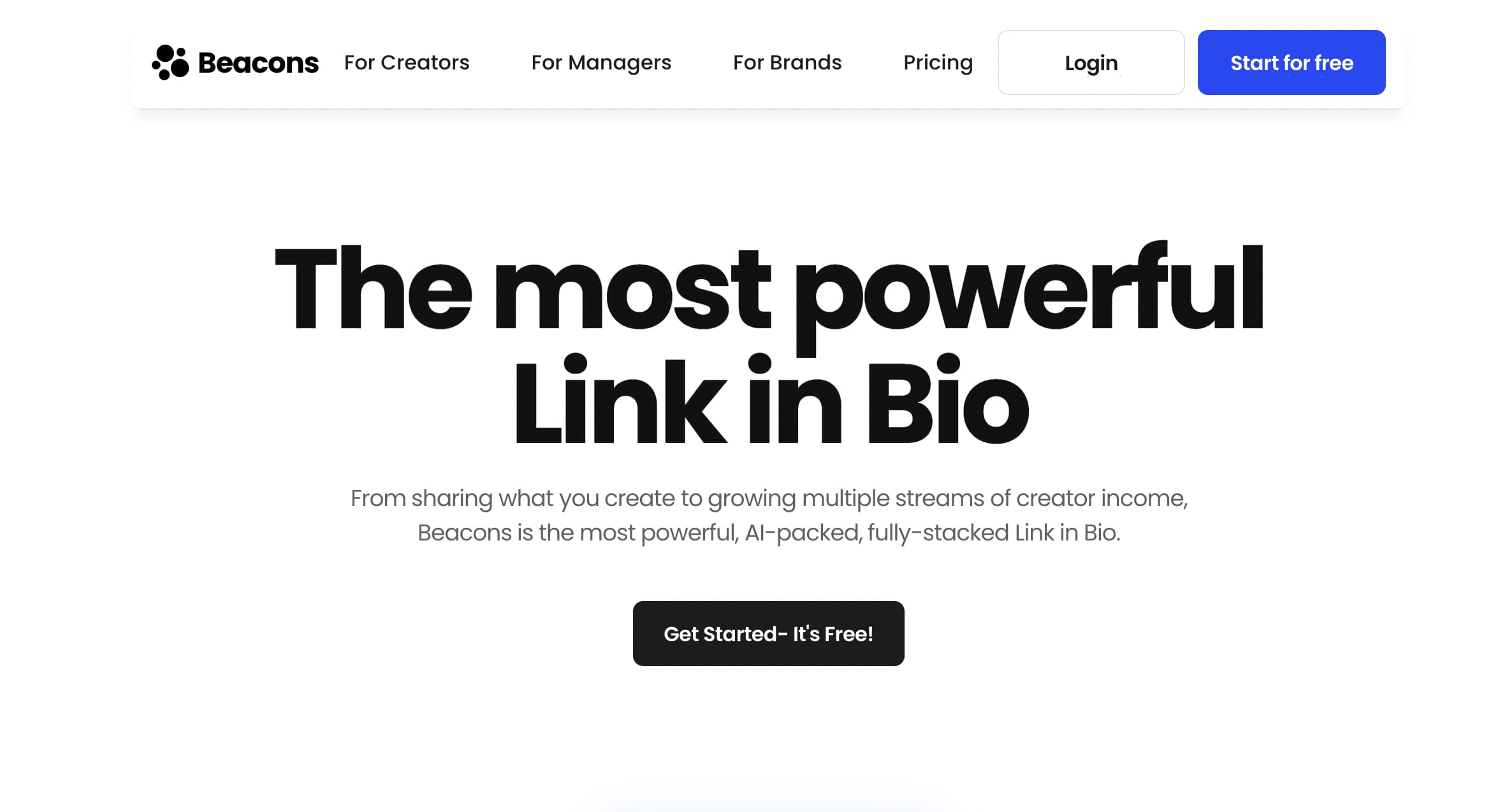
Functioning more as a comprehensive creator-commerce suite than a simple directory, Beacons targets content creators aiming to monetize their digital footprints directly from social profiles.
- Core Architecture: Merges link management with integrated product sales, email list building, and custom media kits.
- Strategic Advantage: Bridges the gap between audience acquisition and direct monetization by embedding digital storefronts and audience capture forms directly into the bio hub.
4. Milkshake
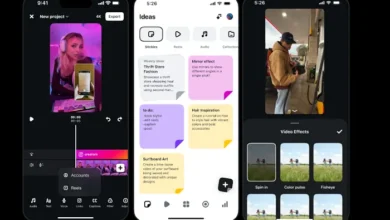
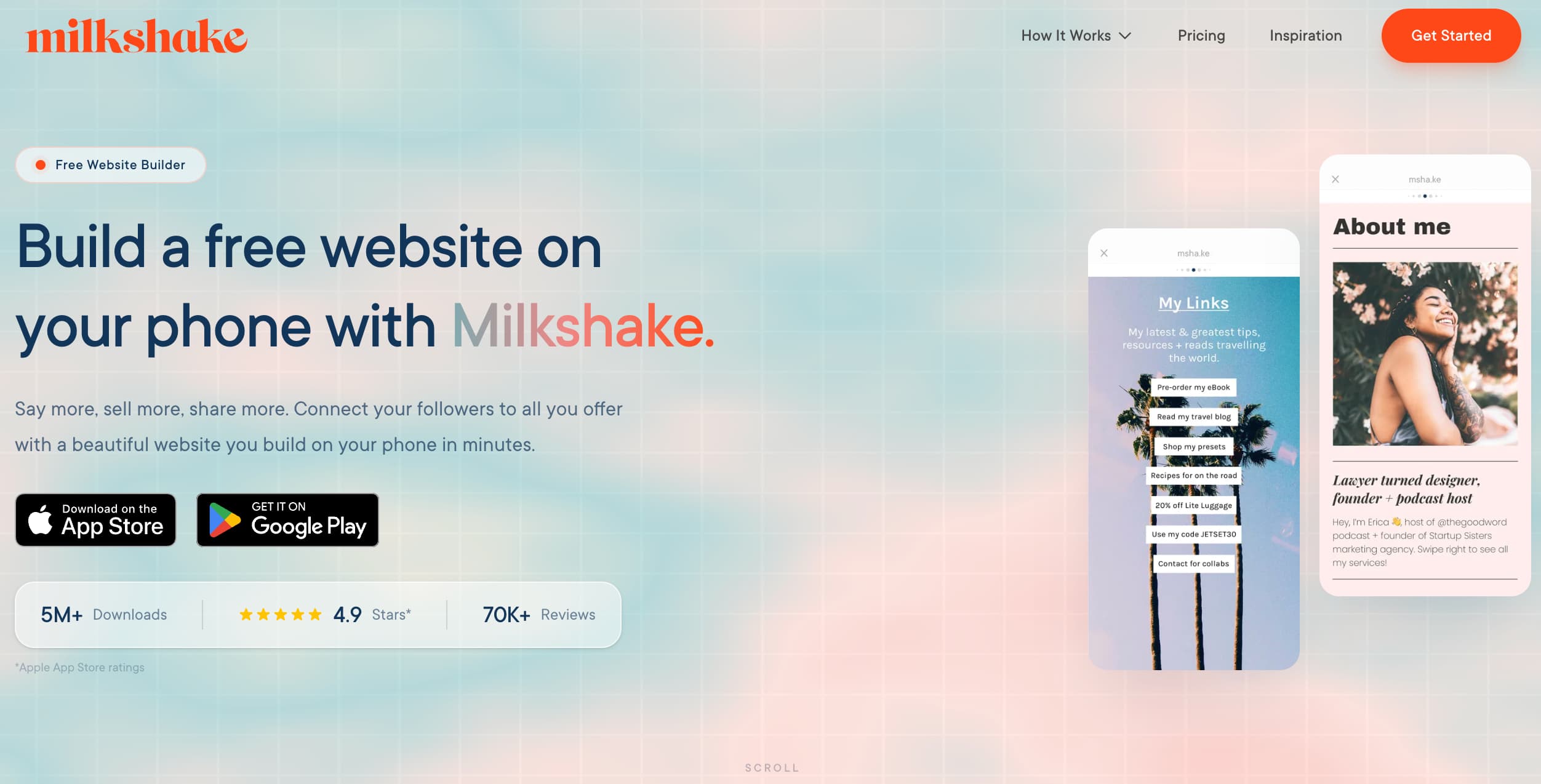
Positioned as a mobile-first website builder rather than a traditional link list, Milkshake utilizes a card-based framework reminiscent of mobile application interfaces.
- Core Architecture: Users assemble multi-page mini-sites using swipeable "Cards" designed natively for smartphone screens.
- Strategic Advantage: Ideal for absolute beginners who prefer a sleek, highly visual aesthetic built entirely via mobile devices rather than desktop dashboards.
5. Shorby
Tailored explicitly for growth marketers and performance-driven teams, Shorby prioritizes data capture, real-time analytics, and conversion tracking.
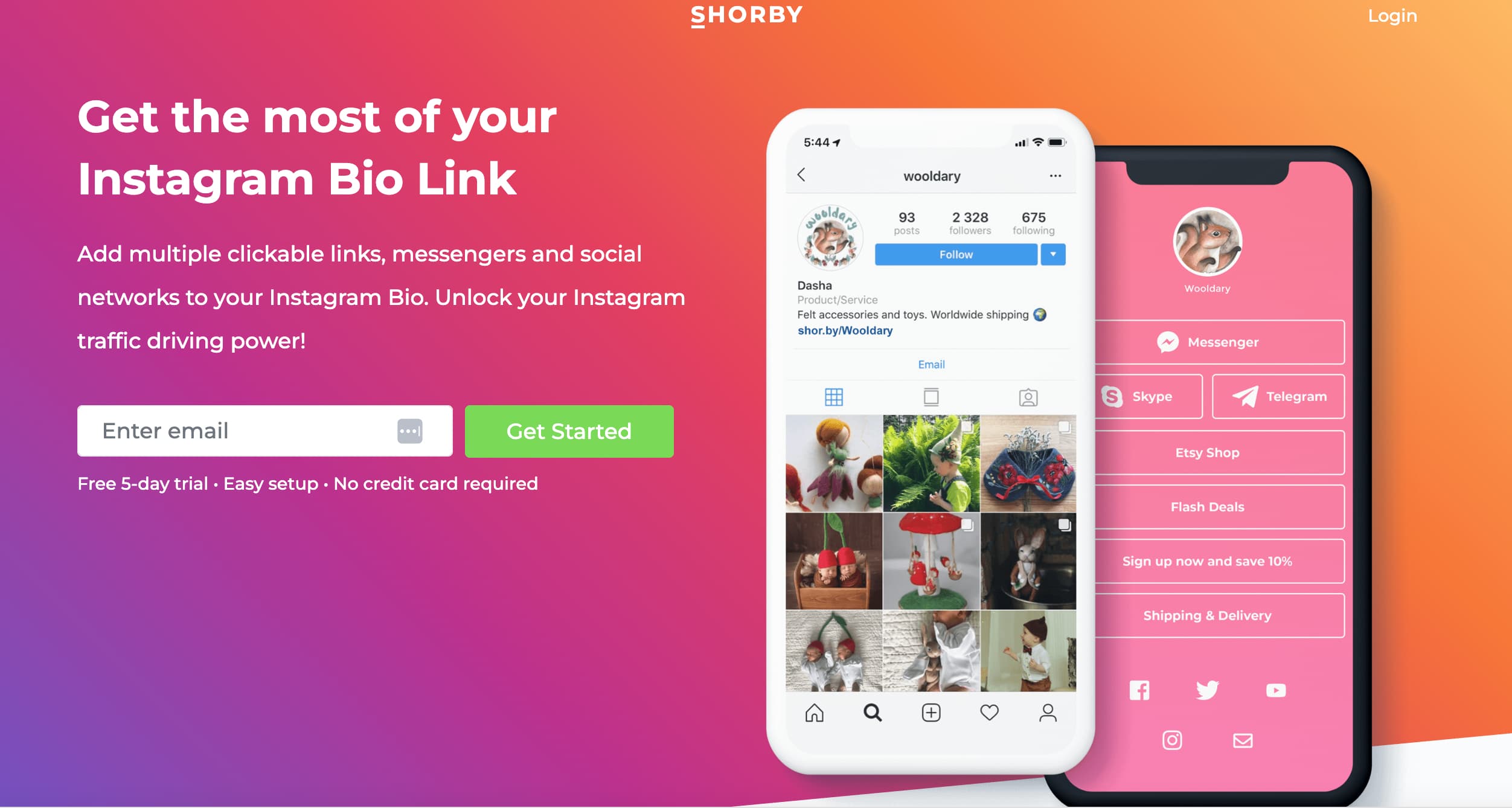
- Core Architecture: Incorporates advanced tracking pixel integrations, allowing marketing professionals to retarget custom audiences through external ad networks based on bio-link interactions.
- Strategic Advantage: Essential for attribution-sensitive campaigns where click-through rate precision and real-time data streaming dictate ad spend efficiency.
6. Carrd
For brands and designers demanding absolute visual autonomy, Carrd operates as a responsive one-page site builder offering deep customization beyond standard templates.
- Core Architecture: Empowers users to build fully responsive single-page sites from scratch or via intricate templates, complete with custom code injections and native widget embeds.
- Strategic Advantage: Provides maximum design freedom and technical flexibility for users who find rigid link-in-bio templates too restrictive.
7. Stan Store
Built specifically for digital product vendors, educators, and coaches, Stan Store replaces the traditional "one link, multiple destinations" model with an immediate transactional storefront.

- Core Architecture: Hosts courses, consultation bookings, and digital downloads directly within the bio interface, supported by frictionless, one-tap checkout modules.
- Strategic Advantage: Drastically reduces purchase friction, transforming passive social media engagements into immediate, quantifiable revenue and heightened social media ROI.
8. Lnk.Bio
For minimalists seeking an uncomplicated, text-based hyperlinking directory, Lnk.Bio offers a straightforward execution without superfluous software bloat.
- Core Architecture: Delivers a clean, unlimited link directory with optional multimedia embeds and password-protected destinations on advanced tiers.
- Strategic Advantage: Appeals to users who reject complex page builders in favor of unpretentious, highly reliable link lists.
Strategic Framework: Choosing the Right Tool
Industry analysts emphasize that selecting a link-in-bio platform should not be treated as a superficial branding decision, but rather as an integral component of an organization’s broader digital marketing strategy. Marketing executives must evaluate three primary variables before committing resources:

- Operational Intent and Objectives: Brands must align software capabilities with primary key performance indicators (KPIs). Enterprises running performance campaigns may prioritize tracking-heavy platforms like Shorby, whereas digital educators benefit significantly from transactional suites like Stan Store or Beacons. Conversely, organizations managing high-volume, multi-channel publishing calendars often find that native workflow integrations—such as SproutLink—prevent administrative bottlenecks.
- Access Control and Scalability: Organizational structure dictates software permissions. Solopreneurs require lightweight, single-user interfaces, while multi-layered marketing agencies need granular role-based access controls and multi-profile management capabilities under a single administrative dashboard.
- Total Cost of Ownership: While free software tiers reduce initial expenditure, they frequently introduce hidden operational costs through manual maintenance, data silos, and disjointed publishing workflows. Marketing leaders must weigh subscription fees against the labor savings achieved by integrated publishing and analytics ecosystems.
Broader Implications for Digital Marketing and Future Outlook
The continuous maturation of link-in-bio infrastructure highlights a broader shift in digital consumer behavior: the collapsing timeline between content discovery and transactional intent. As social media algorithms increasingly act as primary search engines for younger demographics, the friction of navigating away from native applications represents a major barrier to commercial conversion.
Industry observers note that as social platforms experiment with native e-commerce and enhanced profile features, third-party link-in-bio providers must continuously innovate by offering deeper CRM integrations, advanced predictive analytics, and hyper-personalized user experiences. For modern brands, treating the biographical URL as an afterthought is no longer a viable strategy; rather, it serves as the foundational bridge connecting ephemeral social engagement to enduring commercial success.