Microsoft Challenges Apple Silicon with the Nvidia-Powered Surface Laptop Ultra at $2,599

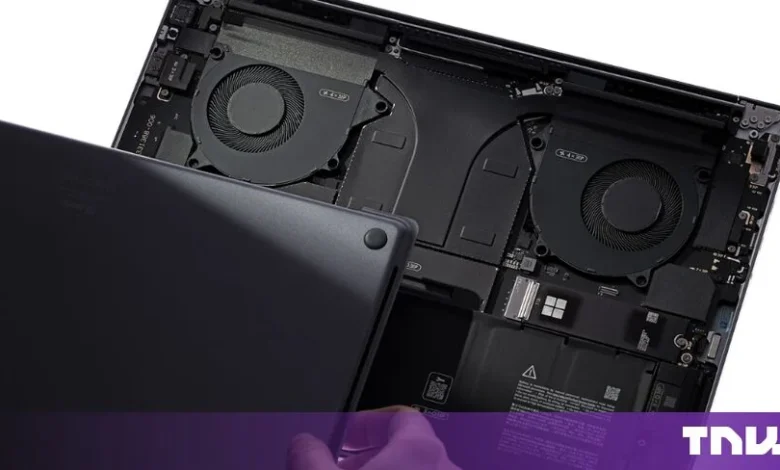
Microsoft has officially entered the high-performance laptop arena with its new Surface Laptop Ultra, a device that marks a radical departure from the company’s traditional reliance on x86 architecture. Unveiled during a high-profile event in San Francisco this past Wednesday, the device represents the first major integration of Nvidia’s Grace-Blackwell "RTX Spark" architecture into a consumer-facing flagship laptop. Priced at $2,599.99, the device is positioned as a direct competitor to Apple’s MacBook Pro M5 series, with Microsoft making bold, if currently unverified, claims regarding its performance in local artificial intelligence workloads.
The Performance Claims and Technical Ambiguity
During the launch presentation, Microsoft executives asserted that the Surface Laptop Ultra can return prompts from locally hosted AI models twice as fast as the latest Apple MacBook Pro M5. Furthermore, the company claimed the machine generates video content six times faster than its Cupertino-based rival. These assertions have sparked significant debate within the tech industry, primarily due to the lack of transparent methodology.
While Microsoft’s official product page provides a detailed list of hardware specifications—including up to 20 Nvidia Grace CPU cores, 128GB of unified memory, and 2TB of solid-state storage—the performance benchmarks remain opaque. The only technical footnote provided on the product page pertains to the display, which boasts a peak brightness of 2,000 nits measured over a 10% window using HDR content. By contrast, the company has provided no white paper or peer-reviewed testing protocol to substantiate the claims regarding the device’s superiority over the M5 chip.
Industry analysts are calling for greater transparency, noting that without standardized testing environments, comparisons between disparate architectures like Nvidia’s Arm-based Grace and Apple’s custom Silicon are inherently difficult to normalize.
A New Era for Nvidia in Consumer Computing
The inclusion of the RTX Spark platform is perhaps the most significant narrative of the launch. The platform pairs Nvidia’s Blackwell-based graphics processing unit with a Grace CPU co-designed with MediaTek. By integrating this technology into a laptop, Nvidia is effectively invading a market that has been the long-standing duopoly of Intel and AMD.
This pivot is particularly ironic given the historical context of the industry. The Grace CPU is built upon Arm’s architecture—the very intellectual property that Nvidia sought to acquire in a $40 billion deal announced in 2020. That acquisition attempt faced fierce opposition from global regulators, including the Federal Trade Commission and the UK’s Competition and Markets Authority, eventually collapsing in February 2022. Today, instead of owning the architecture, Nvidia pays royalties to the Cambridge-based Arm Holdings, a testament to the enduring dominance of the Arm instruction set in modern computing.
The Surface Laptop Ultra is not alone in this transition; other major OEMs, including Dell, HP, Lenovo, Asus, and MSI, are also rolling out machines built on the RTX Spark platform, signaling a potential shift in the Windows laptop ecosystem away from traditional x86 processors toward a more efficient, AI-accelerated Arm-based future.
Market Realities and Economic Headwinds
The launch comes at a precarious time for the hardware industry. According to recent data from TrendForce, European laptop shipments are projected to decline by 6.4% in the current quarter, with a more precipitous 20% drop expected in the fourth quarter. Desktop shipments are faring even worse, with forecasts suggesting a contraction of nearly 30%.
These market contractions are largely driven by the rising costs of memory components and the tendency for corporate IT departments to stretch their hardware refresh cycles to mitigate capital expenditure. Gartner analysts have noted that while AI-enabled PCs are the industry’s current focal point, they are not expected to represent a majority of total market shipments until 2028. At $2,599.99, the Surface Laptop Ultra is priced approximately $400 lower than the base 16-inch MacBook Pro, an aggressive move intended to capture enterprise interest despite the current economic downturn.
Strategic Shift: The "On-Device" AI Mandate
Microsoft’s marketing strategy for the Surface Laptop Ultra centers on the concept of "local compute." Executives argued during the San Francisco event that running complex AI models locally is not only more secure than offloading data to a cloud provider but ultimately more cost-effective.
This argument gains traction as organizations become increasingly wary of the operational costs associated with large-scale cloud subscriptions. A notable case study is the Dutch tax office, which recently decided to move its internal communications and data processing away from Microsoft’s cloud infrastructure and back onto its own on-premises servers. Microsoft’s pitch to potential Surface buyers mirrors this shift, suggesting that the era of "Cloud-Always" is being challenged by a return to powerful, localized edge computing.
Historical Context and Chronology
The development of the Surface Laptop Ultra is the culmination of several years of strategic alignment between Nvidia and Microsoft:
- September 2020: Nvidia announces its intention to acquire Arm for $40 billion, sparking a two-year regulatory battle.
- February 2022: The Nvidia-Arm deal is officially terminated due to regulatory pressure.
- October 2025: Nvidia begins aggressive expansion of its Grace-Blackwell chipsets into the workstation market, signaling intent to enter the laptop space.
- August 2026: Analysts warn that a global memory shortage, coupled with a 75% price hike for Nvidia’s DGX Spark development hardware, could inflate the cost of upcoming AI laptops.
- October 2026: Microsoft officially opens pre-orders for the Surface Laptop Ultra at $2,599.99, setting a new price floor for high-end AI-integrated hardware.
Implications for the Future of Computing
The Surface Laptop Ultra is more than just a piece of hardware; it is a signal of the changing priorities in the computing industry. The focus has shifted from raw clock speeds to "tokens-per-second" in AI inference. If Microsoft can prove its performance claims, the Surface Laptop Ultra could become the standard for software developers and data scientists who require heavy AI compute power without the latency or privacy concerns of a cloud-based interface.
However, the road ahead is fraught with challenges. The industry remains skeptical of the "AI PC" nomenclature, with many questioning whether the average consumer—or even the average enterprise worker—has an immediate need for a one-petaflop AI machine in their backpack. Furthermore, Microsoft faces the daunting task of convincing users to abandon the well-established software ecosystems of Intel-based Windows machines or the highly optimized Apple Silicon ecosystem.
As the industry observes the adoption rates of the RTX Spark platform, the success of the Surface Laptop Ultra will likely hinge on software optimization. If developers fail to harness the power of the Blackwell-Grace architecture effectively, the device risks becoming an overpriced experiment. Conversely, if Microsoft succeeds, it will have successfully repositioned itself as the primary architect of the next generation of mobile AI, effectively neutralizing the hardware advantage Apple has held since the introduction of the M-series chips.
For now, the technical community remains in a "wait and see" pattern. The lack of independent, verifiable benchmarks means the true performance of the Surface Laptop Ultra remains a matter of marketing rather than empirical fact. As units begin to ship and independent reviewers gain access, the reality of the machine’s capabilities—and its potential to reshape the laptop market—will finally be laid bare.