Navigating the 2026 Holiday Economy: How Social Media and Economic Pressures are Reshaping Consumer Behavior

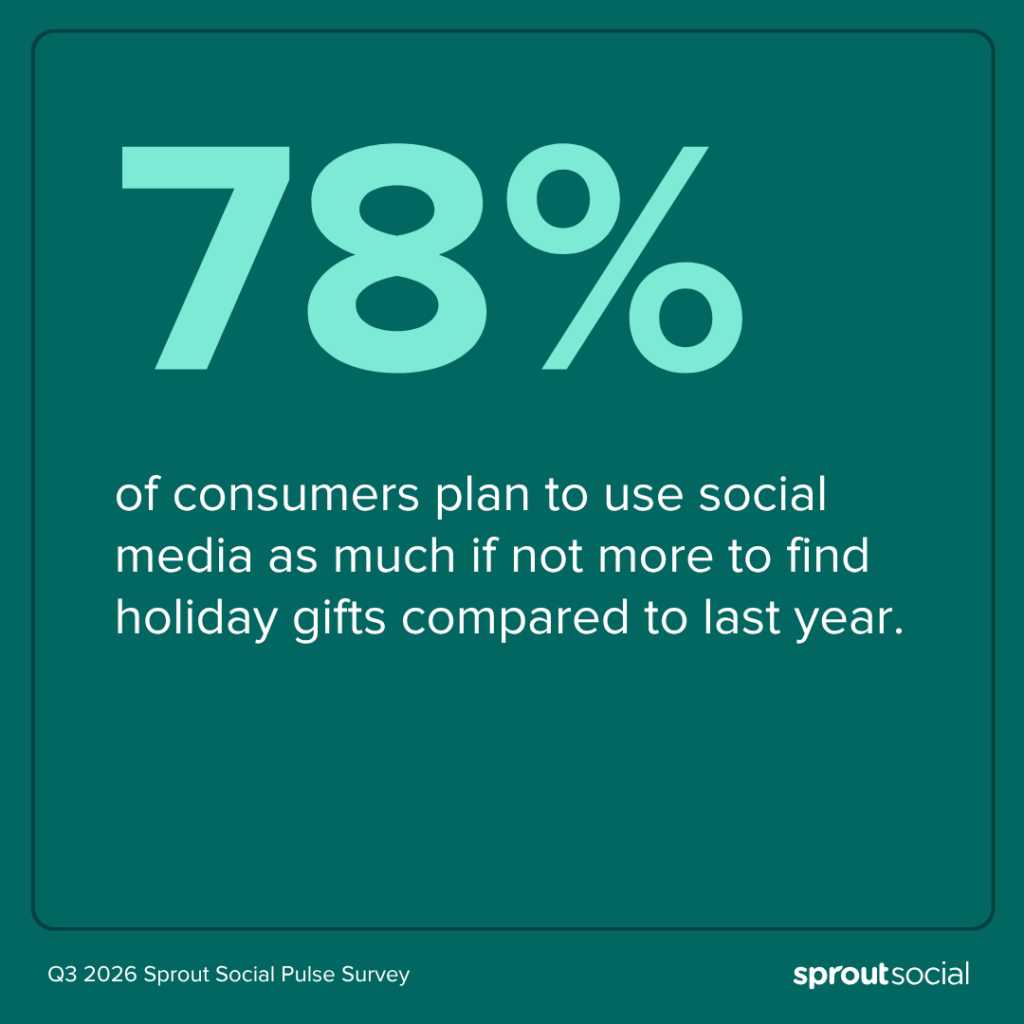
The convergence of economic tightening, shifting consumer timelines, and the unstoppable rise of social commerce is fundamentally altering the retail landscape for the upcoming holiday season. Data from the Q3 2026 Pulse Survey, conducted by Panoplai on behalf of Sprout Social, reveals that social media has cemented its role as the undisputed anchor of the holiday shopping experience. As more than three-quarters of consumers prepare to leverage digital platforms to scout for gifts, brands face a complex web of challenges, ranging from tariff-induced price anxiety to an increased demand for instantaneous digital customer service.
Understanding these dynamics requires a comprehensive examination of how consumer habits have evolved over the past year, the underlying economic factors driving these changes, and the strategic adjustments brands must make to capture market share during the busiest retail period of the year.

The Economic Backdrop: Tariffs, Inflation, and Early Planning
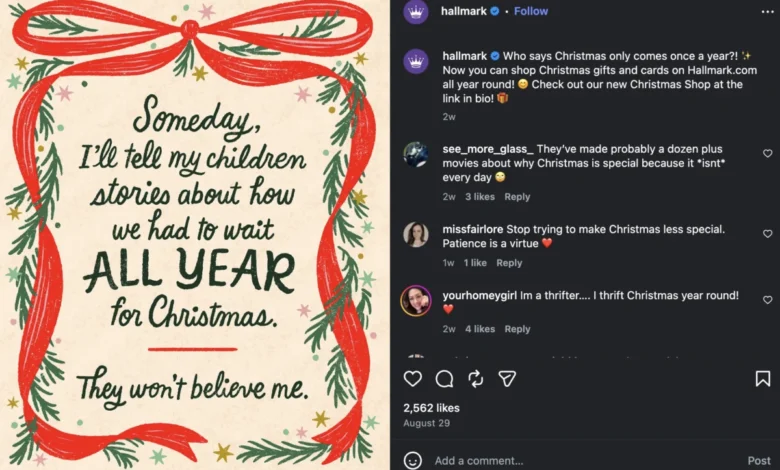
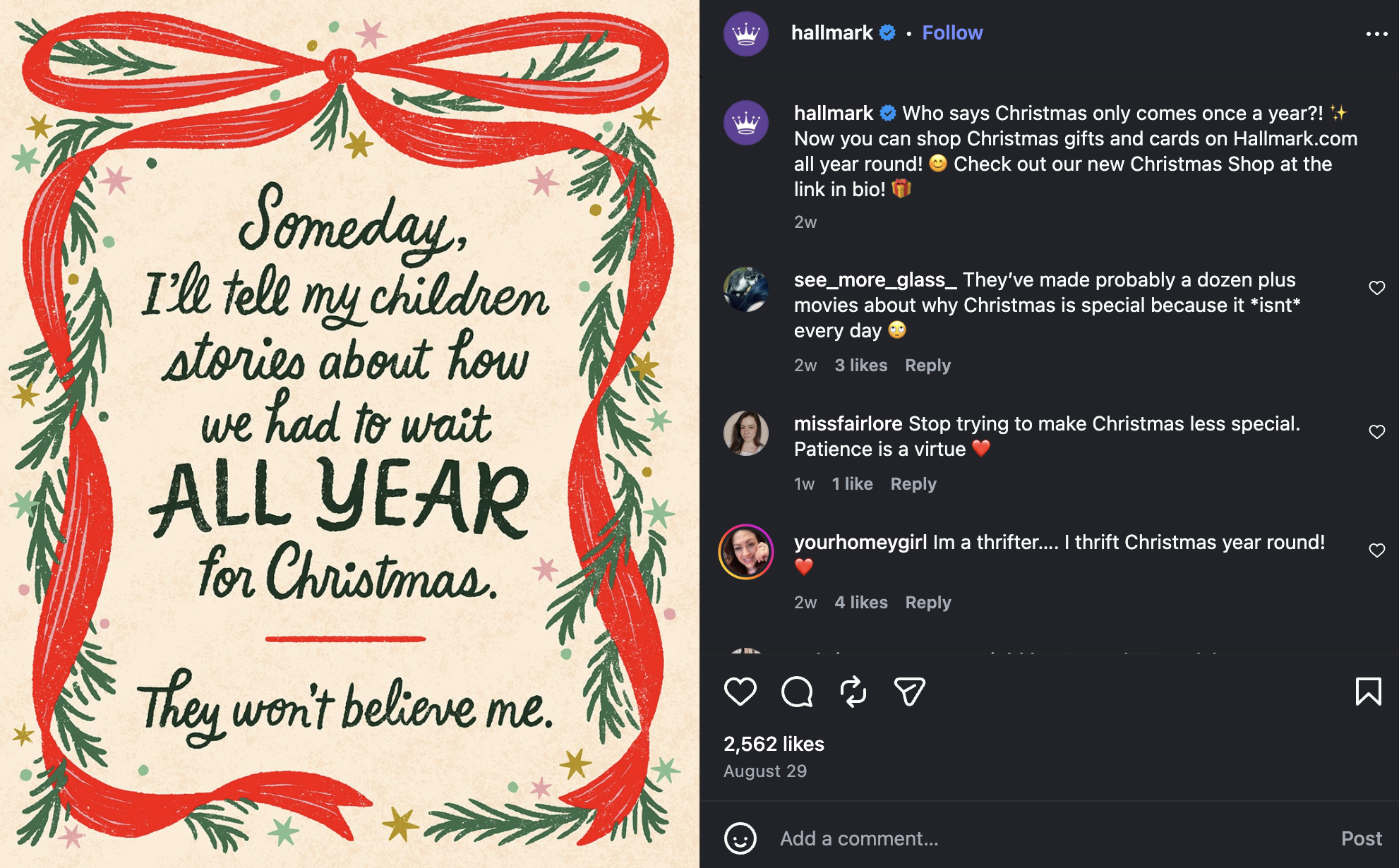
The 2026 holiday season arrives under a distinct economic cloud. While retail experts historically debated the merits of rolling out holiday marketing campaigns as early as August—often referred to colloquially as "Summerween" or preemptive autumn promotions—macroeconomic pressures have largely rendered the calendar debate secondary. Ongoing discussions regarding tariffs and their anticipated impact on retail goods have instilled a palpable sense of budget consciousness among shoppers globally.
According to survey data encompassing respondents across the United States, the United Kingdom, and Australia, roughly 69 percent of consumers express direct concern over potential price hikes driven by tariffs. Consequently, financial constraints are forcing a fundamental shift in retail chronology. Approximately 56 percent of consumers intend to trim their overall holiday spending compared to previous years. To mitigate the impact of rising costs and stretch their limited funds, 36 percent of shoppers are actively planning to initiate their holiday purchasing earlier than usual.
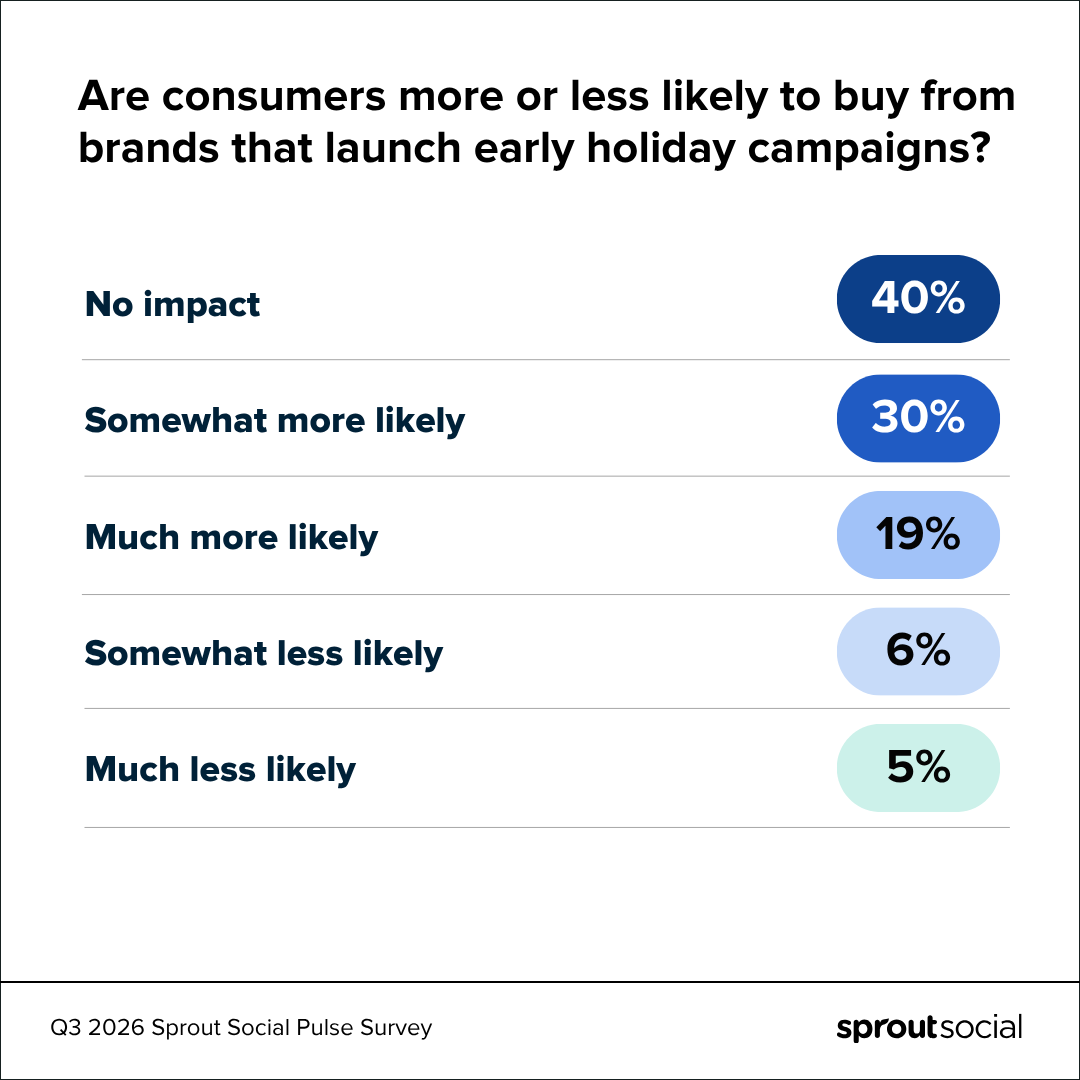
This behavioral shift exposes a fascinating disconnect between consumer preference and actual purchasing action. While 50 percent of surveyed consumers stated a preference for brands to launch official holiday advertising campaigns in October—a notable retreat from the late-summer rollouts preferred in 2025—this temporal preference does not dictate their wallets. In fact, 40 percent of shoppers reported that campaigns launched as early as August have zero negative impact on their purchasing decisions, and nearly half (50 percent) stated they are somewhat or much more likely to patronize brands that advertise early. For corporate retail strategists, this indicates that campaign timing is no longer a primary gatekeeper of consumer trust; instead, the substance of the offering carries vastly more weight.
Decoding What Drives Conversions in a Tight Market
With household budgets constrained by economic headwinds, brands must rethink their conversion strategies. Traditional brand loyalty alone is often insufficient to secure sales in a cost-sensitive environment. Instead, consumers have articulated clear expectations regarding what motivates them to open their wallets.
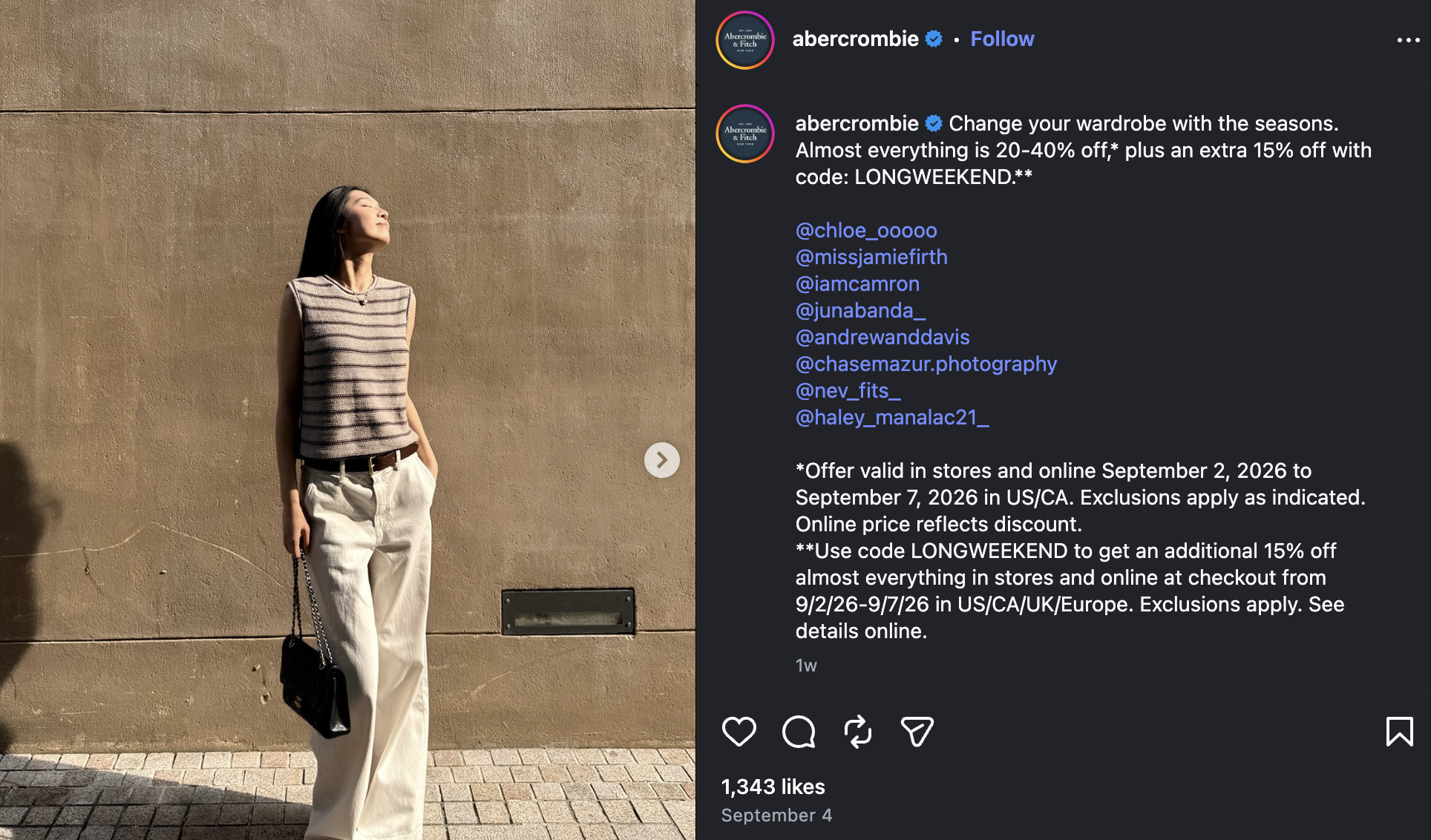
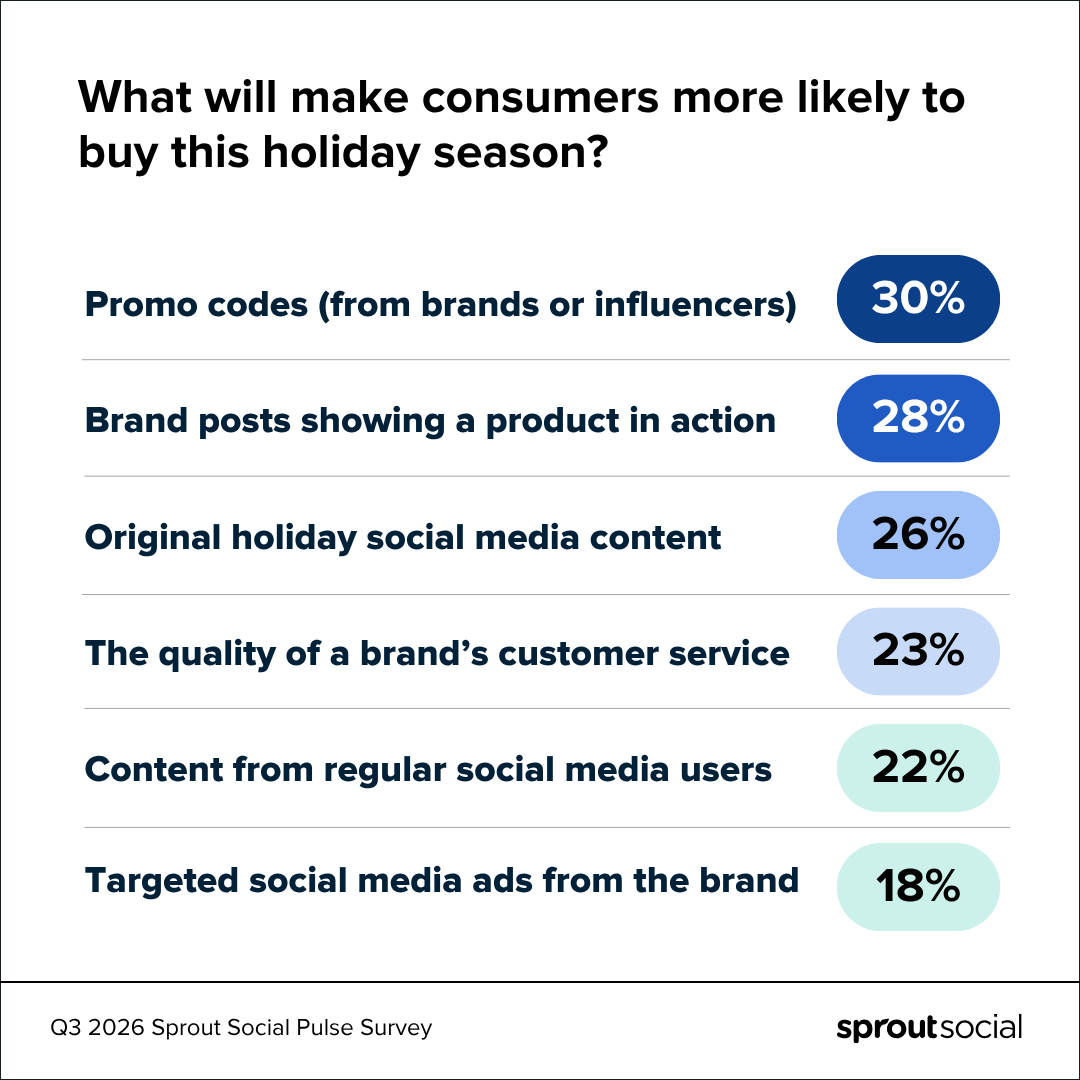
Promo codes have emerged as the single most effective conversion tool. Thirty percent of consumers cite promotional discounts—whether sourced directly from the brand or amplified through influencer partnerships—as the primary catalyst that persuades them to buy. This underscores the reality that value-driven marketing must occupy the epicenter of any 2026 holiday campaign.
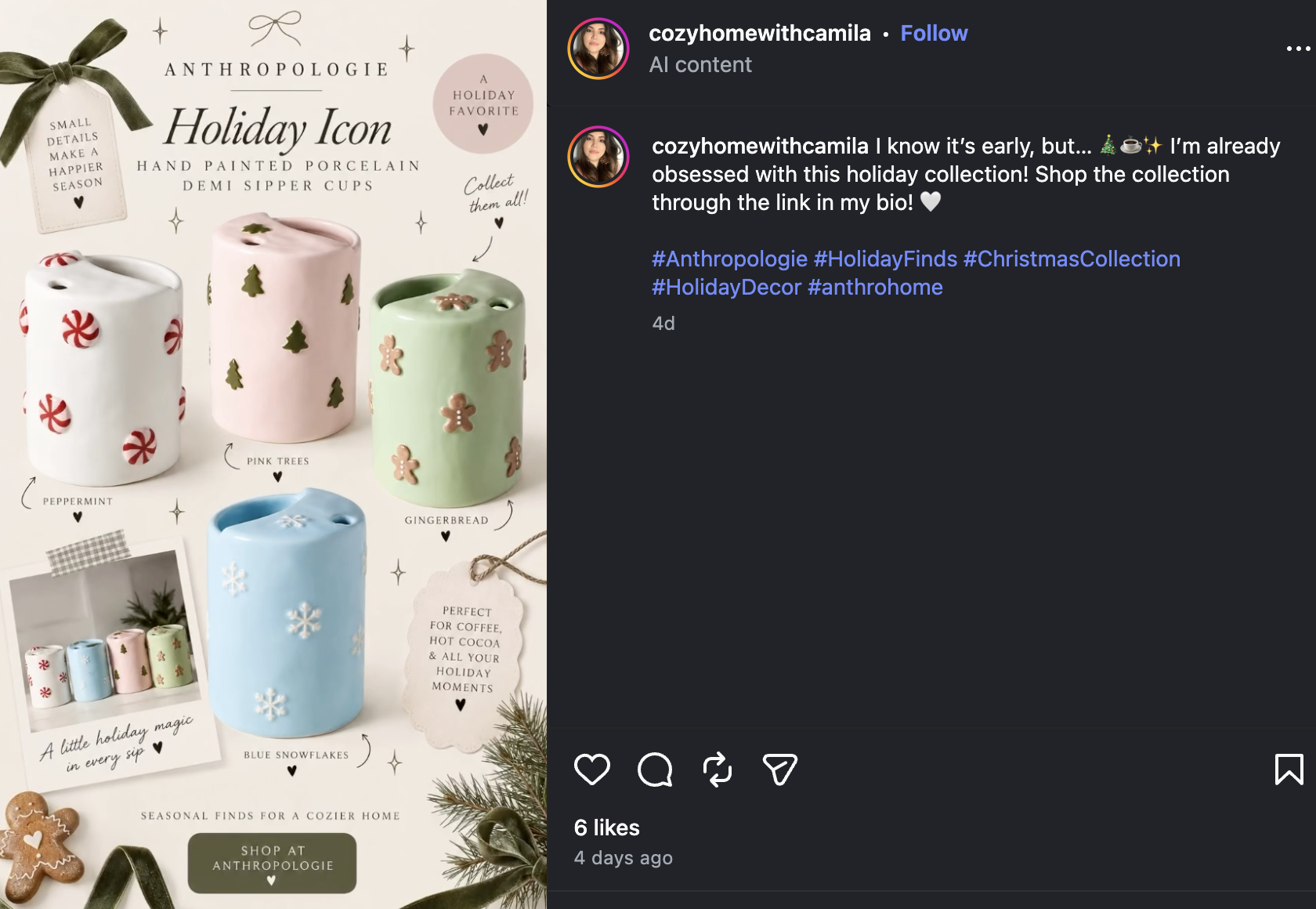
Beyond direct discounts, consumers increasingly demand transparency and demonstration. Twenty-eight percent of shoppers are influenced by content that shows products actively in use, while 23 percent look for original, holiday-specific content that cuts through digital clutter. This represents a distinct evolution from the 2025 shopping season, where customer service responsiveness and user-generated content held primary sway. Today’s consumer wants to see functional value paired with immediate financial relief, making strategic influencer collaborations an essential vehicle for meeting both criteria.
Social Media as the Ultimate Discovery and Checkout Engine
The transformation of social media from a mere networking tool into a robust search engine and transactional marketplace has reached full maturity in 2026. Building on trends identified earlier in the year—where social search outperformed traditional search engines for experiential, highly visual, and peer-led queries—social platforms now serve as the primary arena for holiday gift discovery.
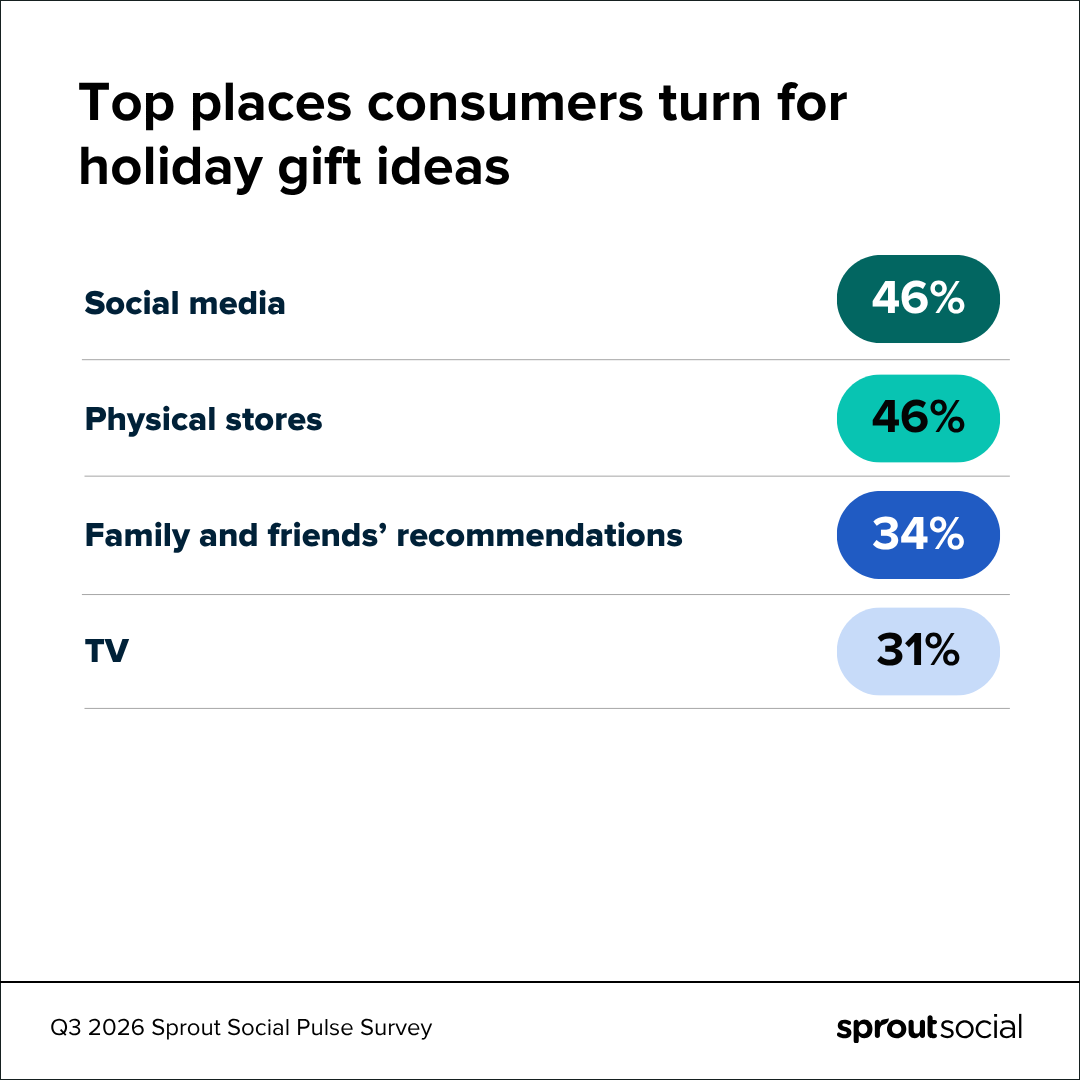
Statistically, social media has tied with traditional physical retail stores as the number one destination for holiday gift ideas, with 46 percent of consumers turning to digital feeds for inspiration. Among younger demographics—specifically Gen Z and Millennials—social media stands alone at the top, with at least half of these cohorts relying on social scrolling to finalize their gift lists.
Crucially, discovery is increasingly leading directly to transaction. More than half of all consumers surveyed expressed a willingness to complete purchases natively within social media applications. Platforms equipped with integrated shopping features, such as TikTok Shop, Facebook Shops, and Instagram Checkout, are uniquely positioned to capture these impulse and research-driven sales. By shortening the distance between inspiration and checkout, brands can minimize friction and capitalize on high-intent consumer traffic.
The Escalation of Social Customer Service Demands
As shopping shifts increasingly toward digital environments, the volume and velocity of consumer inquiries directed at brands via social media channels have grown exponentially. Data indicates that 86 percent of users plan to utilize social media just as much, if not more, to resolve customer service queries during the 2026 holiday season compared to the previous year.
Consumer channel preferences for support are heavily concentrated on major platforms. TikTok leads the preference metrics at 50 percent, closely followed by Facebook at 46 percent, Instagram at 44 percent, X at 28 percent, and WhatsApp at 17 percent. Regarding the method of outreach, direct messages remain the preferred avenue for 55 percent of consumers. However, public channels are also seeing a dramatic surge in usage; nearly one-third of shoppers (31 percent) report that they intend to seek assistance directly within public comment sections.
This transition toward public inquiries raises the stakes for brand reputation management. Speed is an absolute operational imperative, with 70 percent of consumers expecting a definitive response from a brand within twenty-four hours of reaching out. Furthermore, 89 percent of shoppers emphasize that response times directly influence their overall perception of a company.
The Integration of Artificial Intelligence in Customer Care
To manage the overwhelming influx of inquiries during the peak retail window without sacrificing response times, many retailers are turning to artificial intelligence. AI tools offer robust capabilities for sorting incoming messages, analyzing customer sentiment, and drafting initial replies to routine questions.
Public acceptance of these technologies is notably high. Approximately 70 percent of consumers—a figure that climbs to 77 percent among Gen Z—report being comfortable with brands offloading routine customer service tasks to AI, provided it results in faster and more efficient resolutions.
Industry analysts, however, counsel caution. While artificial intelligence excels at handling behind-the-scenes triage and expediting high-volume workloads, maintaining a human-in-the-loop framework is vital for preserving service quality and personalization. Because public comment sections are increasingly utilized for troubleshooting, an unmonitored or poorly calibrated AI response risks public relations exposure. Retailers are therefore advised to pair automated triage systems with well-resourced human support teams, supplemented by comprehensive self-help resources and dynamic FAQs posted directly to social channels.
Strategic Imperatives for Retailers Moving Forward
The 2026 holiday shopping season demands a nuanced, highly adaptable strategy from brands operating in the digital ecosystem. Economic pressures and tariff concerns have accelerated consumer timelines, compelling shoppers to seek value, transparency, and efficiency earlier in the calendar year.
At the same time, the consolidation of discovery, purchasing, and customer service onto social media platforms means that digital channels are no longer peripheral marketing assets—they are the central core of the modern retail experience. Brands that successfully harmonize promotional value, engaging original content, seamless in-app purchasing pathways, and rapid, responsive customer care will be uniquely positioned to not only navigate the complexities of the current economic climate but also secure long-term customer loyalty as they cross into the new year.