Xero vs FreshBooks: A Comprehensive Analysis of Modern Accounting Software for Small Business

The landscape of cloud-based accounting software has undergone a significant transformation over the last decade, evolving from simple bookkeeping spreadsheets into sophisticated, AI-driven financial ecosystems. At the forefront of this shift are Xero and FreshBooks, two industry titans that have increasingly converged in their feature sets while maintaining distinct philosophies regarding their target users. While both platforms provide robust solutions for double-entry accounting, automation, and reporting, the divergence in their architecture reflects the broader segmentation of the modern digital economy: the rise of the independent freelancer versus the complexity of the scaling enterprise.
Historical Context and Evolution
Xero, founded in New Zealand in 2006, entered the market with a vision of creating a seamless, cloud-native experience for small businesses that required a high degree of ledger accuracy. By prioritizing accountant-friendly features and deep integration with the banking sector, it quickly became the standard for businesses that needed to grow beyond a single-person operation.
Conversely, FreshBooks began its life in 2003 as a simple, elegant invoicing tool designed specifically to solve the "pain point" of getting paid for professional services. Its history is rooted in the needs of the gig economy and creative agencies. Over the last twenty years, FreshBooks has expanded its scope to include full accounting capabilities, effectively positioning itself as the premier choice for service-based professionals who prioritize user experience over complex ledger management.
The Structural Divide: Pricing and Scalability
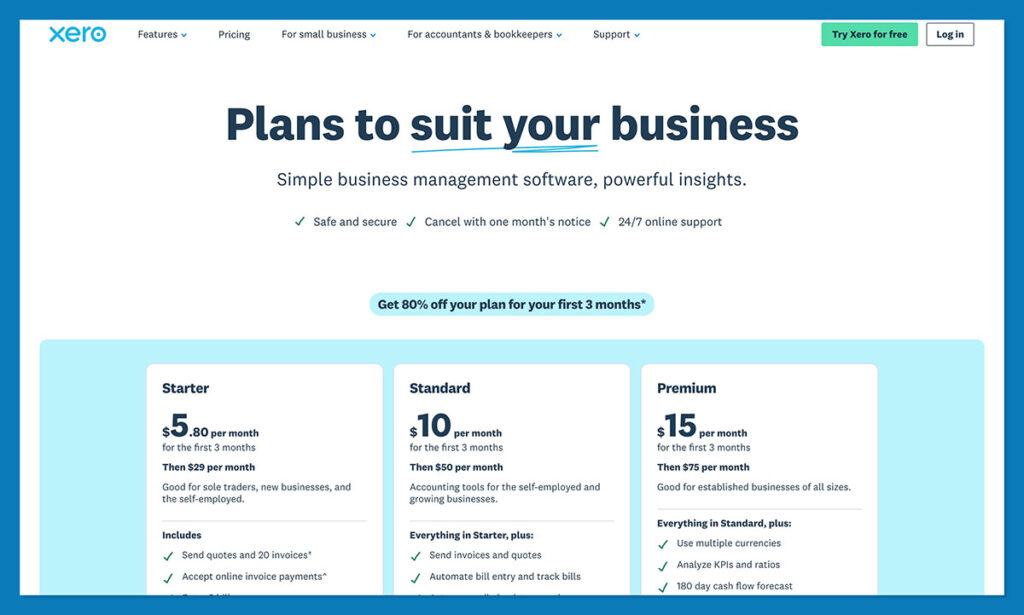
The most immediate factor for business owners choosing between these platforms is the pricing model, which highlights the fundamental difference in their intended users. Xero utilizes a feature-gated pricing strategy, starting at approximately $25 per month for its "Early" plan, scaling to $97 per month for the "Established" tier as of late 2026. A critical structural advantage of Xero is its unlimited user policy. Regardless of the plan, a business can invite an unlimited number of staff, bookkeepers, and external accountants to access the system without incurring additional per-user fees. This is a significant cost-saver for growing companies that rely on collaborative financial management.
FreshBooks, by contrast, employs a client-based pricing model. Plans start at $23 per month for up to 5 billable clients. As a business expands its client list or requires advanced features like automated expense tracking, the costs scale upward. Crucially, FreshBooks charges for additional team members. For a service-based agency with multiple project managers and contractors, the "headline" price of a FreshBooks subscription can be misleading, as the total cost of ownership increases linearly with the size of the team.
Operational Efficiency: Invoicing vs. Inventory
The core functional difference between the two platforms lies in their treatment of the transaction lifecycle. FreshBooks remains the industry leader for service-based entities. Its invoicing engine allows for granular control: users can set up recurring billing, implement client-facing portals, and even structure payment plans that divide a single invoice into up to 12 installments. The platform’s ability to manage retainers—automatically deducting logged hours from a prepaid balance—is an essential tool for consultants and agencies that would otherwise struggle with complex manual tracking.
Xero, however, is built for the complexity of product-based businesses. Its inventory management suite is far more mature than that of its competitor. Through the "Inventory Plus" add-on and native support for Shopify and Amazon FBA, Xero allows business owners to track Cost of Goods Sold (COGS), monitor gross profit margins in real-time, and manage backorders. While FreshBooks allows for basic product creation and stock quantity monitoring, it lacks the multi-currency, multi-warehouse, and sophisticated tax compliance tools that a high-volume ecommerce merchant requires.
The Role of Artificial Intelligence and Automation
The integration of Artificial Intelligence (AI) has become the new frontier for accounting software, and here the two companies take markedly different paths. Xero has aggressively integrated its "JAX" AI assistant. JAX functions as a conversational interface, allowing business owners to query their own financial data in plain English. For example, a user can ask JAX to compare the current month’s cash flow against a previous period or to provide a summary of pending invoices. Furthermore, Xero’s AI is utilized for "Smart Document Capture," which reduces manual data entry errors by automatically categorizing uploaded receipts and bills.
FreshBooks has focused its automation efforts on rules-based workflows rather than generative AI. Its strength lies in its "set-and-forget" capability for reminders and late fees. While it lacks the predictive modeling and benchmark reporting found in Xero’s higher-tier plans, it offers a simplified interface that requires significantly less training for a user without a formal accounting background.
Compliance and Financial Reporting
For businesses operating across international borders, the distinction between these two platforms becomes stark. Xero’s "Established" plan supports over 160 currencies and provides advanced reporting that consolidates financial performance across different regional entities and currency denominations. By leveraging the Avalara tax engine, Xero ensures that businesses selling globally remain compliant with complex, multi-jurisdictional sales tax requirements.
FreshBooks offers multi-currency support, but with a critical caveat: its reporting remains confined to a single currency at a time. For a business owner with global operations, this creates a reporting bottleneck, as they must manually aggregate data to get a true picture of their financial health. Additionally, Xero’s architecture is rooted in traditional double-entry bookkeeping, providing a more robust audit trail for investors and tax authorities. While this makes Xero slightly more intimidating to learn, it ensures that the business is "investor-ready" as it scales.

Support Structures and Onboarding
A notable difference in the service model is the availability of direct phone support. FreshBooks has maintained a reputation for accessible, human-centric support, offering phone assistance that is highly valued by sole proprietors who may be troubleshooting a time-sensitive invoice issue. Xero, while providing an extensive library of self-help resources, certification courses, and a robust community forum, has transitioned away from phone support in many regions, favoring a digital-first ticketing system.
However, Xero compensates for this by providing a "Xero Coach" for new subscribers, offering 90 days of onboarding support to ensure that the initial ledger setup is performed correctly. This reflects the reality that Xero is a complex tool meant for long-term growth, whereas FreshBooks is a platform intended to provide immediate, intuitive utility.
Market Implications and Future Outlook
As of the 2026 fiscal cycle, the accounting software market is reaching a point of maturity where the "best" tool is almost entirely dependent on the firm’s business model. The data suggests a clear trend: freelancers, solo practitioners, and boutique service agencies are finding high value in the ease of use and client-management features of FreshBooks. Conversely, the market for growing small-to-medium enterprises (SMEs)—particularly those with complex supply chains, multiple employees, and international sales—is increasingly gravitating toward Xero.
The implications for business owners are twofold. First, the cost of switching accounting software is high, involving data migration, ledger reconciliation, and staff retraining. Consequently, the choice made at the startup phase is often a long-term commitment. Second, the integration of AI-driven financial insights means that these platforms are no longer just "record-keepers"; they are becoming proactive business advisors. Companies that prioritize growth and data-driven decision-making will likely find that the initial learning curve of Xero is an investment that pays dividends in administrative efficiency. In contrast, those who prioritize speed, simplicity, and client relationship management will find that the specialized focus of FreshBooks offers a more streamlined path to profitability.
Ultimately, both companies have successfully carved out their niches, ensuring that whether a user is a freelance graphic designer or a growing e-commerce retailer, the tools exist to automate the back office and focus on the core mission of the business.