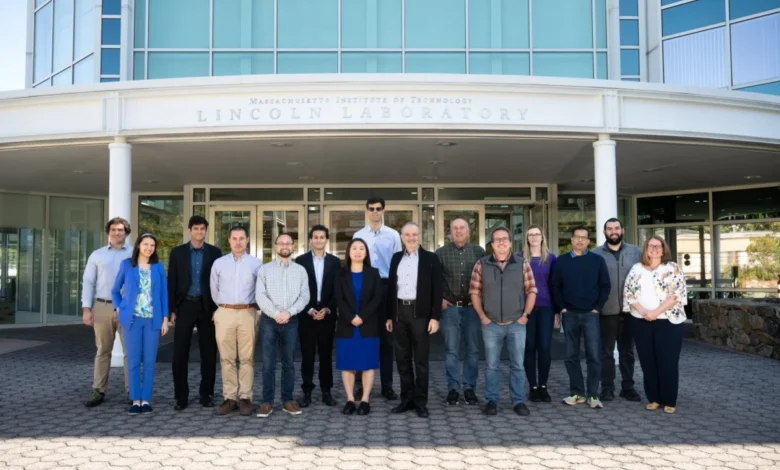
Three groundbreaking technologies developed by researchers at the Massachusetts Institute of Technology (MIT) Lincoln Laboratory have been named recipients of the 2026 R&D 100 Awards. Often referred to in the scientific community as the "Oscars of Invention," this internationally recognized program highlights the 100 most significant technological innovations that have successfully transitioned into practical deployment or been made available for commercial licensing over the preceding year.
Managed by the online publication R&D World, the awards program has operated annually since 1963, tracking the evolution of industrial, academic, and government-sponsored research. A rigorous judging process conducted by an independent panel of science and technology experts, industry leaders, and academic professionals evaluates hundreds of global submissions to select the final honorees.
The latest accolades bring Lincoln Laboratory’s total R&D 100 Award count to 111 since 2010. This impressive track record underscores the institution’s ongoing role as a Department of War (DoW) federally funded research and development center (FFRDC). While the laboratory routinely transitions advanced technologies across both classified and unclassified domains, the R&D 100 program specifically celebrates innovations that can be broadly shared with industry and government partners to bolster national security, economic competitiveness, and technological infrastructure.
Addressing Critical Engineering Bottlenecks
The three winning technologies target severe vulnerabilities and limitations in modern engineering: cyber vulnerabilities in embedded hardware, interconnection bottlenecks in quantum and high-performance computing, and electromagnetic spectrum congestion caused by commercial 5G deployments.
"These awarded technologies address critical problems in cybersecurity, quantum computing, and communications. We’re proud of our dedicated staff who developed and transitioned these technologies for the nation’s advantage," stated Melissa Choi, director of Lincoln Laboratory.
The recognition reflects a multi-year trajectory of targeted research aimed at ensuring critical systems can operate securely and efficiently in increasingly complex operational environments. Below is a detailed examination of each award-winning innovation, the engineering challenges they solve, and their broader implications for national security and commercial industries.
Magnetite: A Secure-by-Design Operating System for Embedded Hardware
The Cybersecurity Challenge of Legacy Systems
Computers embedded within deployed military and commercial platforms—ranging from low-Earth-orbit satellites and tactical drones to advanced radar systems—are vital for maintaining mission integrity and safeguarding human lives. However, the operating systems (OS) running these embedded computers are frequent targets for sophisticated cyberattacks.
Historically, embedded systems have relied on legacy operating systems designed decades before modern cyber threats emerged. These traditional platforms are often bloated, complex, and ill-equipped to defend against adversaries who are increasingly weaponizing artificial intelligence to discover and exploit zero-day vulnerabilities.
To confront this challenge, Lincoln Laboratory engineered Magnetite, an inherently secure operating system designed explicitly for high-stakes embedded environments.
Engineering Principles and Formal Verification
Unlike general-purpose operating systems like Windows or Linux, which prioritize broad compatibility and resource flexibility, Magnetite is tailored to the strict constraints of embedded computing.
"If Windows and Linux are the familiar workhorses of general-purpose computing, Magnetite is built for the different realities of embedded systems, for which real-time performance matters, resources are tight, and system failure has physical consequences," explained Juliana Furgala, principal investigator in the Secure Resilient Systems and Technology Group at Lincoln Laboratory.
Magnetite’s security architecture relies on three foundational pillars:
- A Formally Verified Microkernel: The core of the operating system is built upon seL4, a formally verified microkernel. Formal verification uses mathematical proofs to guarantee that the underlying software code behaves precisely as intended, thereby eliminating entire categories of logical flaws and vulnerabilities.
- Memory-Safe Services: Operating system services—including networking, file storage, and inter-process communication—are written in Rust. Rust is a modern programming language engineered to prevent memory-corruption bugs, such as buffer overflows, which hackers routinely exploit to gain unauthorized control.
- The Principle of Least Privilege: Magnetite isolates individual OS services into tightly bounded processes. Under this configuration, if an adversary successfully breaches one component, that single service can be instantly locked down while the remainder of the embedded system continues to execute its critical functions.
Deployment and Future Outlook
Magnetite is currently available free of charge for government use and approved partners, and it is being actively integrated into space and flight platforms for the Department of War. Beyond military applications, the development team sees vast potential for expanding the platform into civilian infrastructure, such as industrial control systems and smart-grid networks.
By providing a reusable, highly secure foundation for specialized mission capabilities, Magnetite is also being evaluated across other laboratory divisions as a cost-effective, high-assurance alternative to proprietary operating systems. In addition to securing an R&D 100 Award, Magnetite was named MIT Lincoln Laboratory’s Best Invention of 2025.
The Quantum Microsystems Platform: Overcoming Interconnection Bottlenecks
The Physical Limits of Conventional Interconnects
For decades, the advancement of computing systems was defined by Moore’s Law—the continuous shrinking of transistors to increase processing power. Today, however, modern high-performance and quantum computing architectures face a different physical barrier: interconnection bottlenecks.
As microchips become denser, the electrical pathways linking them consume precious physical space, degrade data transfer speeds, and generate excessive heat. This challenge is acute in quantum computing, where delicate superconducting chips must be housed in cryogenic dilution refrigerators to achieve near-zero electrical resistance. Bridging these cryogenic chips with room-temperature control electronics traditionally requires massive bundles of bulky coaxial cables, creating severe thermal and spatial constraints that limit scalability.
AI-Optimized Wafer-Scale Integration
The Quantum Microsystems platform solves this interconnect crisis by integrating hundreds of superconductor and semiconductor chips into a unified, wafer-scale system. The platform relies on a sophisticated suite of manufacturing and design innovations:
- AI-Driven Routing: An artificial intelligence decision-tree algorithm determines the optimal routing pathways for connecting chips across an entire silicon wafer.
- Digital Lithography Yield Enhancement: Once a wafer is screened for defects, a digital lithography system dynamically "draws" custom wiring layers between viable chip locations, routing around flawed circuit components to maximize manufacturing yield.
- Advanced Packaging: Chips are joined using ultra-dense microbump or bumpless integration techniques, placing them in extreme proximity. A superconducting fabric then extends these connections across the wafer, enabling signal transmission at near-light speeds while replacing bulky coaxial cables with lithographically defined flexible interconnects.
Crucially, the Quantum Microsystems platform is fully reworkable. Individual chiplets can be replaced or upgraded without requiring engineers to scrap and rebuild the entire hardware system. Furthermore, the platform supports diverse architectural layouts, ranging from individual reticle designs to multi-reticle configurations and fully integrated wafer-scale systems.
Commercial and Scientific Implications
"By shifting from chip-level scaling to AI-optimized system-level integration, the platform establishes a new paradigm for building ultra-efficient, large-scale computing infrastructure for applications in quantum computing, AI, and high-performance computing," noted Rabindra Das, principal investigator in the Quantum-Enabled Computation Group.
Designed to transition smoothly to both government and commercial semiconductor foundries, the Quantum Microsystems platform is positioned to accelerate the timeline for practical, fault-tolerant quantum computers and ultra-dense artificial intelligence accelerators.
5G Interference Cancellation Algorithm: Protecting Critical Radio Frequency Systems
The Spectrum Congestion Crisis
The rapid, global deployment of 5G cellular networks has transformed mobile communications, but it has also introduced unintended electromagnetic interference. In specific environments, high-powered signals emitted by 5G base stations spill over into adjacent frequency bands utilized by vital non-5G radio frequency (RF) hardware.
This spectral encroachment can effectively blind critical systems, including military defense radars, commercial aircraft radio altimeters, satellite ground stations, and sensitive radio astronomy telescopes. Because these legacy and specialized systems cannot easily be migrated to alternative frequencies, engineers required a sophisticated method to filter out cellular noise without degrading the primary signal.
Mathematical Reconstruction and Subtraction
To solve this problem, Lincoln Laboratory researchers developed an advanced signal-processing algorithm capable of isolating and stripping away 5G interference from an affected antenna’s data stream in real time.
Because 5G networks operate under strict, publicly published international standards, the cancellation system can decode the exact structure of a nearby base station’s transmission. By accounting for environmental variables—such as multipath scattering caused by buildings and terrain—the algorithm constructs a highly accurate digital replica of the interfering 5G signal. This reconstructed waveform is then subtracted directly from the incoming data stream, leaving a clean, usable primary signal.
Unlike conventional interference mitigation strategies, such as spatial beamforming, the Lincoln Laboratory approach does not rely on the physical separation of the interfering source and the desired signal. By performing cancellation independently on each antenna channel of a receiver, the algorithm preserves essential antenna resources that may be required to counter other threats, such as electronic jamming.
Validation and Operational Impact
The research team rigorously validated the algorithm using live signals captured over the air from a commercial Nokia 5G base station located at Hill Air Force Base in Utah. During testing, the algorithm successfully recovered a simulated radar signal that had been entirely buried beneath cellular interference. The restoration brought the signal back to within two decibels of its original signal-to-noise ratio, successfully preserving 89 percent of the radar system’s original interference-free detection range.
"While 5G waveforms exhibit complex structure, their generation is governed by global standards that allow our cancellation methodology to generalize across base station radio heads made by a diverse set of vendors," said Binoy Kurien, principal investigator in the Tactical Edge Communications Group.
The Department of War is currently evaluating the algorithm for immediate deployment across multiple defense platforms. Furthermore, because the foundational architecture of cellular waveforms is expected to persist into future telecommunications generations, researchers anticipate that the underlying methodology can be adapted to mitigate interference from emerging 6G networks as well.
Broader Impact and Future Outlook
The simultaneous recognition of Magnetite, the Quantum Microsystems platform, and the 5G interference cancellation algorithm highlights the diverse engineering scope of MIT Lincoln Laboratory. By addressing fundamental vulnerabilities in software security, hardware scalability, and electromagnetic spectrum management, these innovations bridge the gap between academic theoretical research and practical, mission-ready deployment.
As government agencies and private industries alike grapple with rising cybersecurity threats, the physical limits of microchip scaling, and increasingly crowded radio frequency environments, technologies of this caliber provide crucial stepping stones toward safer, faster, and more resilient technological infrastructure.